
Chimpanzee tracking in Kibale National Park takes you into the rainforest with trained ranger guides to locate one of the park’s habituated chimpanzee communities. Most standard tracking is centred around the Kanyanchu area, where the walk follows forest trails as trackers listen for calls, movement in the canopy, and other signs of where the chimpanzees are feeding or travelling. The time needed to find them changes from one trek to another. Once the assigned community is reached, standard tracking allows visitors to spend up to one hour observing the chimpanzees while following the ranger’s instructions. Kibale also fits naturally into a wider western Uganda safari. Travellers can continue south to Queen Elizabeth National Park for wildlife and boat safaris, then on to Bwindi for mountain gorilla trekking. AA Safaris & Tours can arrange the chimpanzee permit, accommodation and private transfers around your tracking date and wider Uganda itinerary.
Chimpanzee Tracking in Kibale at a Glance
Kibale’s standard chimpanzee tracking experience is centred around the Kanyanchu area, with ranger-led walks into the forest to locate habituated chimpanzees. The exact length of the trek changes according to where the chimpanzees are moving that day.
| Planning Detail | Kibale Chimpanzee Tracking |
|---|---|
| Main tracking area | Kanyanchu, Kibale National Park |
| Typical overall trek | Around 2 to 5 hours, depending on chimpanzee movement, weather and forest conditions |
| Time with chimpanzees | Up to 1 hour once the habituated community is reached |
| Minimum age | 15 years |
| Permit price | USD 300 for foreign non-residents |
| Sighting success | 90% at the established Kanyanchu tracking area |
| Extended experience | Chimpanzee Habituation Experience is available separately |
Why Kibale for Chimpanzee Tracking
Kibale National Park is Uganda’s leading destination for chimpanzee tracking, with a long-established tracking programme around Kanyanchu and one of the richest primate populations in the country. The forest supports 13 primate species, including chimpanzees, red colobus, black-and-white colobus, L’Hoest’s monkeys and grey-cheeked mangabeys. The habituated chimpanzee communities around Kanyanchu have been followed for decades, giving visitors a strong chance of finding them during a guided trek. Sightings are never guaranteed because the chimpanzees move freely through the forest, but Kibale remains the most reliable place in Uganda for this experience.
What to Expect on a Kibale Chimpanzee Trek
Chimpanzee tracking in Kibale begins with a briefing at the park headquarters before you enter the forest with a ranger guide. The walk follows established forest trails, but the route changes according to where the chimpanzees are moving, feeding or resting that day. Tracking can take around 2 to 5 hours, depending on the location of the chimpanzee community, weather and forest conditions. Some encounters happen quickly, while others require a longer walk through humid forest and uneven ground. Once the chimpanzees are located, standard tracking allows up to one hour with the group.
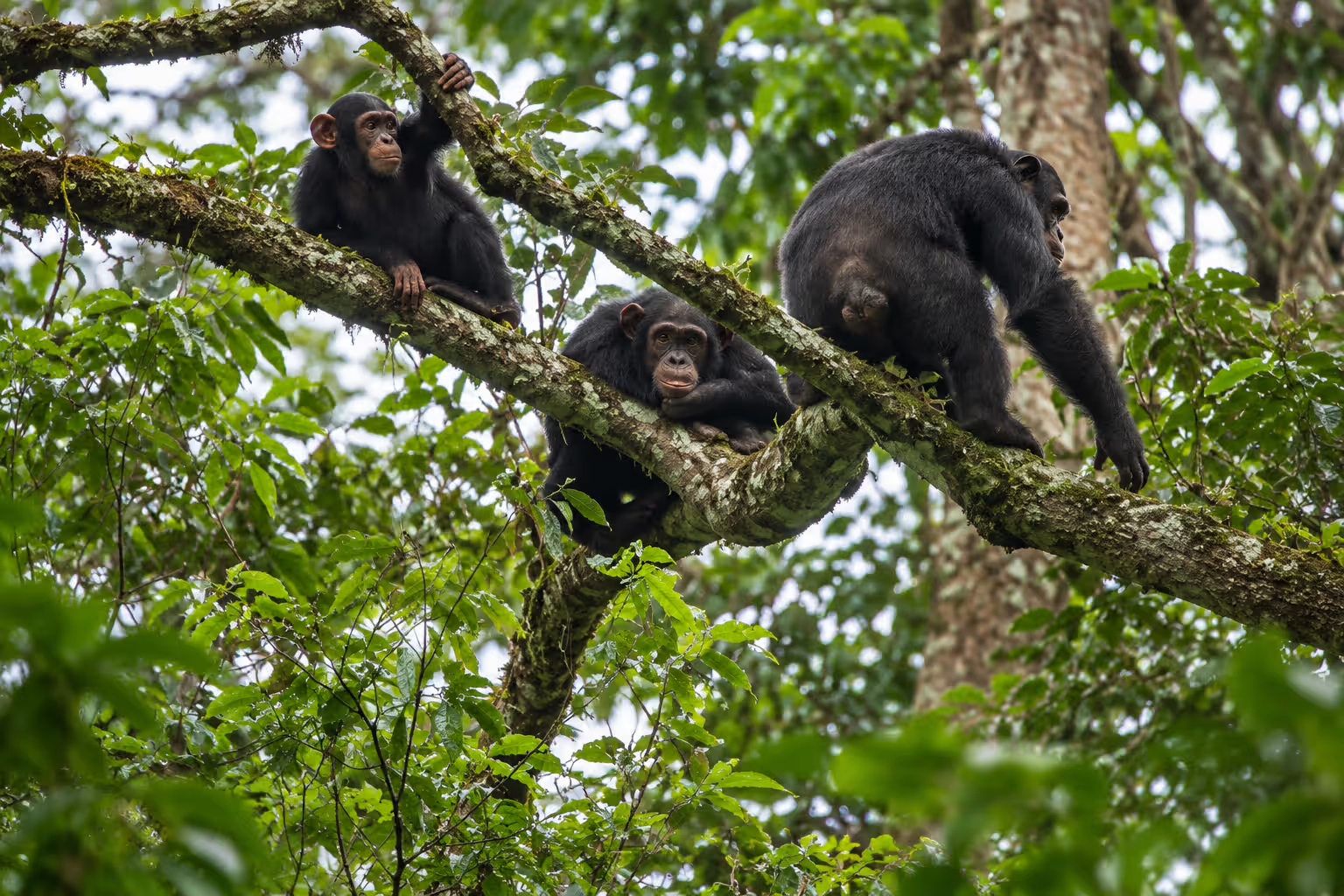
Kibale Chimpanzee Trek
During that time, you may see them feeding in the canopy, grooming, resting, travelling through the forest or calling to one another. The pace can change quickly because chimpanzees move faster than gorillas and may shift between the trees and forest floor. Comfortable walking shoes, light rain protection and a small daypack make the experience easier. The trek finishes when your viewing time is complete, and the ranger guides the group back towards the tracking point.
Chimpanzee Tracking vs Habituation in Kibale
Kibale offers two different chimpanzee experiences. Standard chimpanzee tracking is the better choice for most first-time visitors, while the Chimpanzee Habituation Experience gives you considerably more time in the forest following a community that is still becoming accustomed to human presence.
| Experience | Standard Tracking | Chimpanzee Habituation |
|---|---|---|
| Time with chimpanzees | Up to 1 hour once located | Up to 4 hours once located |
| Overall experience | Shorter forest trek | Longer forest experience |
| Chimpanzee group | Fully habituated community | Community undergoing habituation |
| Best for | First-time visitors and shorter itineraries | Travellers wanting more observation time |
| Permit | Standard chimpanzee permit | Separate habituation permit |
| Time commitment | Part of the day | Much of the day |
Kibale Chimpanzee Permit Costs
A chimpanzee permit is the official authorisation required to join either standard chimpanzee tracking or the Chimpanzee Habituation Experience in Kibale National Park. Permits are issued by the Uganda Wildlife Authority for a specific activity and trekking date, so availability should be confirmed before accommodation and transfers are finalised. For Kibale, the permit covers the ranger-guided activity and park entry for the tracking day. Standard chimpanzee tracking also includes a nature walk on the day of tracking, while the habituation permit covers the longer experience with the habituation team. Permits are secured through full payment at the time of booking.
| Permit Type | Foreign Non-Resident | Foreign Resident | Rest of Africa | East African Community |
|---|---|---|---|---|
| Chimpanzee Tracking | USD 300 | USD 200 | USD 100 | UGX 180,000 |
| Chimpanzee Habituation Experience | USD 400 | USD 300 | USD 250 | UGX 250,000 |
Best Time for Chimpanzee Tracking in Kibale
Chimpanzee tracking in Kibale is available throughout the year, so there is no single month when the experience suddenly becomes possible or impossible. The main difference between seasons is trail conditions and how widely the chimpanzees are moving through the forest.
Drier Months
The generally drier periods around June to August and December to February can make the forest trails firmer and easier to walk. These months suit travellers who prefer more comfortable underfoot conditions, particularly when chimpanzee tracking is part of a longer Uganda safari involving road travel between several parks. The chimpanzees may move farther through the forest in search of food during drier conditions, so a dry trail does not necessarily mean a shorter trek.
Wetter Months
Rainfall is generally higher from March to May and September to November. Trails can become muddy and slippery, but chimpanzee tracking continues normally. Wetter periods can also be productive because food is more widely available and the chimpanzees may spend less time travelling deep into the forest. Good waterproof footwear and a lightweight rain jacket make a noticeable difference during these months.
How Difficult Is Chimpanzee Tracking in Kibale?
Chimpanzee tracking in Kibale is generally manageable for travellers with a reasonable level of fitness, but the difficulty changes from one trek to another. The forest itself is not especially mountainous, but the chimpanzees can move quickly, and the walk may involve several hours on uneven, muddy or root-covered trails. The main challenge is often keeping pace with the chimpanzees rather than climbing steep ground. They may travel through the canopy, descend to the forest floor and change direction quickly, which can mean faster walking and repeated stops as the ranger follows their movement. Rain can make the trails slippery, while heat and humidity can make a longer trek more tiring. Good walking shoes, light rain protection and carrying only a small daypack help considerably. Travellers with mobility or fitness concerns should mention them before the permit and tracking date are confirmed so the wider safari can be planned at a comfortable pace
Getting to Kibale National Park
Kibale National Park is reached most easily through Fort Portal in western Uganda. The direct road journey from Kampala follows the Kampala to Fort Portal highway and covers about 326 km, taking roughly 6 hours before the final drive to the chimpanzee tracking area. From Fort Portal, allow about 1 hour to reach the main Kibale tourism area around Kanyanchu.
By Road
Travelling by road works well when Kibale is part of a longer western Uganda safari. The route can continue naturally south towards Queen Elizabeth National Park, then farther south to Bwindi for gorilla trekking.
By Air
There are no scheduled flights directly into Kibale National Park. Travellers can fly from Entebbe or Kajjansi to Kasese Airstrip, with the flight taking about 1 hour, followed by roughly 2 hours by road to Kibale. Chartered flights to Fort Portal may also be arranged, followed by a shorter road transfer to the park. For most multi-day safaris, travelling to Kibale by road works particularly well because it connects naturally with the rest of Uganda’s western safari circuit

AA Safaris and Tours
Where to Stay for Chimpanzee Tracking in Kibale
Where you stay around Kibale should be decided mainly by how close you want to be to the chimpanzee tracking area at Kanyanchu. Staying near the forest makes the trekking morning easier, while properties around the crater lakes and Fort Portal work better for travellers who want wider scenery, town access or additional activities. For a safari built mainly around chimpanzee tracking, accommodation close to Kanyanchu or Bigodi is usually the most practical choice. You can reach the morning briefing without a long transfer and still combine the trek with nearby forest or wetland activities.
| Lodge | Area | Best For | Access to Chimpanzee Tracking |
|---|---|---|---|
| Primate Lodge Kibale | Kanyanchu, inside Kibale National Park | Travellers prioritising the shortest possible morning transfer | A few minutes’ walk from the Kanyanchu chimpanzee tracking start point |
| Turaco Treetops | Near Kibale National Park | Comfortable forest stay with easy access to Kibale | About 15 minutes by road from the chimpanzee tracking area |
| Chimpundu Lodge | Kibale Forest area | Travellers wanting a higher-comfort lodge close to the forest | Well positioned for Kibale chimpanzee trekking and other forest activities |
| Ensiko Primates Lodge | Kibale and Bigodi area | Chimpanzee tracking combined with Bigodi and community activities | Around 5 to 10 minutes by road to Kibale and Bigodi activities |
| Kibale Lodge | Fort Portal and Kibale region | Luxury stays and longer western Uganda itineraries | About 30 minutes by road from the Kibale chimpanzee trekking area |
What to Combine with Kibale Chimpanzee Tracking
Kibale fits particularly well into a western Uganda safari because several strong wildlife and primate destinations can be added without forcing the itinerary into unnecessary backtracking. The best combination depends on whether you want more forest experiences, classic wildlife or mountain gorillas.
Bigodi Wetland Sanctuary
Bigodi Wetland Sanctuary works well alongside chimpanzee tracking because it is close to the Kibale area and can often be included as an afternoon activity after a morning trek. Guided walks pass through wetland, forest and community landscapes where you can look for monkeys, birds and other smaller wildlife. It adds a different pace to the day without requiring another long road transfer.
Queen Elizabeth National Park
Travelling south from Kibale to Queen Elizabeth National Park adds game drives and a boat safari on the Kazinga Channel. This is one of the most practical combinations for travellers who want chimpanzees and classic wildlife in the same itinerary. The park can then become the next stage of a longer route towards southwestern Uganda.
Bwindi and Gorilla Trekking
For a fuller primate safari, continue from Kibale through Queen Elizabeth National Park to Bwindi Impenetrable National Park. This allows you to combine chimpanzee tracking with mountain gorilla trekking while keeping the journey within Uganda’s western and southwestern safari circuit.
What to Pack for Chimpanzee Tracking
Chimpanzee tracking in Kibale takes place in humid rainforest where trails can be muddy, uneven and slippery, especially after rain. You do not need a heavy bag, but the right clothing and footwear make the walk much easier. For the tracking day, pack:
- Closed walking or hiking shoes with good grip.
- Long trousers to protect your legs from vegetation and insects.
- Long-sleeved shirt for added protection in the forest.
- Lightweight rain jacket or poncho, since rain can fall at any time.
- Insect repellent for the forest and surrounding lodge areas.
- Small daypack with drinking water and light snacks.
- Camera or phone with a spare battery or power bank. Keep the flash switched off around the chimpanzees.
- Personal medication and identification required for the activity.
Keep the bag light. Chimpanzees can move quickly, so carrying only what you need makes it easier to keep pace with the group.
Kibale Chimpanzee Tracking Rules
Chimpanzee tracking rules are in place to protect both visitors and the chimpanzees. Your ranger will explain the current instructions before entering the forest, and those instructions should always take priority during the trek.
- The minimum tracking age is 15 years. Children below this age cannot join standard chimpanzee tracking in Kibale.
- Keep the required distance from the chimpanzees. Do not move closer simply to improve a photograph or view.
- Standard viewing is limited to one hour once the habituated chimpanzee community is located.
- Do not track if you are unwell with an infectious illness. Chimpanzees are susceptible to several human diseases.
- Do not eat, drink or smoke near the chimpanzees. Food should remain packed away during the viewing period.
- Flash photography is not permitted. Cameras and phones can be used, but the flash must remain switched off.
- Stay with your ranger and follow instructions throughout the trek. Do not chase chimpanzees, imitate their calls, touch them or block the direction in which they are moving.
Frequently Asked Questions About Chimpanzee Tracking in Kibale
1. How long does chimpanzee tracking in Kibale take?
Chimpanzee tracking usually takes around 2 to 5 hours, although the exact time depends on where the chimpanzees are moving that day, the weather and forest conditions. Once the habituated community is located, standard tracking allows up to one hour with the chimpanzees.
2. What is the minimum age for chimpanzee tracking in Kibale?
The minimum age for chimpanzee tracking in Kibale is 15 years. Travellers below this age cannot join the standard tracking activity, so families travelling with younger children should arrange another activity for them during the chimpanzee trek.
3. How much is a Kibale chimpanzee permit?
From 1 January 2027, standard chimpanzee tracking costs USD 300 for foreign non-residents, USD 200 for foreign residents, USD 100 for Rest of Africa visitors and UGX 180,000 for East African Community citizens.
4. What is the difference between chimpanzee tracking and habituation?
Standard tracking allows up to one hour with a habituated chimpanzee community once it is located. The Chimpanzee Habituation Experience is a longer forest activity that allows up to four hours with chimpanzees undergoing habituation, making it better suited to travellers wanting more observation time.
5. What is the best time for chimpanzee tracking in Kibale?
Chimpanzee tracking is available throughout the year. June to August and December to February generally bring firmer forest trails, while wetter months can mean muddier walking conditions. Both periods can provide productive tracking because chimpanzee movement changes according to food availability and forest conditions.
6. Can Kibale chimpanzee tracking be combined with gorilla trekking?
Yes. Kibale fits naturally into Uganda’s western safari circuit. A common route continues south to Queen Elizabeth National Park for game drives and the Kazinga Channel before travelling farther south to Bwindi Impenetrable National Park for mountain gorilla trekking.