
Bigodi Wetland Sanctuary lies beside Kibale National Park in western Uganda and is one of the best places to add birding, primate watching and a guided nature walk to a chimpanzee safari. The sanctuary protects part of the Magombe wetland, where papyrus, forest-edge vegetation and wetter open areas create excellent habitat for birds and monkeys. More than 200 bird species have been recorded around Bigodi, with the Great Blue Turaco among the birds most visitors hope to see. The sanctuary also supports several primates, including red colobus, black-and-white colobus, red-tailed monkeys, grey-cheeked mangabeys and L’Hoest’s monkeys. The main guided walk follows roughly 4.5 km of trails and boardwalk sections and can take up to three hours, depending on wildlife sightings and the pace of the group. Its location near Kibale also makes Bigodi easy to combine with chimpanzee tracking before continuing to Queen Elizabeth National Park or farther south towards Bwindi.
Bigodi Wetland Sanctuary at a Glance
Bigodi is a community-managed wetland beside Kibale National Park, best known for guided nature walks, birding and primate sightings. The trail is relatively easy to fit around other activities in the Kibale area, particularly chimpanzee tracking
| Bigodi Wetland Detail | What to Know |
|---|---|
| Location | Bigodi village, beside Kibale National Park in western Uganda |
| Main Experience | Guided wetland and nature walk |
| Trail Distance | Approximately 4.5 km |
| Typical Duration | Up to about 3 hours, depending on sightings and walking pace |
| Birdlife | More than 200 recorded bird species, including the Great Blue Turaco |
| Other Wildlife | Several primates, including colobus monkeys, red-tailed monkeys and grey-cheeked mangabeys |
| Landscape | Papyrus wetland, forest edge, boardwalk sections and village surroundings |
| Best Combined With | Chimpanzee tracking in Kibale National Park |
| Management | Community-managed through local conservation and tourism initiatives |
What to Expect on the Bigodi Wetland Walk
The Bigodi Wetland walk is a guided nature experience through papyrus swamp, forest-edge vegetation, open wetland and sections of wooden boardwalk around the Magombe wetland. It is not a strenuous mountain trek, but the experience is slow and observant, with frequent stops as the guide listens for birds, watches the canopy for primates and points out smaller details that are easy to miss when walking alone. The route changes in character as you move through the sanctuary. Some sections pass beneath dense vegetation where monkeys may move through the trees, while others open onto wetter areas where papyrus specialists, kingfishers, weavers and other wetland birds are easier to pick out. The wooden boardwalks allow you to cross some of the wetter ground without disturbing the habitat, although parts of the trail can still become muddy after rain. One of the strengths of Bigodi is that the walk is not centred on a single animal. A good outing can include birds, several primate species, butterflies, wetland plants and occasional sightings of small mammals. The experience therefore changes from one visit to another depending on weather, season and wildlife movement.
Trail Distance and Duration
The main guided route is approximately 4.5 km and normally takes around 2 to 3 hours. The actual time depends on the group’s pace and how often you stop for sightings. Birders may spend longer because the guide will pause repeatedly to identify calls and wait for birds to move into view. Travellers mainly interested in the general nature walk can often complete the route more quickly, although it is worth allowing enough time rather than trying to rush through the sanctuary. The terrain is generally manageable, but visitors should expect narrow paths, tree roots, damp ground and slippery sections after rainfall. Closed walking shoes are more useful than sandals, especially during wetter months.
Morning and Afternoon Walks
Early morning is particularly rewarding for birding because activity is usually higher and the forest edge is alive with calls. It also works well for travellers who want to continue with another activity around Kibale later in the day. Afternoon walks are equally practical, especially after morning chimpanzee tracking in Kibale National Park. This combination works well because the two experiences are very different. Chimpanzee tracking focuses on finding one habituated community inside the forest, while Bigodi is slower and broader, with attention shifting between birds, monkeys, wetland habitat and smaller wildlife. Rain can occur at any time around Kibale and Bigodi, so it is sensible to carry a lightweight rain jacket even when the morning starts clear.
Bird Watching in Bigodi Wetland
Bigodi Wetland is one of the most rewarding birding areas around Kibale National Park, with more than 200 bird species recorded across the wetland, papyrus stands, forest edge and surrounding vegetation. The variety of habitats is what makes the walk particularly productive. Within a relatively short distance, you move between open wetland, thicker woodland and shaded forest margins, each attracting a different group of birds. The Great Blue Turaco is the species most closely associated with Bigodi and is often one of the main targets for visiting birders. Its large size, deep blue and green plumage and loud calls make it easier to notice than many smaller forest birds, although sightings still depend on where the birds are feeding that day.
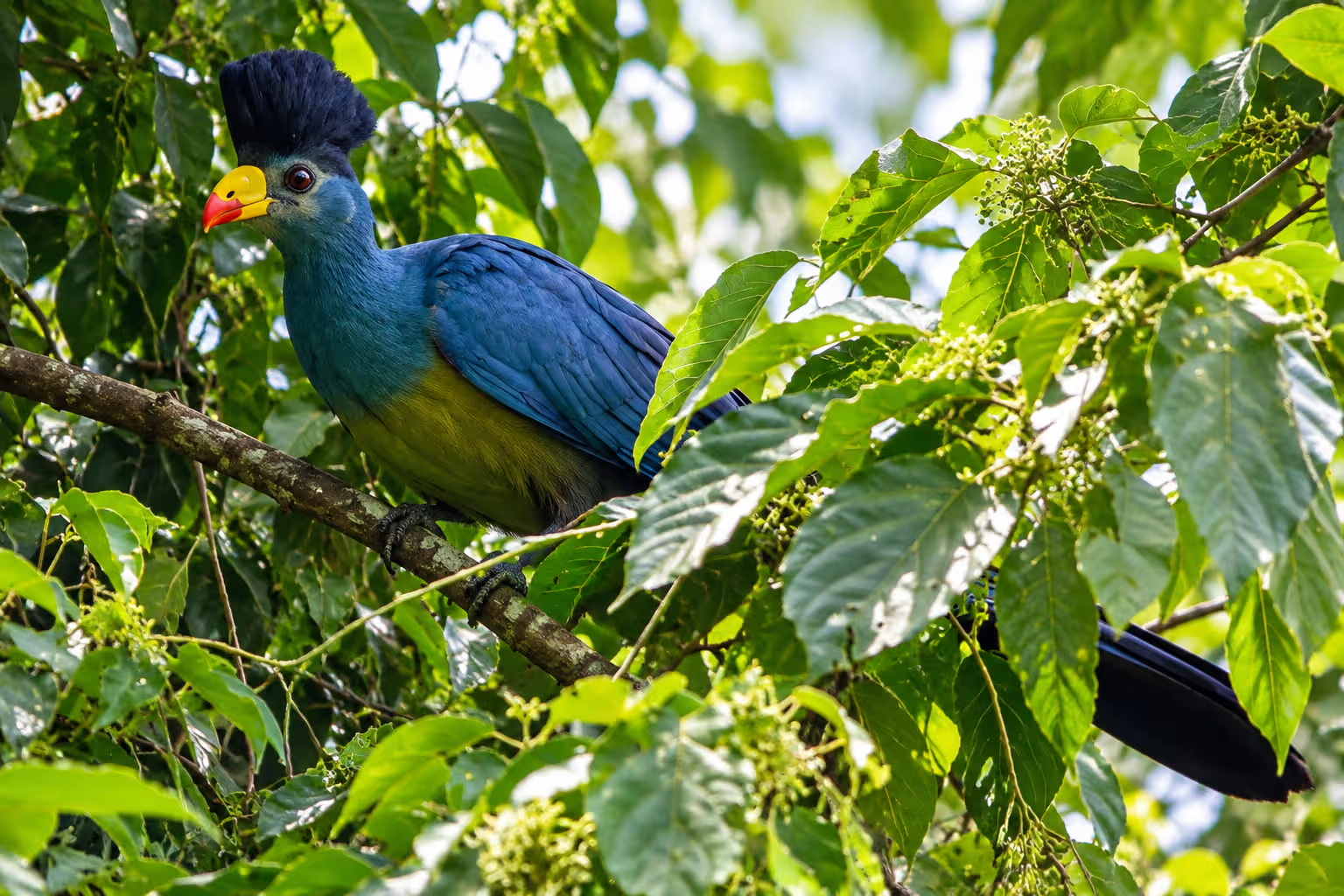
Great Blue Turaco
Other species associated with the sanctuary include the Papyrus Gonolek, White-spotted Flufftail, Yellow-billed Barbet, Western Nicator, Black-crowned Waxbill, kingfishers, hornbills, sunbirds, weavers and a wide range of forest-edge birds. Some are easier to locate by sound before they appear in the vegetation, which is one reason walking with a local guide makes such a difference. Birding here is not about moving quickly through a checklist. Guides regularly stop at productive sections of the trail, listen for calls and scan the papyrus, canopy and lower vegetation before continuing. This slower pace also gives photographers more time to position themselves when birds move into clearer view.
Best Time of Day for Birding
Early morning generally gives the strongest bird activity. Calls are more frequent, temperatures are cooler and many species are feeding before the day becomes warmer. Travellers with a particular interest in birds should therefore consider Bigodi as a morning activity rather than fitting it into the hottest part of the day. Afternoon birding can still be productive, especially for travellers combining Bigodi with chimpanzee tracking earlier in the day. The sanctuary remains active, but the experience may be quieter than during the first hours after sunrise.
Bigodi for Serious Birders
Experienced birders should allow enough time for a slower walk and tell the guide about any particular species they hope to find before setting out. This helps the walk focus more closely on suitable habitats rather than following the trail at a general sightseeing pace. Bigodi also works particularly well as a complement to birding inside Kibale National Park. Kibale offers deeper forest species, while Bigodi adds wetland, papyrus and forest-edge habitat, giving birders a broader range of environments within the same part of western Uganda.
Primates and Other Wildlife in Bigodi
Bigodi Wetland is best known for birds, but the sanctuary also supports a varied population of primates and smaller mammals that make the walk much more than a birding experience. The forest edge around the wetland provides feeding and travel routes for monkeys moving between trees, thicker vegetation and the surrounding Kibale landscape. Red colobus and black-and-white colobus are among the primates visitors may encounter, along with red-tailed monkeys, grey-cheeked mangabeys, L’Hoest’s monkeys, blue monkeys and vervet monkeys. Sightings depend on where the groups are moving that day, so some walks produce several primate encounters while others are quieter. Chimpanzees occasionally move through the wider Bigodi area, but they should be treated as an unexpected sighting rather than the main reason to visit. Travellers specifically hoping to see chimpanzees should book a formal tracking experience in nearby Kibale National Park, then use Bigodi as a complementary walk focused on wetland wildlife, birds and smaller primates.
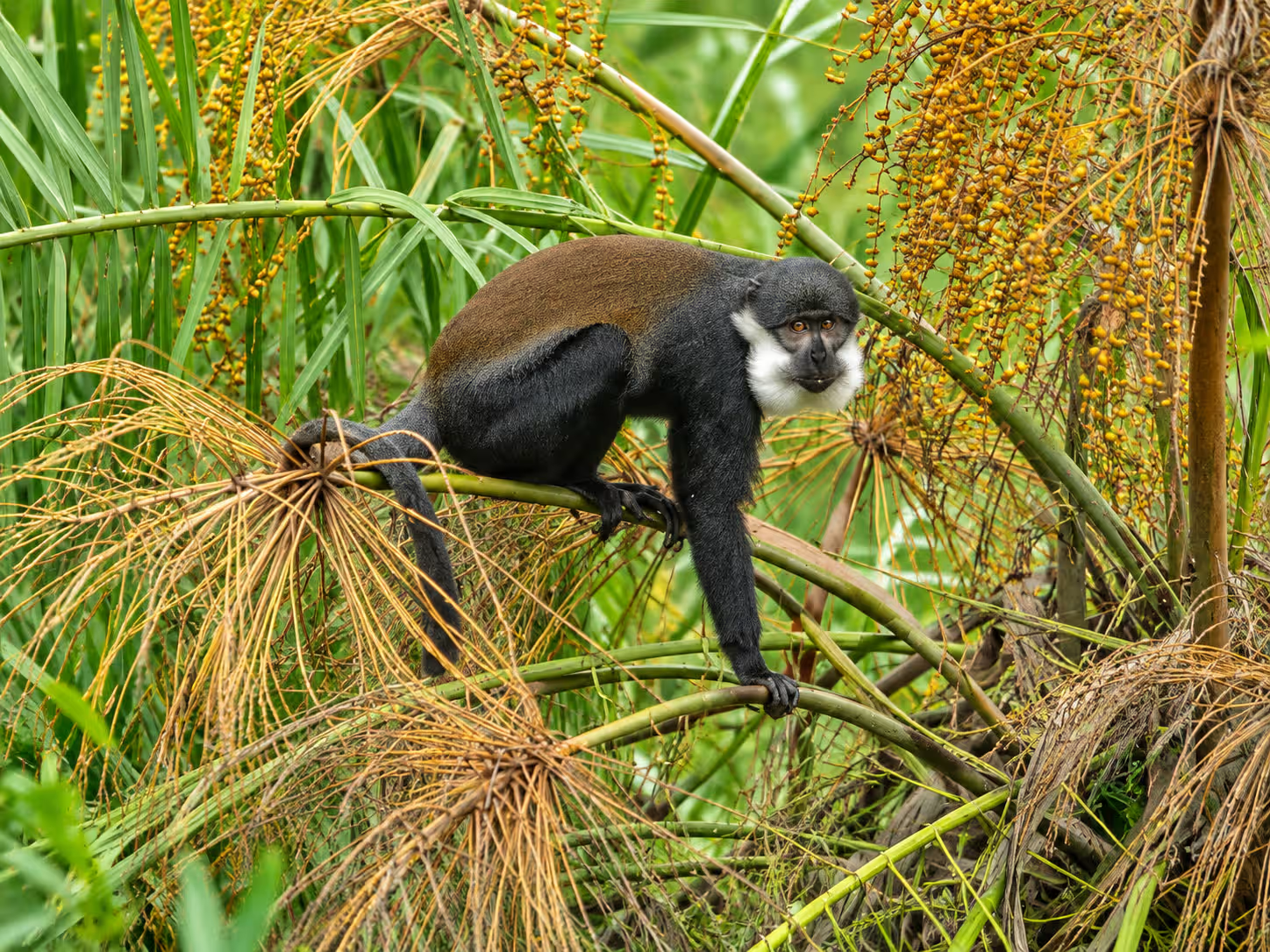
Red colobus monkey
Other Wildlife Along the Wetland
Beyond the monkeys, the sanctuary supports smaller mammals and wetland species that are often easier to notice when the walk is taken slowly. Bushbuck may appear near thicker vegetation, while sitatunga are associated with the wetland habitat but are much more difficult to see because they remain well hidden in dense vegetation. Butterflies, amphibians and reptiles also form part of the experience, particularly during wetter periods when the wetland becomes more active. Guides often point out tracks, feeding signs and movement in the vegetation long before an animal is clearly visible. What makes Bigodi valuable is the variety packed into one relatively short walk. The experience moves constantly between birds in the canopy, monkeys in the forest edge and smaller wildlife closer to the ground, giving the sanctuary a different feel from the more focused chimpanzee tracking experience inside Kibale.
Community Tourism and Conservation at Bigodi
Bigodi Wetland Sanctuary is managed through a community-based tourism model that links conservation directly with local livelihoods. The sanctuary is run by KAFRED, a local organisation that has helped protect the wetland while creating income and employment around guiding, tourism and community projects. This matters because the value of Bigodi goes beyond wildlife sightings. Visitor fees help support the management of the wetland and contribute to local development, giving surrounding communities a direct reason to protect the habitat rather than convert it for other uses. That relationship between tourism and conservation has become one of Bigodi’s strongest features.
Local guides are also central to the experience. Their knowledge of bird calls, primate movement and wetland habitats makes the walk more productive, especially for visitors who would otherwise miss much of what is happening in the vegetation around them. For travellers, this means a visit to Bigodi supports more than a short nature walk. It contributes to a working community conservation model that helps keep the wetland protected while providing practical benefits to the people living around it.
Bigodi Wetland Walk Fees and Booking
Bigodi Wetland can only be explored on a guided walk with a trained sanctuary guide. This is important because much of the wildlife is easier to locate by sound or movement than by simply walking along the trail. The guide also helps identify birds, primates, wetland plants and smaller wildlife while keeping visitors on the established paths and boardwalks. The guided nature walk fee is charged per person
| Visitor Category | Ugandan Shillings | US Dollars |
|---|---|---|
| International Visitors | UGX 50,000 | USD 25 |
| Expatriate Residents | UGX 40,000 | USD 20 |
| Ugandan Visitors | UGX 10,000 | USD 5 |
Booking the Bigodi Wetland Walk
It is worth confirming the walk before arriving, particularly when Bigodi is being fitted around chimpanzee tracking or another activity in Kibale National Park. The booking normally requires your intended date, preferred walking time, number of visitors and nationality so the correct visitor rate can be applied. Walks begin from the Bigodi visitor area and are accompanied by a local guide. You do not need a chimpanzee permit or Kibale National Park permit to take part in the Bigodi Wetland walk because the sanctuary operates as a separate community-managed attraction. Allow roughly 3 hours in the itinerary rather than scheduling another activity immediately afterwards. Birders and photographers may take longer because they tend to spend more time waiting at productive sections of the wetland. Rates can change, so the walk fee should be reconfirmed when the safari is booked
Best Time to Visit Bigodi Wetland
Drier Months
June to August and December to February usually offer the most comfortable walking conditions. Rain can still fall because Bigodi lies within a humid tropical environment, but prolonged wet conditions are less common. The drier months are useful for travellers carrying cameras or binoculars because movement along the trail is easier and there is less need to concentrate on slippery ground. Birding remains productive, although some species may move more widely between feeding areas depending on food availability.
Wetter Months
Rainfall is generally heavier from March to May and again from September to November. During these periods, parts of the trail can become muddy, and vegetation grows thicker around the wetland. The wetter months should not be dismissed, especially by birders. Increased vegetation, flowering plants, insects and wetter habitat can create very active conditions around the sanctuary. The landscape is also particularly green, and some birds become more vocal or easier to locate around productive feeding areas. The main difference is practical. Waterproof walking shoes, a lightweight rain jacket and protection for cameras or binoculars become more important.
Best Time of Day
Early morning remains the strongest choice for visitors whose main interest is bird watching. Cooler temperatures and higher bird activity make it easier to hear calls and locate species before the day becomes warmer. Afternoon walks are particularly useful for travellers who spend the morning chimpanzee tracking in Kibale National Park. Bigodi can then be added without requiring another full travel day, giving you two very different wildlife experiences within the same area. Because rain can develop quickly around Kibale, it is sensible to prepare for changing conditions regardless of the month you visit.
How to Get to Bigodi Wetland
Bigodi Wetland Sanctuary is in western Uganda beside Kibale National Park, with Fort Portal serving as the main gateway. Most visitors do not travel to Bigodi as a standalone destination. It is normally included within a Kibale stay, particularly alongside chimpanzee tracking at Kanyanchu. Its position works particularly well on western Uganda routes because you can continue south towards Queen Elizabeth National Park and Bwindi rather than returning to Kampala after the wetland walk.
From Fort Portal
Bigodi lies approximately 37 to 40 km from Fort Portal, and the drive normally takes around 45 to 50 minutes in good conditions. The road heads south towards Kibale National Park through the greener highland landscape around Fort Portal before reaching the Bigodi area. Fort Portal is therefore a practical base for travellers who want to combine Bigodi with crater lakes, other activities around the city or a wider exploration of the Kibale region. If your main reason for staying in the area is chimpanzee tracking, however, accommodation closer to Kanyanchu or Bigodi is usually more convenient because it avoids repeating the Fort Portal transfer before early activities.
From Kanyanchu and Kibale National Park
Bigodi is particularly easy to reach from Kanyanchu, the main chimpanzee trekking area in Kibale National Park. The sanctuary is roughly 4 km beyond the Kanyanchu trailhead, which is only about a five-minute drive under normal conditions. This short distance is what makes the two activities so easy to combine. Travellers can complete chimpanzee tracking in the morning, return for lunch or a short break, then continue to Bigodi for an afternoon wetland walk. The reverse also works when your chimpanzee permit is scheduled for an afternoon session, although birders will generally benefit more from visiting Bigodi early in the morning.
From Kampala or Entebbe
Travelling from Kampala or Entebbe to the Kibale region is normally treated as a full transfer rather than a quick excursion. From Kampala, the journey towards Kibale covers roughly 330 km and requires at least about 6 hours before allowing for stops, traffic and the final transfer to your lodge or Bigodi. For that reason, Bigodi is better included within a multi-day western Uganda safari than attempted as a day trip from Kampala. A practical route might begin with Kibale and Bigodi, continue south to Queen Elizabeth National Park, and then travel farther into southwestern Uganda for Bwindi or Mgahinga. This keeps the journey moving in one direction instead of repeatedly returning to Kampala. Travellers using domestic flights can shorten part of the western Uganda journey by flying to the wider Kasese region and completing the remaining distance by road, but there is no scheduled airstrip at Bigodi itself