
This 11-day Rwenzori hiking safari takes you deep into Uganda’s legendary Mountains of the Moon, following the Central Circuit to Margherita Peak at 5,109 metres (16,763 feet). Margherita is the highest point in Uganda and the third-highest summit in Africa, standing within Rwenzori Mountains National Park. You’ll spend 7 days on the mountain, starting and finishing at Nyakalengija. The climb takes you through montane forest, bamboo, giant heather, high-altitude bogs and the Afro-alpine valleys of the Rwenzori before reaching the rocky and glacial slopes around Mount Stanley. Nights on the mountain follow the classic Central Circuit, with stops at Nyabitaba, John Matte, Bujuku, Elena, Kitandara and Guy Yeoman. The mountain becomes tougher as you climb higher. Expect steep and wet trails, muddy sections and cold conditions, with the terrain becoming more rugged as you approach the summit. The final push to Margherita Peak involves glacier travel and requires the appropriate technical equipment. Good fitness and proper preparation are important for this trek. Warm, waterproof mountain clothing is essential, and you should be ready for changing weather and cold conditions at altitude. The final summit attempt depends on the weather, conditions on the mountain and the lead guide’s safety decision on the day.
Safari Highlights
- 11-day Uganda Rwenzori hiking safari with arrival and departure support
- 7-day Central Circuit trek beginning and ending at Nyakalengija
- Summit attempt on Margherita Peak at 5,109 metres
- Trek through montane forest, bamboo, giant heather and Afro-alpine moorland
- Cross the famous Bigo Bog and walk past giant lobelias and groundsels
- Views of Mount Stanley, Mount Speke and Mount Baker
- Lake Bujuku beneath the central Rwenzori peaks
- Overnight at Elena Camp before the summit attempt
- Pre-dawn Margherita Peak summit climb
- Glacier, rock and high-altitude terrain on Mount Stanley
- Kitandara Lakes and high mountain scenery
- Crossing of Freshfield Pass during the descent
- Mountain huts throughout the Central Circuit
- Mountain guides, porters and support crew
- Suitable for fit trekkers comfortable with long, wet and demanding mountain days
Detailed Itinerary
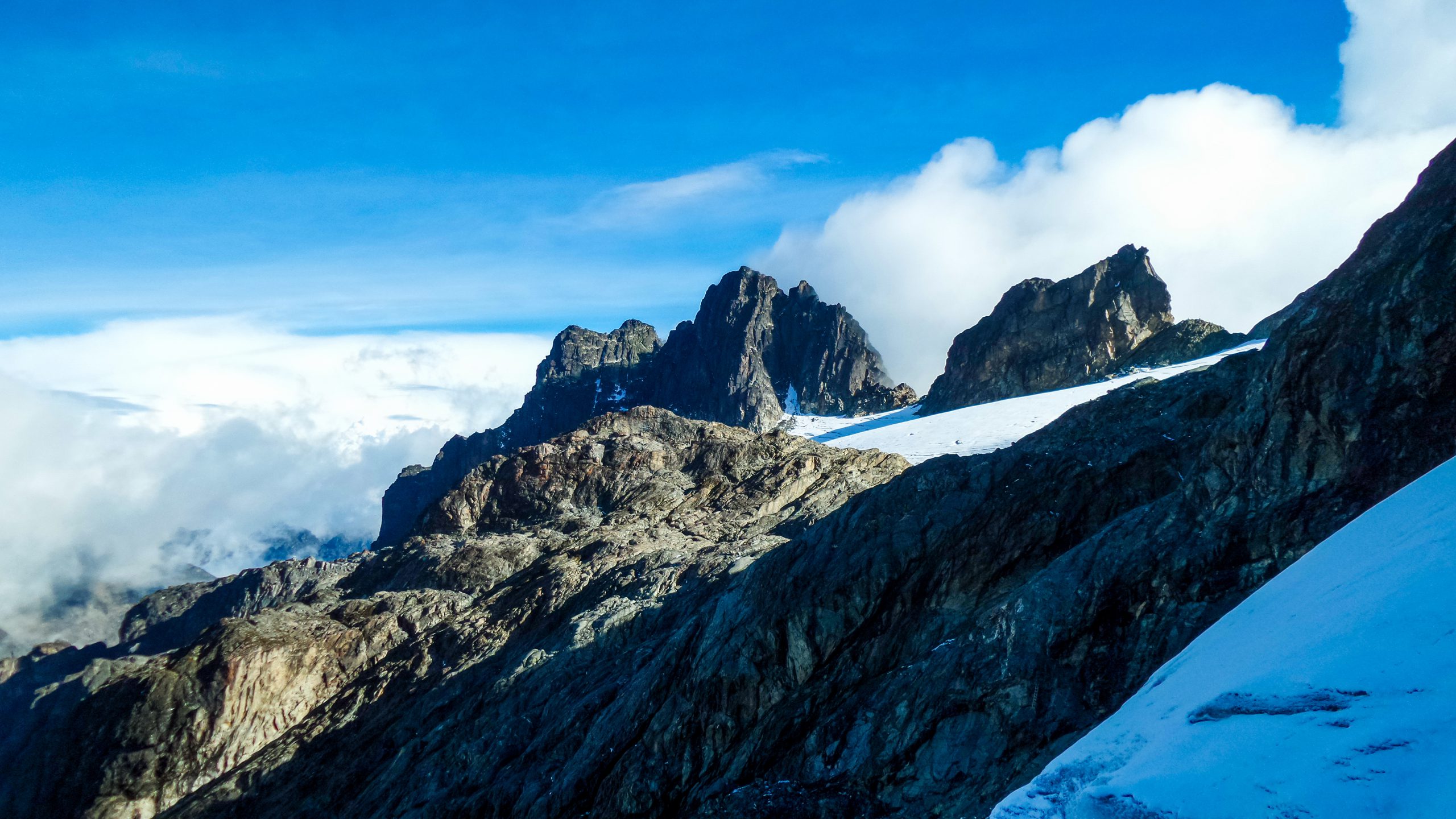
Rwenzori Mountains
Day 1, Arrival in Entebbe
Arrive at Entebbe International Airport, where your driver will meet you and take you to your hotel. Keep the first evening easy. After the flight, you’ll have time to settle in, rest and organise everything you need for the Rwenzori trek ahead. Take some time to check your trekking gear and make sure you have everything packed and ready, including waterproof clothing, warm layers, gloves, sturdy trekking boots, a headlamp, personal medication and the other items on your final trekking list.
Overnight
Entebbe
Day 2, Transfer to Kasese and Rwenzori Trek Preparation
After breakfast, leave Entebbe or Kampala and begin the drive west towards Kasese and the Rwenzori Mountains. The journey takes about 7 to 9 hours by road, depending on your starting point, traffic and stops along the way. The route takes you through western Uganda towards the foothills of the Rwenzori range. Arrive in the Kasese area later in the afternoon and settle in at your lodge. This is a good time to meet the trekking team, go through the plans for the following morning and make sure everything is ready for the mountain. Check your trekking equipment, confirm your porter arrangements and separate the gear you will carry into the mountains from the luggage that can remain at the lodge. If anything is missing, this is the best time to sort it out before you head higher into the Rwenzori. Have an early dinner and get a good night’s rest ahead of the trek.
Overnight: Sandton Hotel Kasese
Day 3, Nyakalengija to Nyabitaba Hut
After breakfast, drive to Nyakalengija at about 1,600 metres, where you will register, have a short briefing and meet your mountain guides and porters. From here, the trek starts through the cultivated foothills before entering Rwenzori Mountains National Park. The trail follows the Mubuku Valley and gradually takes you into the montane forest. The climb becomes steeper as you cross the Mahoma River and make your way through the forest towards Nyabitaba Hut at about 2,651 metres. Allow around 5 to 7 hours for the walk, depending on the trail conditions and the pace of the group. This lower section of the mountain is also where you have some of your best chances of seeing forest wildlife. Black-and-white colobus monkeys, blue monkeys and the Rwenzori turaco can all be encountered along the trail, although wildlife sightings are never guaranteed.
Mountain overnight
Nyabitaba Hut
Day 4, Nyabitaba Hut to John Matte Hut
After breakfast, leave Nyabitaba and descend briefly towards the meeting point of the Mubuku and Bujuku rivers before crossing the Kurt Schafer Bridge. From the bridge, the trail begins to climb more seriously. You will pass through bamboo forest and gradually enter wetter, moss-covered terrain. Mud becomes part of the journey here, so waterproof boots, gaiters and a steady pace are important. As you climb higher, the bamboo gives way to giant heather and more open mountain vegetation. When the weather is clear, you can begin to catch your first good views towards Mount Stanley and Mount Speke. Continue to John Matte Hut, sitting at roughly 3,400 to 3,500 metres. The day’s trek usually takes about 6 to 7 hours.
Mountain overnight
John Matte Hut
Day 5, John Matte Hut to Bujuku Hut
After breakfast, cross the Bujuku River and continue into one of the most memorable sections of the Central Circuit. The trail takes you through the Lower Bigo Bog, where the ground becomes wet and progress can be slow. Higher up, you reach the Upper Bigo Bog, surrounded by giant lobelias, groundsels and the unusual high-altitude vegetation that gives the Rwenzori its character. Some sections have boardwalks, but expect plenty of wet ground and mud along the way. From the bogs, continue towards Lake Bujuku, sitting between Mount Stanley, Mount Speke and Mount Baker. Bujuku Hut is at about 3,962 metres and is normally reached after around 5 to 6 hours of trekking. You are now close to 4,000 metres, so this is where a steady pace becomes particularly important. Take your time, drink plenty of water and eat well as your body adjusts to the altitude.
Mountain overnight
Bujuku Hut
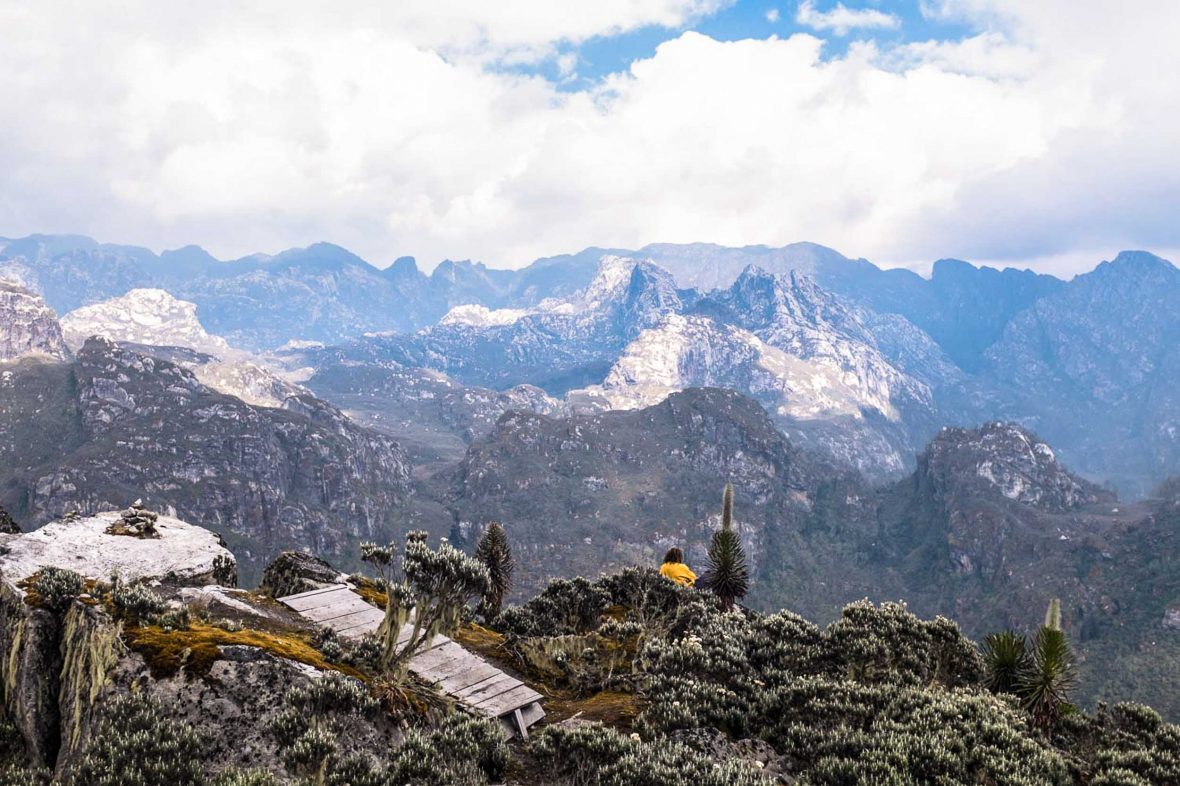 Day 6, Bujuku Hut to Elena Camp
Leave Bujuku after breakfast and climb higher into the Rwenzori, where the vegetation becomes shorter and more exposed. The trail rises towards Scott Elliot Pass at about 4,372 metres. The landscape becomes rockier as you gain height, with impressive views back towards Bujuku Valley whenever the clouds open up. From the pass, branch towards Elena Camp, high on Mount Stanley at around 4,500 metres. This is your final camp before the summit attempt on Margherita Peak. The day’s distance is shorter than some of the earlier stages, but the altitude makes the climb much more demanding. Once you reach camp, there is time to eat, organise your summit gear and get some rest. Your guides will also go over the next morning’s climb and prepare you for the early start.
Mountain overnight
Elena Camp
Day 7, Margherita Peak Summit and Descent to Kitandara
Summit day starts in the early hours, usually while it is still dark. Leave Elena Camp with your headlamp and technical climbing equipment and begin the ascent towards Margherita Peak. The route takes you into the rocky and glacial terrain of Mount Stanley, where the conditions underfoot and the exact route can change with the weather and mountain conditions. This is the most technical part of the trek. Depending on the conditions, you may use ropes and crampons and negotiate steep rock, exposed sections and glacier terrain. Your guides will lead the way and determine the safest route as you climb. If the conditions are right and you are feeling strong, continue to the highest point in Uganda and the third-highest summit in Africa.
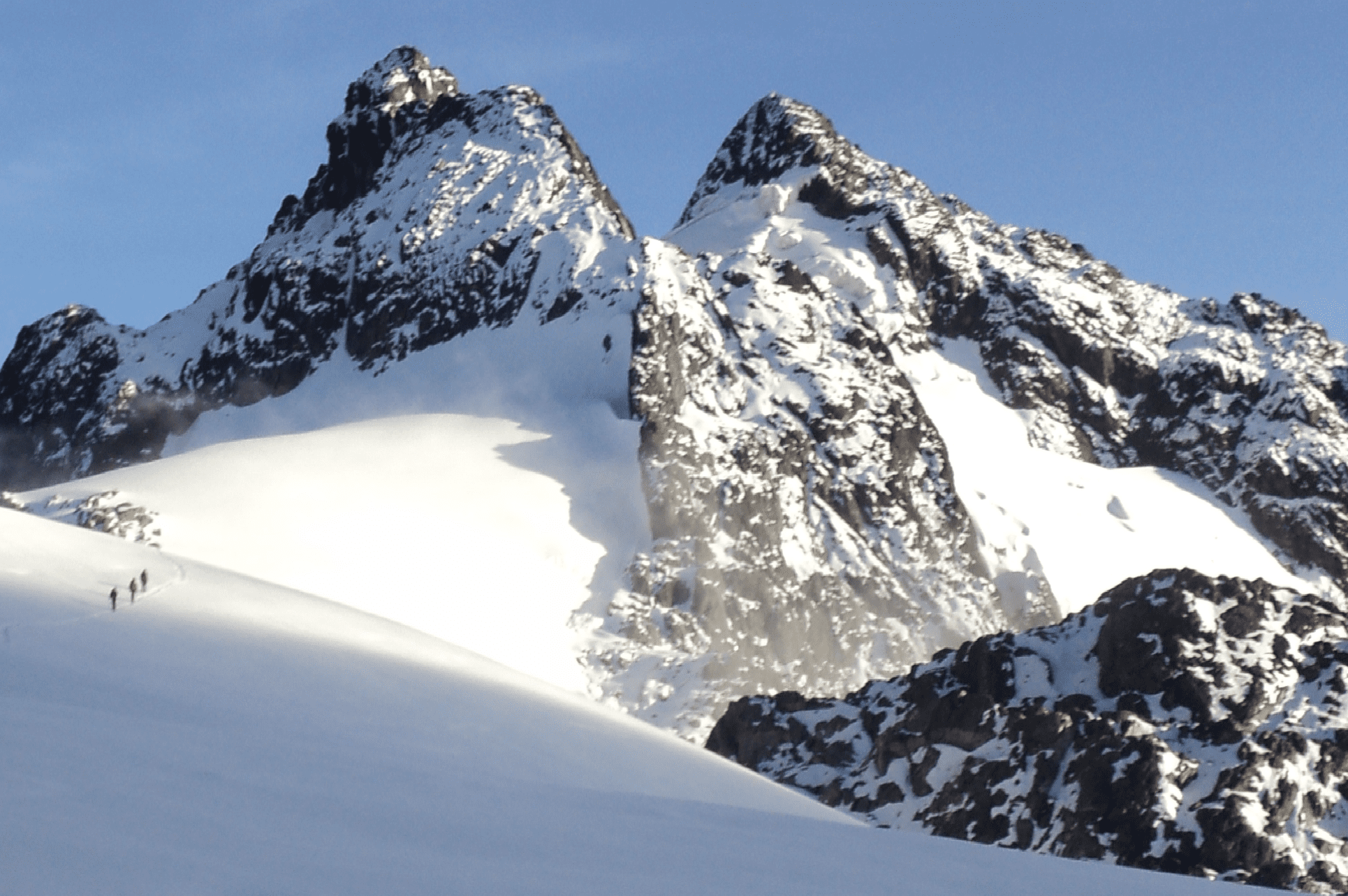
Margherita Peak at 5,109 metres
Take some time at the summit to enjoy the achievement and the views, but do not linger longer than conditions safely allow. The descent is a serious part of the day too. Return to Elena Camp for a short rest and something to eat before continuing down towards Scott Elliot Pass and the Kitandara Lakes. As you lose altitude, the vegetation gradually begins to return. Reach Kitandara Hut at about 4,023 metres after what can be a very long 10 to 14-hour day. The summit is always an attempt rather than a guarantee. Weather, altitude, glacier conditions or the guide’s assessment may mean turning back before reaching the peak. On the mountain, safety comes first.
Mountain overnight
Kitandara Hut
Day 8, Kitandara to Guy Yeoman Hut
After the long summit day, you might expect today’s trek to be an easy descent, but the Rwenzori still has plenty to demand from your legs. From Kitandara, climb towards Freshfield Pass at about 4,282 metres. On a clear day, this high section opens up wide views across the Rwenzori and towards the Democratic Republic of Congo. Once over the pass, the trail begins its long descent through moss-covered mountain terrain. The vegetation gradually becomes thicker as you lose altitude, and the trail continues towards Guy Yeoman Hut, passing near the historic Bujongolo rock shelter along the way. Allow around 6 to 7 hours for the day’s trek. By the evening you will have lost considerable altitude, but tired legs and slippery sections of trail can still make the final descent demanding.
Mountain overnight
Guy Yeoman Hut
Day 9, Guy Yeoman to Nyakalengija and Kasese
After breakfast, begin the final descent from the mountains. The trail takes you down through the Kichuchu area, bamboo forest and several river crossings before reconnecting with the lower section of the Central Circuit. Continue through the montane forest towards Nyakalengija, where you complete the Central Circuit at the same trailhead where the trek began. The final descent from Guy Yeoman to Nyakalengija takes about 7 to 8 hours. Once you reach Nyakalengija, meet your driver and transfer to your hotel in Kasese or around the Rwenzori foothills. After several days in the mountains, this is a good evening to relax, enjoy a proper meal and settle into a comfortable bed.
Overnight: Sandton Hotel Kasese
Day 10, Kasese to Kampala or Entebbe
After breakfast, leave Kasese and begin the drive back towards Kampala or Entebbe. After several days in the Rwenzori Mountains, this gives you a full day to make the journey back without having to rush from the mountains straight to the airport. Stop along the way for lunch and refreshments before continuing to Kampala or Entebbe. If you are flying out of Uganda the following day, we recommend spending the night in Entebbe. This gives you a more relaxed finish to the trip and leaves you close to the airport for your international flight.
Overnight
Entebbe or Kampala
Day 11, Departure from Entebbe
Enjoy breakfast at your hotel and take some time to relax before your flight. When it is time to leave, your driver will pick you up and take you to Entebbe International Airport for your departure. This brings your 11-day Rwenzori hiking safari to an end. If you are continuing with another safari or travelling to another part of Uganda, we can arrange your onward transfer from Entebbe or Kampala.
Inclusions and Exclusions
Included
- Airport pickup and departure transfer
- Private road transfers between Entebbe or Kampala and the Rwenzori region
- Accommodation for 10 nights as stated in the itinerary
- Mountain hut accommodation during the Central Circuit trek
- Meals as stated in the confirmed itinerary
- Park and trekking fees
- Professional Rwenzori mountain guides
- Porter services within the agreed baggage allowance
- Mountain cooking and support team
- Central Circuit trekking arrangements
- Drinking water arrangements while on the mountain
- English-speaking driver guide for road transfers
Excluded
- International flights
- Uganda visa fees
- Travel insurance
- High-altitude and emergency evacuation insurance
- Personal hiking clothing and footwear
- Specialist climbing equipment hire
- Additional porter weight above the agreed allowance
- Alcoholic and premium drinks
- Tips for mountain guides, porters, cooks and driver guides
- Laundry and personal expenses
- Extra accommodation before or after the itinerary
- Activities not stated in the confirmed itinerary