
Mabira Forest Reserve is one of the easiest places to add a genuine tropical forest experience to a journey through central and eastern Uganda. Covering about 306 sq km, the reserve lies 54 km from Kampala and 26 km from Jinja, making it practical for a half-day stop, a full-day forest visit or an overnight stay between the two cities. Visitors come for guided nature walks, forest birding, Uganda mangabey sightings, mountain biking and the canopy zipline near Griffin Falls. More than 68 km of forest trails provide access to a landscape supporting 315 recorded bird species, 218 butterfly species and 23 small mammal species. What matters when planning Mabira is choosing the right activity and starting point. A short walk from the Najjembe side is a very different outing from travelling to Griffin Falls for a longer forest walk or ziplining. This page explains the main experiences, access options, best visiting conditions and how Mabira can fit into a wider Uganda itinerary.
Mabira Forest Reserve Quick Facts
| Location | Central Uganda, along the Kampala to Jinja route |
|---|---|
| Forest Size | About 306 sq km |
| Distance from Kampala | About 54 km |
| Forest Trails | More than 68 km of walking trails |
| Bird Species | About 315 recorded species |
| Main Activities | Nature walks, birdwatching, mangabey tracking, mountain biking and ziplining |
Things to Do in Mabira Forest Reserve
Mabira Forest is not a place where you simply stop for a photograph and leave. The reserve has a good mix of activities for travellers who want to spend a few hours in the forest or build a full day around it. The experience changes depending on how active you want to be. You can follow shaded forest trails with a guide, spend the morning looking for birds, track Uganda mangabeys, cycle through selected routes, or head towards Griffin Falls for the canopy zipline
Nature Walks and Forest Trails in Mabira Forest
Nature walks are one of the best ways to experience Mabira Forest because they take you away from the main road and into quieter sections beneath the canopy. The reserve has more than 68 km of walking trails, with routes passing through mature forest, smaller clearings and areas used by birds, monkeys and butterflies. Walks are usually guided, which helps visitors spot wildlife that would otherwise be easy to miss and also gives useful context about the trees, forest ecology and local species.
The length and pace of the walk can be adjusted to the time available. Shorter walks work well for travellers stopping between Kampala and Jinja, while longer routes suit birders and visitors who want more time inside the forest. Good walking shoes are important, especially after rain when some sections can become slippery or muddy. Early morning is usually a good time for cooler conditions and more bird activity.
Mangabey Tracking in Mabira Forest
Mangabey tracking gives visitors a more focused wildlife experience than a general forest walk. Mabira is one of the places in Uganda where travellers can look for the Uganda mangabey, a primate associated with the country’s central forest belt. Tracking is done on foot with a guide, following forest trails and listening for movement and calls in the canopy before approaching areas where the monkeys are active.
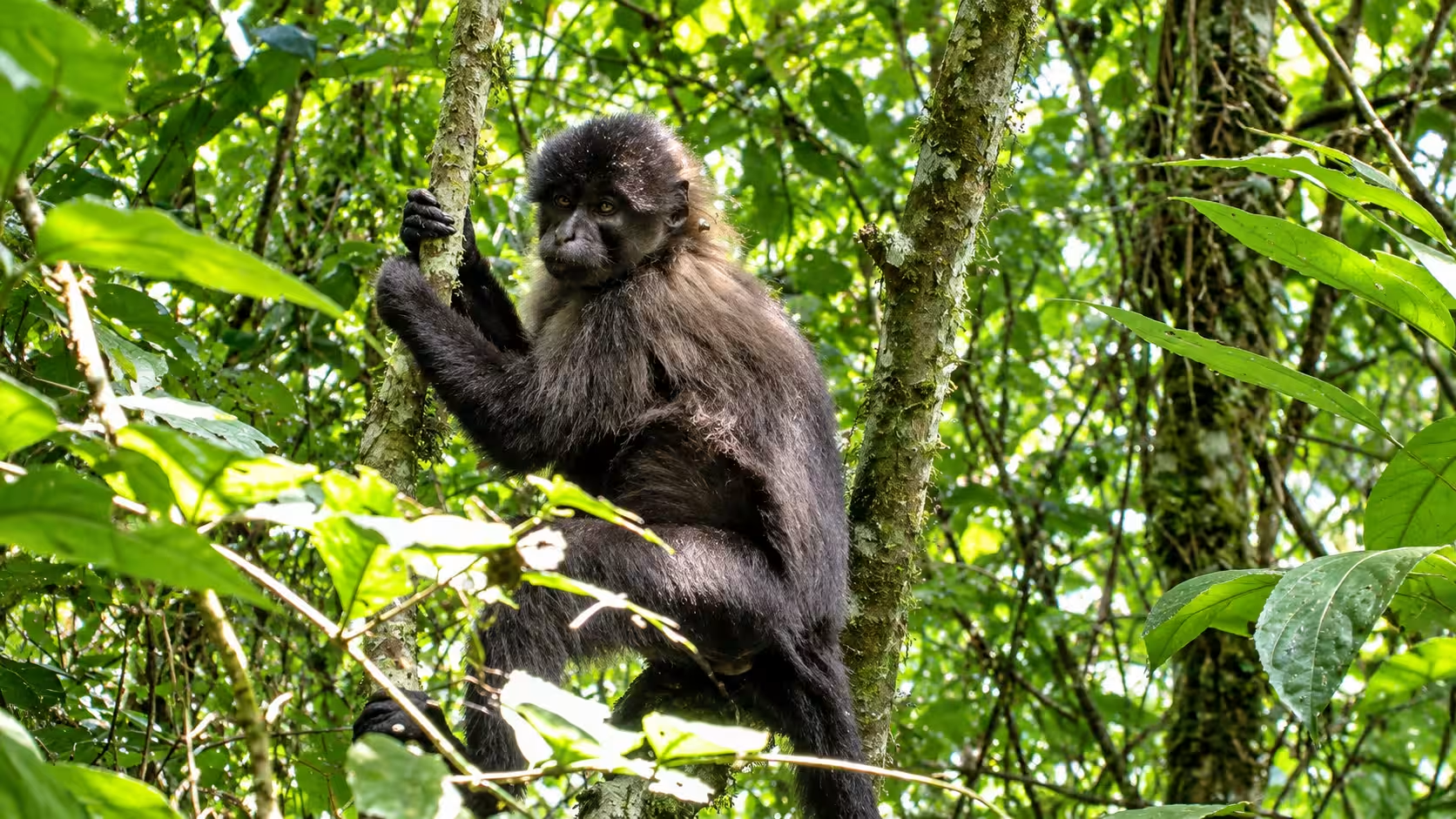
Uganda mangabey
The experience also gives visitors time to notice other parts of the forest that are easy to overlook when walking quickly. Red-tailed monkeys, forest birds, butterflies and smaller mammals may be encountered along the way, although sightings always depend on conditions in the forest. Mangabey tracking works particularly well for travellers interested in primates but who want a shorter forest activity that can fit comfortably into a Mabira day visit or an overnight stop.
Birdwatching in Mabira Forest
Mabira is one of the stronger forest birding areas within easy reach of Kampala and Jinja, with about 315 recorded bird species. The mix includes forest specialists, canopy species and birds that favour clearings and forest edges, so the experience changes as you move through different sections of the reserve. Early morning is usually the most rewarding time, when bird activity is higher and the forest is cooler and quieter. For keen birders, a dedicated guide is worthwhile because many species are easier to locate by call than by sight. Travellers with only a few hours can still combine birding with a general forest walk, while serious birders benefit from a slower pace and more time on the trails. Binoculars are essential, and a light rain jacket is useful because conditions can change quickly beneath the forest canopy.
Ziplining in Mabira Forest
Ziplining adds a more active side to a Mabira visit and is centred around the Griffin Falls area of the forest. The canopy course carries participants between elevated platforms above the forest, with views across the treetops and sections of the River Musamya below. Reaching the activity area also involves moving through the forest, so the experience combines the zipline itself with time beneath the canopy rather than feeling like a separate roadside attraction. The activity is supervised by trained instructors, with a safety briefing before participants enter the course. It works particularly well for travellers looking to add something more energetic to a Mabira day trip and can be combined with a forest walk or a visit to Griffin Falls. Advance confirmation is recommended, especially when Mabira is being fitted into a fixed Kampala to Jinja itinerary.
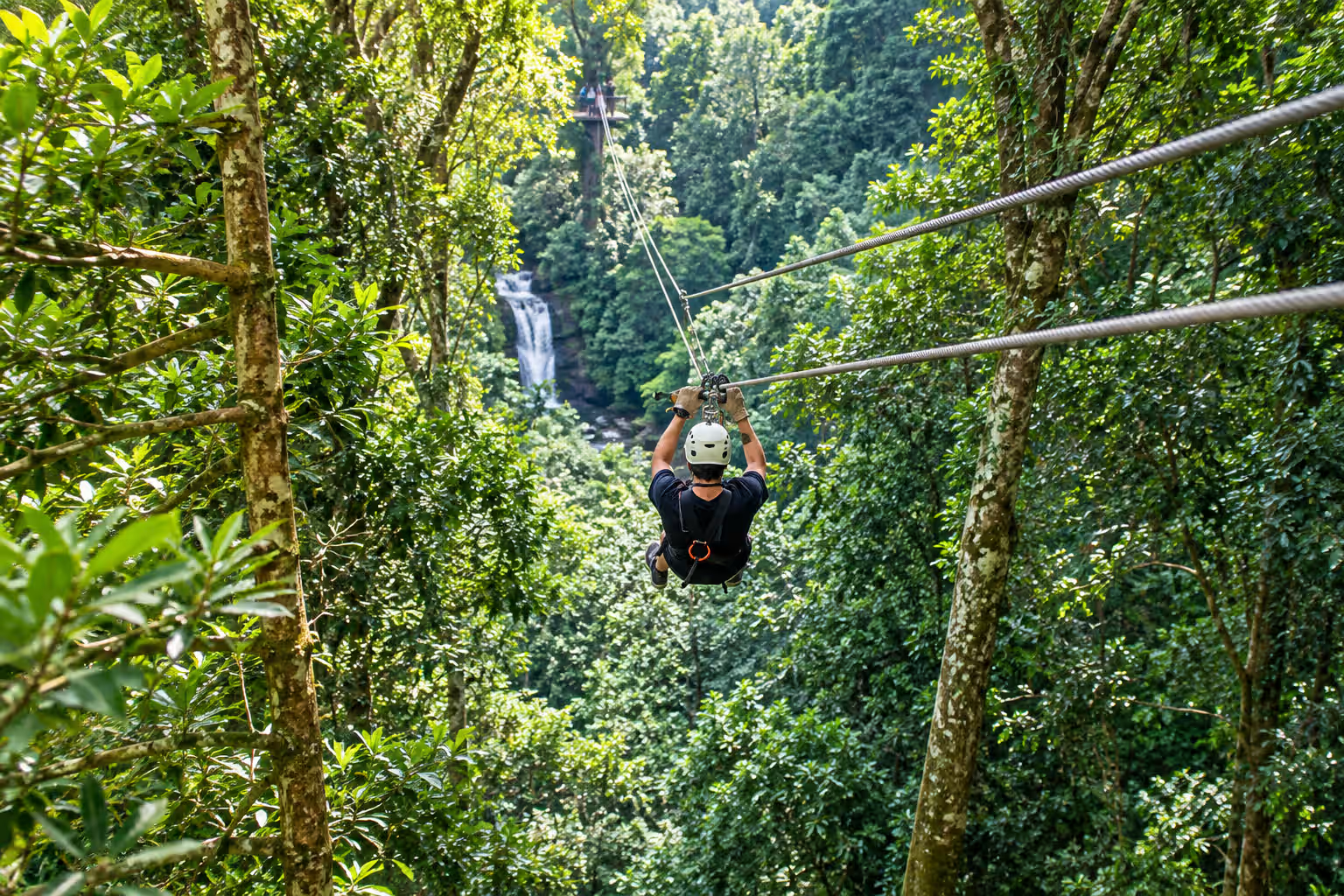
Ziplining in Mabira Forest
Mountain Biking in Mabira Forest
Mountain biking is a good option for travellers who want to cover more ground than they would on foot while still spending time inside the forest. Routes pass through sections of Mabira where riders can move between shaded forest tracks, open stretches and quieter areas away from the main road, with opportunities to stop for birds, monkeys and viewpoints along the way. The activity suits reasonably active travellers and works best when trail conditions are firm. After heavy rain, some sections can become muddy and more demanding, so the experience depends on both the route and recent weather. Mountain biking can be combined with a shorter forest walk or another Mabira activity when building a full-day visit.
Butterflies and Griffin Falls
Mabira Forest supports about 218 butterfly species, adding colour to forest walks, especially along brighter trail edges, clearings and damp sections where butterflies are often more active. Butterfly watching is best treated as part of the wider forest experience rather than a separate full-day activity, and it combines naturally with nature walks, birding and photography. Griffin Falls provides another worthwhile stop on the forest’s western side. From Griffin Falls Camp, the waterfall is reached by roughly a 30-minute walk through the forest, giving visitors a short hike before reaching the falls. The surrounding trail system can also be extended for a longer walk towards Namusa Hill, making this area useful for travellers who want to combine scenery with time on foot in the forest.
How to Get to Mabira Forest
Mabira Forest is reached from the Kampala to Jinja highway. The main Mabira eco-tourism site is about 54 km from Kampala and approximately 26 km from Jinja. From Kampala, allow roughly 1 to 1.5 hours in lighter traffic, but more time is sensible when leaving the city during busy periods. From Jinja, the drive is much shorter, generally around 30 to 40 minutes. The main forest tourism area is near Najjembe, where the access road leaves the highway. The eco-tourism site itself is only about 500 metres from the main road along a short dirt track, and it is accessible throughout the year. Travellers heading specifically for Griffin Falls, ziplining or activities based at Griffin Falls Camp should not use the main Najjembe entrance as their final destination. Griffin Falls Camp is about 10 km off the Kampala to Jinja highway, reached from the Lugazi side towards Wasswa village. Public transport can get you as far as Najjembe or Lugazi, but a private vehicle is much more convenient if you are combining Mabira with Jinja or continuing elsewhere the same day
Combining Mabira Forest with Jinja Activities
Mabira Forest fits naturally into a Jinja itinerary because the reserve is only about 26 km from Jinja, making it practical to combine a forest activity with time on the Nile without adding a major detour. A common approach is to leave Kampala in the morning, spend 2 to 4 hours in Mabira for a nature walk, birding, mangabey tracking or ziplining, then continue to Jinja for the afternoon. From Mabira, allow roughly 30 to 40 minutes to reach Jinja in normal traffic. Once in Jinja, the strongest combinations are a Source of the Nile boat trip, white-water rafting, kayaking, quad biking, horse riding or a sunset boat cruise. Travellers wanting a lighter day can pair Mabira with the Source of the Nile and an afternoon around Jinja, while those looking for a more active itinerary can combine a shorter forest experience with rafting or quad biking. If you want to include both a longer Mabira activity and a full rafting programme, it is better to split them across two days rather than forcing both into one schedule
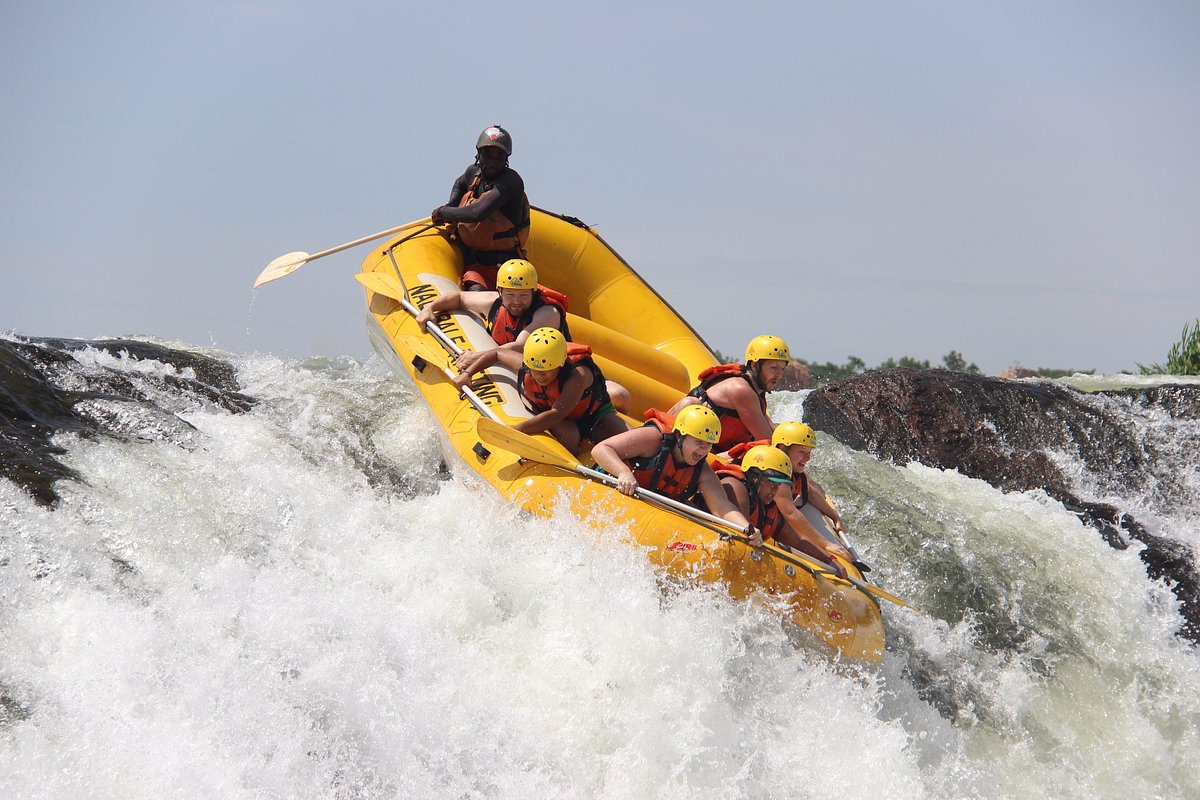
white-water rafting
Where to Stay in Mabira Forest
Travellers who want to stay inside or immediately beside the forest have a small but useful range of options. The RainForest Lodge is the more comfortable choice, with 12 individual forest cabins, private viewing decks and facilities including a swimming pool. Its location inside Mabira makes it practical for travellers who want to wake up in the forest and combine an overnight stay with nature walks, birding or other activities. For a simpler and more activity-focused stay, Griffin Falls Camp offers bandas, self-contained rooms and camping close to the Griffin Falls trail system and zipline area. The camp lies about 10 km off the Kampala to Jinja highway, so it works particularly well for travellers planning ziplining, longer walks or a visit to Griffin Falls. Basic NFA accommodation and camping facilities are also available around the main forest tourism area for visitors who prefer a straightforward overnight stop.