
Samburu National Reserve offers a northern Kenya safari shaped by dry-country wildlife, elephant encounters and the Ewaso Nyiro River. Across its 165 km², thorn scrub and open plains contrast with doum palms and riverine woodland. Game drives take you between these habitats, searching for animals adapted to a landscape quite different from the Masai Mara’s grasslands. The Samburu Special Five are a major draw: Grevy’s zebra, reticulated giraffe, Beisa oryx, Somali ostrich and gerenuk. Look beyond the names to the behaviour, from giraffes browsing thorn trees to long-necked gerenuk reaching for leaves. Elephants and predators add to the experience, making Samburu worth considering for its own wildlife rather than simply as another stop on a Kenya circuit. Samburu lies on the river’s northern bank, with Buffalo Springs National Reserve across the water. The two share a wider wildlife landscape but remain separate reserves, an important distinction when selecting your lodge and planning game drives.
Samburu National Reserve at a Glance
| Planning detail | What to know |
|---|---|
| Correct name | Samburu National Reserve |
| Location | Samburu County in northern Kenya, near Archer’s Post |
| Reserve area | Approximately 165 km² |
| Main river | Ewaso Nyiro, along the reserve’s southern boundary |
| Signature wildlife | Grevy’s zebra, reticulated giraffe, Beisa oryx, gerenuk and Somali ostrich, collectively called the Samburu Special Five |
| Other wildlife highlights | Elephants, lions, leopards and cheetahs, with sightings dependent on conditions |
| Main safari activity | Vehicle-based game drives through dry-country habitats and the river corridor |
| Main road entrance | Archer’s Gate, near Archer’s Post |
| Neighbouring reserve | Buffalo Springs, across the river to the south |
| Suggested stay | Allow two nights for a focused visit, or three for more unhurried game drives |
| Accommodation check | Confirm the property’s actual reserve or conservancy, transfer arrangements and applicable entry fees |
Where Is Samburu National Reserve?
Samburu National Reserve lies in northern Kenya, near Archer’s Post in Samburu County. The Ewaso Nyiro River forms its southern boundary, with Buffalo Springs National Reserve across the water in Isiolo County. These are separate reserves within a wider wildlife landscape, rather than two sections of the same park. When selecting accommodation, check the property’s exact location. A camp marketed as “Samburu” can be inside Samburu National Reserve, in Buffalo Springs or in a neighbouring conservancy. That location affects your transfer to game-viewing areas and the entry fees included in your itinerary. For example, Ashnil Samburu Camp is in Buffalo Springs National Reserve.
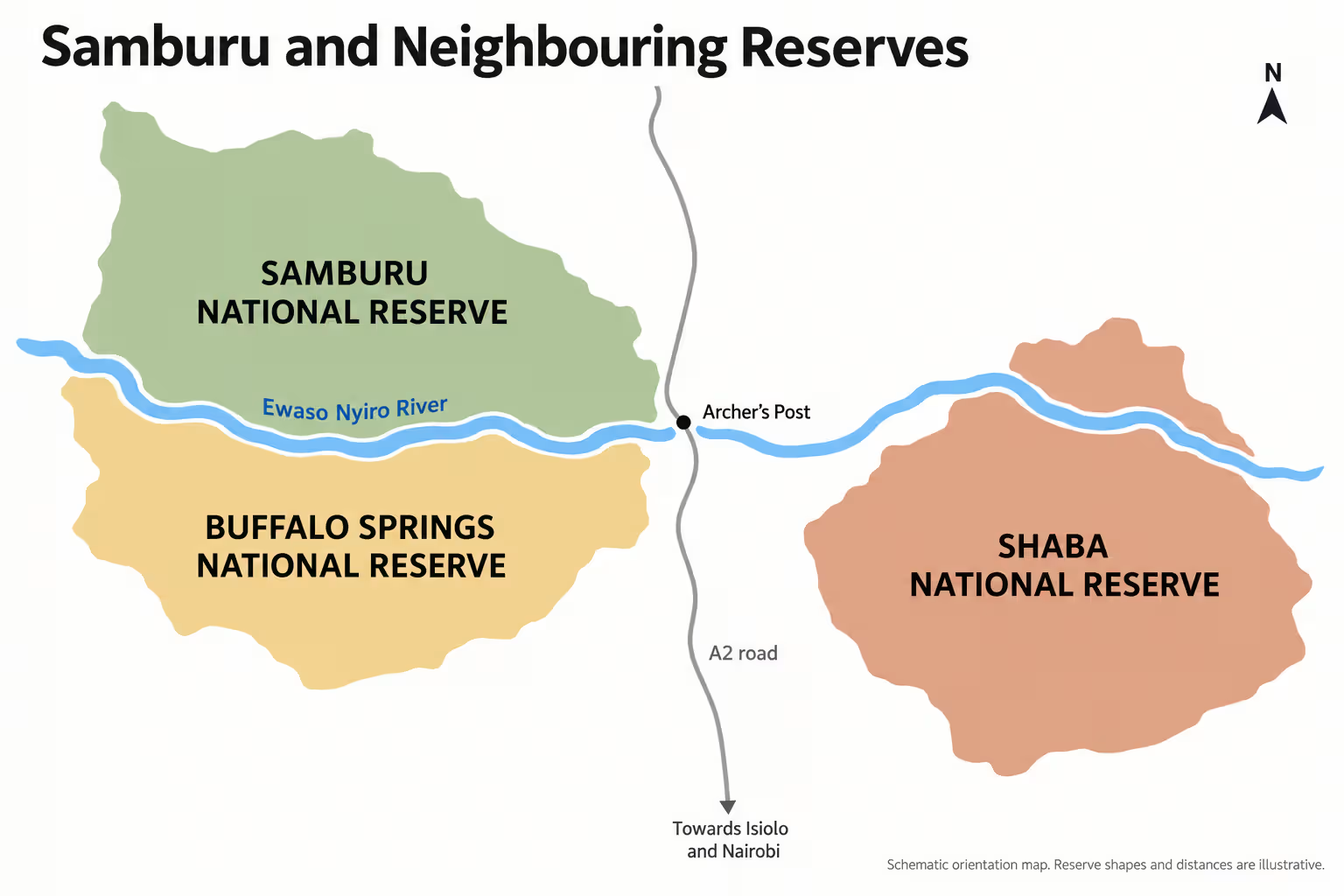
Map showing Samburu, Buffalo Springs, and Shaba reserves
Wildlife in Samburu National Reserve
Samburu’s wildlife changes with the habitat. Explore the dry plains and thorn scrub for northern specialists, then spend time along the Ewaso Nyiro’s wooded banks for elephants and a different mix of birds. Moving between these settings gives a game drive more variety than concentrating on one animal or river viewpoint.
The Samburu Special Five
The Samburu Special Five are Grevy’s zebra, reticulated giraffe, Beisa oryx, gerenuk and Somali ostrich. They are associated with northern Kenya’s dry country, rather than found exclusively in this reserve. Look for the Grevy’s zebra’s narrow stripes and large rounded ears, and the reticulated giraffe’s sharply defined coat pattern. Beisa oryx have long, straight horns and dark facial markings. Gerenuk are slender, long-necked antelopes that can stand on their hind legs to reach browse. Male Somali ostriches have blue-grey necks and legs, helping distinguish them from other ostriches.
Elephants and Predators
Elephants are a major reason to spend time in Samburu. Watch how a family feeds, moves together and responds to younger members, rather than stopping only for a photograph. Leave space around the vehicle and let your guide manage the encounter. Lions, leopards and cheetahs also occur here, but finding them requires searching suitable habitat. Your guide checks shaded resting places, riverine cover and open ground as conditions change. Allow several drives instead of expecting every predator on one outing.
Birdwatching Habitats
Samburu’s birding adds another reason to explore beyond the river corridor. Watch the ground for vulturine guineafowl, scan trees for hornbills and check open skies and prominent perches for birds of prey. Combine riverine woodland with dry scrub and open country to encounter different bird communities. Ask your guide to pause for identification and behaviour, rather than treating bird sightings as brief stops between mammal encounters.
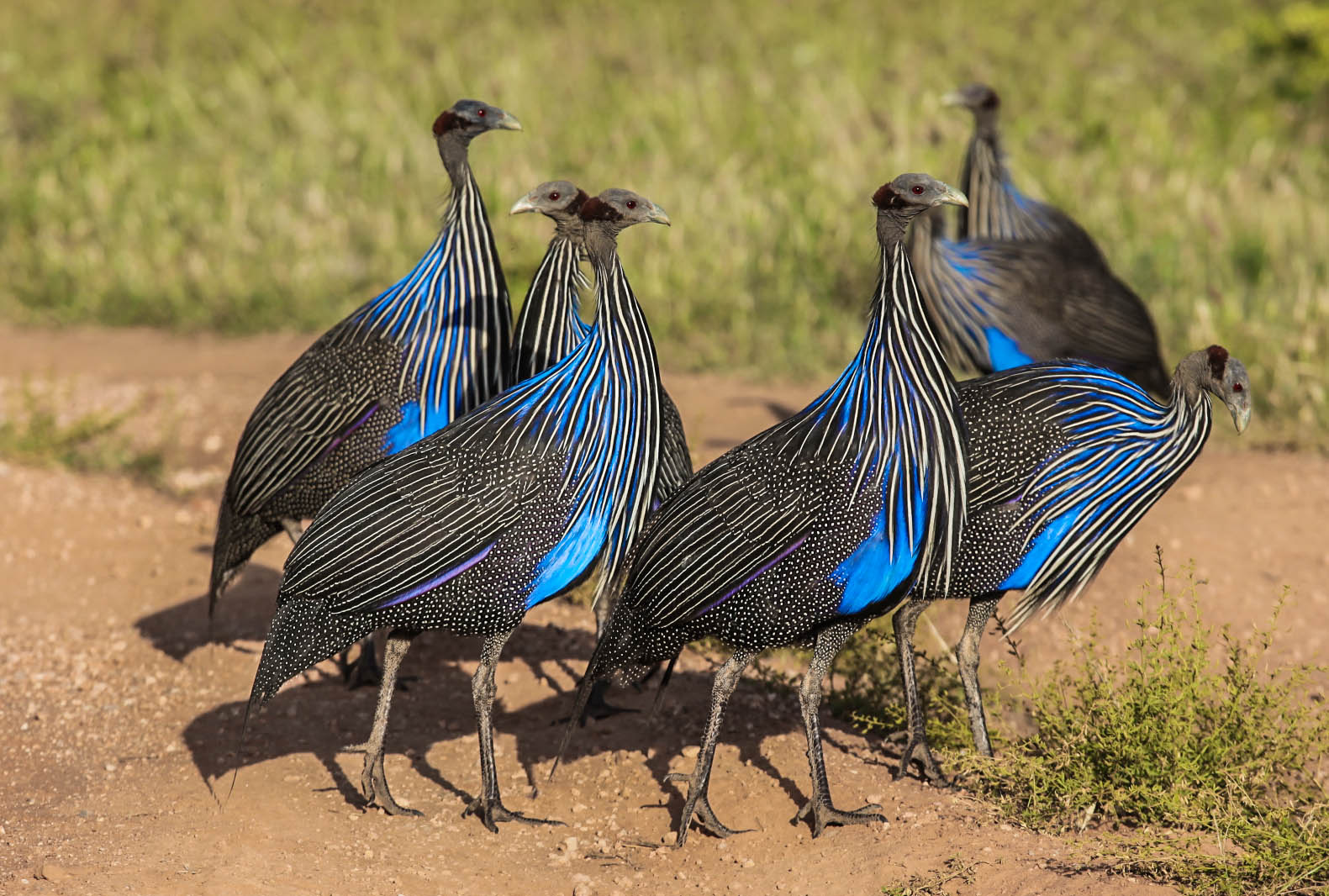
vulturine guineafowl
Things to Do in Samburu
Game drives are the main activity in Samburu National Reserve. Build your stay around time in different habitats, then add birdwatching or a community visit according to your interests.
Morning and Afternoon Game Drives
Leave early to explore before the heat builds. Your guide can combine open-country searches with quieter stretches beside the river, adjusting the route to animal movements and recent sightings. Return to camp during the hotter part of the day, then head out again as the afternoon cools. Revisit promising areas without repeating exactly the same circuit. Staying for several drives gives you time to watch behaviour rather than rushing between sightings.
Birdwatching
Arrange a bird-focused drive if you want time for identification, calls and photography. Progress slowly between riverine woodland, thorn scrub and open ground, stopping long enough to follow movement through branches or observe ground-feeding birds. Tell your guide whether you are a beginner or have target species. Keep a general wildlife drive flexible, but reserve dedicated time if birding is a main reason for your visit.
Samburu Community Visits
Arrange a visit with a community that welcomes guests and confirm what the experience includes before setting out. Depending on the programme, you can learn about pastoral livelihoods, beadwork and daily life through conversation and demonstrations. Ask permission before photographing people and clarify any visit or photography charges in advance. Give the visit its own time rather than treating it as a brief roadside stop.
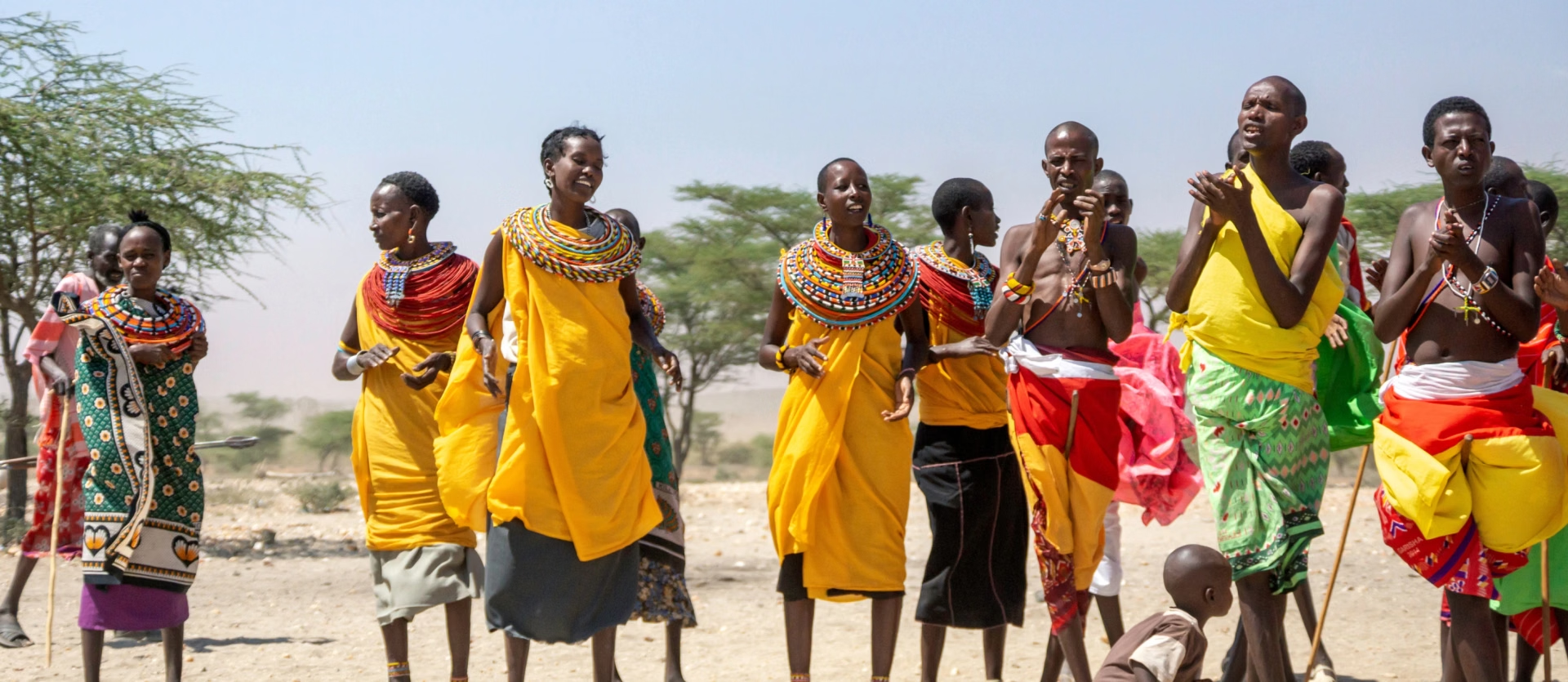
Samburu Community Visits
Best Time to Visit Samburu
June to September and January to February are strong starting points for wildlife-focused visits. Drier conditions reduce vegetation cover and concentrate animals around available water, making searches more focused. Samburu remains hot, so prioritise early morning and late afternoon drives.
| Period | What to expect | Planning consideration |
|---|---|---|
| January and February | Typically hot, dry conditions with more open wildlife viewing. | Allow a midday break and carry drinking water on drives. |
| March to May | Increasing chances of rain and greener vegetation. | Wet tracks can affect routes and journey times. |
| June to September | Generally drier conditions suited to game drives. | Confirm accommodation early if your dates are fixed. |
| October to December | Variable conditions, including the short rains and fresh vegetation. | Keep drive routes flexible and protect cameras from rain and dust. |
How to Get to Samburu
Reach Samburu by road from Nairobi or by a scheduled safari flight. Driving suits a journey through central Kenya, while flying reduces road time for a shorter stay.
Driving from Nairobi
Allow approximately 6 hours for the roughly 350 km journey, with extra time for traffic, stops and the final drive to your lodge. The route passes through central Kenya to Isiolo and Archer’s Post. Leave Nairobi early rather than planning a late arrival. Confirm your accommodation’s location before selecting the entrance
Flying to the Samburu Area
Scheduled flights depart from Wilson Airport in Nairobi. Allow roughly 1 to 1.5 hours, depending on the service and intermediate stops. Confirm the arrival airstrip with your lodge before purchasing tickets, then arrange the vehicle transfer to camp. If you arrive internationally at Jomo Kenyatta International Airport, allow time for immigration, baggage collection and the road transfer to Wilson. Check your safari airline’s baggage allowance and bag requirements before packing
Where to Stay in Samburu
Start with the location, then compare comfort and facilities. Staying inside Samburu National Reserve places you within its game-viewing area. A camp across the river in Buffalo Springs provides a different base, so check which reserves your itinerary covers.
| Location | Accommodation | Safari suitability |
|---|---|---|
| Inside Samburu National Reserve, beside the Ewaso Nyiro River | Soroi Larsens Camp | A luxury tented stay with private decks overlooking the river. Suits travellers prioritising a riverside setting and time relaxing between drives. |
| Inside Samburu National Reserve, on elevated ground | Samburu Sopa Lodge | Cottage accommodation with views across the surrounding landscape. Suits travellers who prefer a lodge setting rather than a tented camp. |
| Buffalo Springs National Reserve, beside the Ewaso Nyiro River | Ashnil Samburu Camp | Tented accommodation for an itinerary including Buffalo Springs. Confirm access arrangements and entry fees for drives into Samburu. |
How Many Days to Spend in Samburu
Allow 2 nights for a focused Samburu visit, or 3 nights for a less hurried safari. A road journey from Nairobi takes much of the arrival day, so a 1-night stop leaves little time to explore beyond an afternoon and possible departure-morning drive.
| Length of stay | What it allows | Main consideration |
|---|---|---|
| 1 night | A brief introduction between transfers. | Delays can reduce an already short wildlife-viewing window. |
| 2 nights | One full day between arrival and departure, with morning and afternoon drives. | A sensible starting point within a wider Kenya itinerary. |
| 3 nights | Two full days to explore different habitats and revisit promising areas. |
Better for patient wildlife observation, birdwatching and time between drives. |
| 4 nights or more | A slower stay with space for specialist interests or separately arranged activities. |
Plan varied routes and activities with your guide. |
Flying reduces road time, but check flight timings and airstrip transfers before assuming you gain another game drive. For photography or target wildlife, extra nights provide more opportunities, without guaranteeing a sighting.
Combining Samburu with a Kenya Safari
Pair Samburu with destinations that add a different wildlife experience. Its dry-country specialists complement rhino viewing around Laikipia, Rift Valley lake habitats and the Masai Mara’s open grasslands.
| Combination | What it adds | Route planning |
|---|---|---|
| Samburu and Ol Pejeta Conservancy | Rhino-focused wildlife viewing alongside Samburu’s northern specialists. | Combine through the Nanyuki area, allowing time for activities at both destinations. |
| Samburu and Lake Nakuru National Park | Lake scenery, birdwatching and rhino viewing. | Treat the journey as a transfer day, with any arrival drive dependent on timing. |
| Samburu and Masai Mara | A contrast between dry northern habitats and extensive grassland game drives. | Allow a substantial road transfer or check flight connections for your dates. |
| Samburu, Lake Nakuru and Masai Mara | A varied circuit combining northern wildlife, lake habitats and savannah. | Give each destination enough nights rather than counting travel days as full safari days. |