
Bwindi Impenetrable National Park lies in south-western Uganda along the eastern edge of the Albertine Rift and protects about 321 sq km of steep, densely forested hills and valleys. The park was inscribed as a UNESCO World Heritage Site in 1994 for its exceptional biodiversity and conservation importance, and it remains one of Uganda’s two mountain gorilla trekking destinations. Bwindi’s terrain rises from about 1,160 to 2,607 metres, so the experience changes noticeably between the lower valleys and the higher forested ridges. For most travellers, the first practical decision is not simply whether to visit Bwindi, but which trekking sector to use. Gorilla trekking is organised from Buhoma, Ruhija, Rushaga and Nkuringo, and that choice determines where your permit is allocated, where you should stay and which road or airstrip is most convenient. A gorilla trek itself can take roughly 2 to 7 hours, depending on where the gorilla family is found, so Bwindi is best planned around the trek rather than treated as a quick stop. Beyond gorillas, the park also offers birding, forest walks, longer hiking routes and community experiences, which makes it worth allowing more than one night when your itinerary has room.
Bwindi Impenetrable National Park Quick Facts
| Location | South-western Uganda, on the eastern edge of the Albertine Rift |
|---|---|
| Park Size | 32,092 hectares, about 321 sq km |
| UNESCO Status | World Heritage Site since 1994 |
| Main Experience | Mountain gorilla trekking |
| Trekking Sectors | Buhoma, Ruhija, Rushaga and Nkuringo |
| Landscape | Steep forested hills, narrow valleys and montane rainforest |
Gorilla Trekking in Bwindi National Park
Gorilla trekking is the main reason most travellers visit Bwindi, but the experience starts long before you meet the gorillas. Treks operate from Buhoma, Ruhija, Rushaga and Nkuringo, and visitors must report to the correct sector for briefing before entering the forest. The walk can take roughly 2 to 7 hours, depending on the location of the allocated gorilla family and how far it has moved since the previous day. Once the group is reached, standard trekking permits allow one hour with the gorillas. The terrain can be steep, wet and uneven, so reasonable fitness, proper hiking boots, rain protection and enough drinking water make a real difference. On the morning of the trek, visitors are assigned to a specific habituated gorilla family within their booked sector. The exact family is normally allocated on the day rather than chosen months in advance, which is why the sector on your permit matters more than the family name when planning accommodation and transport. Porters are available at the trailheads and are worth using, especially on longer treks, because they can carry your daypack and assist on difficult sections of the trail. Gorilla trekking also has a minimum age of 15 years, and travellers should avoid trekking when unwell because gorillas are susceptible to human respiratory infections.
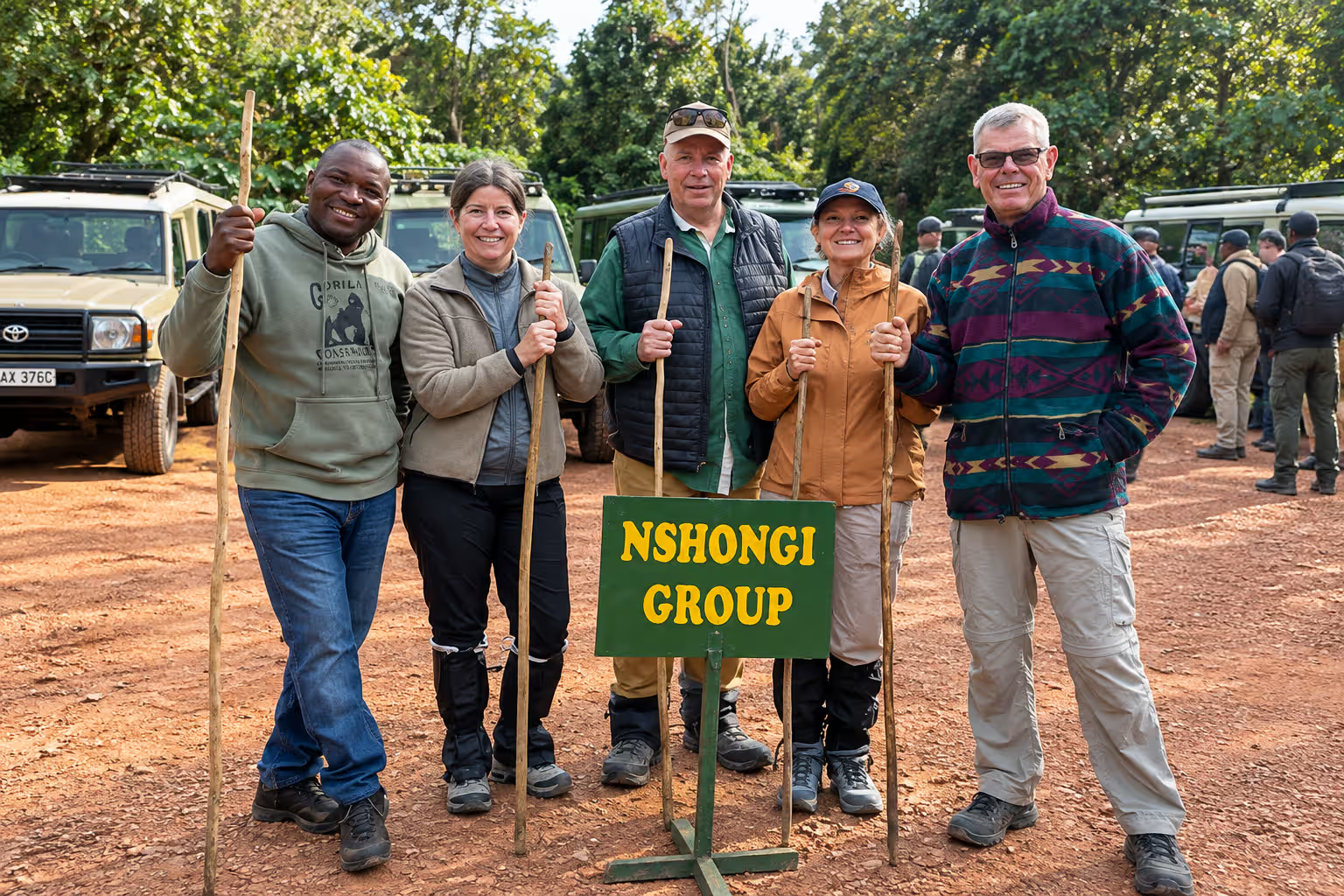
Bwindi Gorilla Briefing
The practical rule for planning Bwindi is simple. Secure the gorilla permit first, then choose accommodation close to the correct trekking sector. Booking a lodge on the opposite side of the park can create a difficult early-morning transfer because the four trailheads are separated by steep roads and long driving times.
Bwindi Gorilla Permits
A gorilla permit is required before joining any gorilla trek in Bwindi, and the permit must correspond with the trekking sector where space has been secured. This is why the permit should be confirmed before finalising your lodge. Buhoma, Ruhija, Rushaga and Nkuringo are in different parts of the park, and accommodation booked in the wrong sector can leave you with a difficult transfer on the morning of the trek.
| Permit | Season | Foreign Non-Resident | Foreign Resident | Rest of Africa | East African Citizens |
|---|---|---|---|---|---|
| Gorilla Trekking From 1 January 2027 |
Standard | US$800 | US$700 | US$500 | UGX 300,000 |
| Gorilla Trekking Low-season permit |
April, May & November | US$600 | US$500 | Not listed | Not listed |
| Gorilla Habituation From 1 January 2027 |
Standard | US$1,800 | US$1,600 | US$1,000 | UGX 750,000 |
Permits are limited, so travellers with fixed dates should secure them well before arrival, particularly when travelling during busier safari periods.
Gorilla Trekking Sectors in Bwindi
Bwindi has four main gorilla trekking sectors, Buhoma, Ruhija, Rushaga and Nkuringo. Each sector has its own visitor centre, trekking trailheads and habituated gorilla groups, so your permit is tied to the sector where you will report for the trek. This is one of the most important planning details in Bwindi because there is no simple road straight through the forest linking all four trailheads. Moving between sectors usually means driving around the park on mountain roads, so accommodation should be booked close to the sector shown on your permit.
Buhoma Sector
Buhoma lies on the north-western side of Bwindi and was the first area developed for gorilla tourism. It has the most established visitor infrastructure around the park entrance and is particularly convenient for travellers coming from the Ishasha sector of Queen Elizabeth National Park. Buhoma is about 62 km from Ishasha and around 160 km from Mweya, making it practical to combine wildlife viewing in Queen Elizabeth with gorilla trekking without returning through Kabale. Buhoma also has a broad range of accommodation close to the trekking headquarters, which makes it easier to stay near the morning briefing point. Travellers flying into northern Bwindi normally use Kihihi Airstrip, followed by a road transfer to their lodge.
Ruhija Sector
Ruhija is on the eastern side of Bwindi and sits in a higher, cooler part of the forest. It is a strong choice for travellers who want to combine gorilla trekking with birding or forest walking because this side of Bwindi provides access to routes such as the Bamboo Trail and trails towards the Mubwindi Swamp area. By road, Ruhija is approached from the Kabale to Kisoro highway, turning north approximately 18 km beyond Kabale before continuing towards the forest. Accommodation around Ruhija is more limited than in Buhoma, so staying close to the sector becomes particularly important when permits and lodges begin filling.
Rushaga Sector
Rushaga lies in southern Bwindi, closer to Kisoro than Buhoma, and is one of the park’s busiest gorilla trekking bases. The area has several habituated gorilla groups and also supports the Gorilla Habituation Experience, making it particularly relevant for travellers comparing standard trekking with the longer habituation activity. For air access, travellers normally fly from Entebbe to Kisoro Airstrip, followed by a 4WD transfer through the hills to Rushaga. This southern location also works well when combining Bwindi with Mgahinga Gorilla National Park, Lake Mutanda or Kisoro.
Nkuringo Sector
Nkuringo occupies the south-western side of Bwindi and is reached through some of the park’s steepest surrounding terrain. From Kabale, the road journey is about 105 km and can take roughly 4 hours on mountainous murram roads. From Kisoro, Nkuringo is about 35 km away, with the journey generally taking at least 1 to 1½ hours depending on road conditions. A 4WD vehicle is recommended for both approaches. The elevated setting means visitors should allow realistic transfer times rather than judging distances alone. Nkuringo works particularly well when the rest of the itinerary is already focused on southern Bwindi, Kisoro or Lake Mutanda, but the permit and accommodation should still be matched carefully to avoid unnecessary early-morning driving.
Gorilla Habituation Experience in Bwindi
The Gorilla Habituation Experience is different from the standard gorilla trek because it allows much more time with a gorilla family that is still becoming accustomed to regular human presence. The day starts earlier, with visitors reporting from around 6:30 am, and once the gorillas are located, you can spend up to four hours with the group instead of the one hour allowed on a standard trek. This experience suits travellers who want more time observing gorilla behaviour, photography, feeding patterns and movement through the forest. It is also a more demanding day because the tracking period can be long and the group may move through steep, wet terrain before you reach them. Good hiking boots, rain protection, gloves, enough water and a porter are all worth considering. The Gorilla Habituation Experience is offered in southern Bwindi, around the Rushaga side of the park, so your accommodation and road transfer should be planned around that area rather than Buhoma or Ruhija. For travellers choosing between the two experiences, the practical difference is straightforward. Standard gorilla trekking gives you one hour with a fully habituated family, while the habituation experience allows up to four hours with a group still going through the habituation process.
Things to Do in Bwindi Beyond Gorilla Trekking
Gorilla trekking is the main reason most travellers come to Bwindi, but it should not automatically be the only activity in the itinerary. If you have an extra half-day or full day, the park has several worthwhile experiences that show a very different side of the forest. The strongest additions are birdwatching, guided forest walks and longer hiking routes, with community visits around the park providing another option outside the forest itself. The choice should depend on where you are staying. Buhoma is particularly good for shorter forest walks such as the Munyaga River Trail and longer routes towards the River Ivi area. Ruhija is stronger for serious birding and high-altitude forest walks, including the Bamboo Trail and routes towards Mubwindi Swamp. Travellers staying in the southern sectors can also arrange longer guided walks through the forest between trailheads rather than simply driving around the park. These activities work best when added around the gorilla trek rather than squeezed into the same morning, because trekking duration is unpredictable and can take several hours.
Birdwatching in Bwindi Impenetrable National Park
Bwindi is one of Uganda’s strongest forest birding destinations, with more than 347 recorded forest bird species and an exceptional concentration of Albertine Rift species. For serious birders, the Ruhija sector deserves the most attention. The Bamboo Trail and the route towards Mubwindi Swamp are among the best-known areas for Albertine Rift endemics, including species such as the African green broadbill, Grauer’s swamp warbler and Shelley’s crimson-wing. Buhoma is easier for shorter birding sessions, especially along the Munyaga River Trail and the River Ivi route, where forest-edge and lower-altitude species can be added without committing to a long day in the hills. Birding in Bwindi works best when you give it its own morning rather than treating it as something to squeeze around a gorilla trek. Early starts are better for activity and calls, and a specialist bird guide is especially useful because many forest species are heard before they are seen. Binoculars are essential, while waterproof boots and a light rain jacket are worth carrying even outside the wetter months because the trails can remain damp under the canopy. If birding is one of your main reasons for visiting Bwindi, Ruhija is usually the strongest base, while Buhoma is more convenient for travellers who want a shorter birding session alongside other activities.
Forest Walks and Hiking Trails in Bwindi
Forest walks in Bwindi range from short half-day walks to longer routes that cross large sections of the park, so this is one activity where the trail you choose matters. In Buhoma, the Waterfall Trail takes about 3 hours and follows the forest towards a series of waterfalls, making it one of the easier ways to explore Bwindi beyond gorilla trekking. The Rushura Hill Trail and Muzabajiro Loop also take roughly 3 to 4 hours and are better for travellers who want higher viewpoints across the forest, Albertine Rift and Virunga landscape. For a longer day on foot, the River Ivi Trail is one of the strongest options. It follows an old forest route between the Buhoma side and the southern edge near Nkuringo and can take around 6 to 8 hours, depending on pace and trail conditions. In Ruhija, the Bamboo Trail climbs towards the high forest around Rwamunyonyi, while the route towards Mubwindi Swamp is especially rewarding for birders and travellers comfortable with a longer hike. These walks are best planned as separate activities from gorilla trekking because the forest terrain is steep, the ground can be slippery after rain and a full gorilla trek can already take most of the day.
Community and Cultural Experiences Around Bwindi
Community experiences around Bwindi are best treated as a separate half-day activity rather than something squeezed in after a long gorilla trek. Buhoma has one of the easiest options, with community walks of around 3 hours through nearby villages, homesteads, small farms and local enterprises. Depending on the route, you may see banana beer brewing, traditional medicine, craft making and cultural performances. The Batwa Experience near Buhoma is longer, often taking up to 5 hours, and is better for travellers who want a more detailed cultural visit rather than a quick village stop. On the southern side, Nkuringo has the Buniga Batwa Forest Walk, a shorter option of about 2 to 3 hours over roughly 4 km. The walk is led by Batwa elders and local guides through a small forest area near Nkuringo, with explanations of traditional plant use, forest survival skills, hunting methods, shelter and the community’s historical relationship with the forest. It fits particularly well into an afternoon after arriving in Nkuringo or on a spare half-day between other activities.
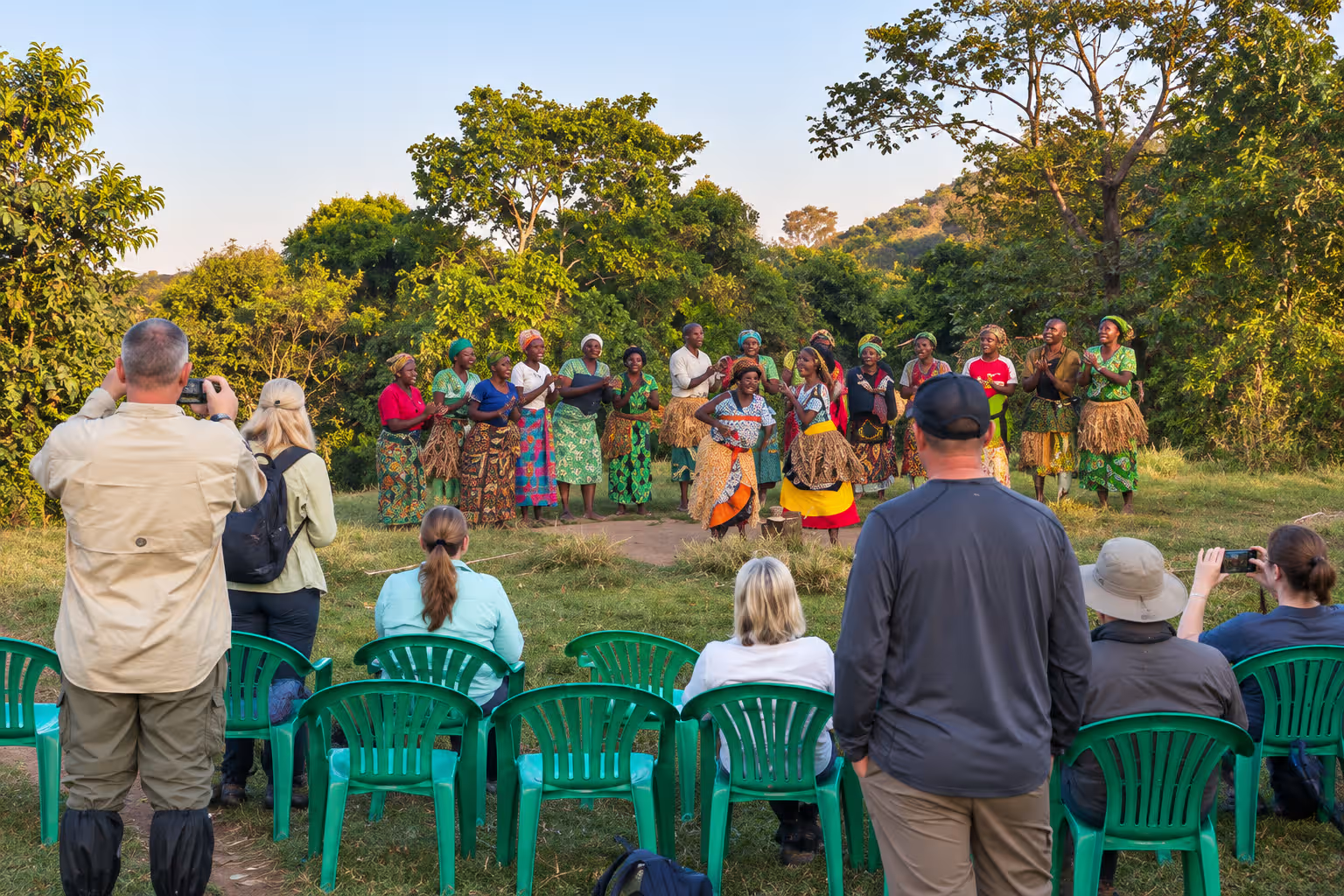
Cultural Experiences near Buhoma
How to Get to Bwindi Impenetrable National Park
Reaching Bwindi depends on which trekking sector is on your gorilla permit. There is no single entrance that works for the whole park, and this is where many itineraries go wrong. From Kampala or Entebbe, expect a full-day drive of roughly 8 to 10 hours, depending on whether you are heading to Buhoma, Ruhija, Rushaga or Nkuringo. Most of the journey is on tarmac through Masaka, Mbarara and the south-western highlands, but the final approach becomes slower on winding murram roads. A 4WD vehicle is strongly recommended, especially after rain.
Driving to Bwindi from Kampala or Entebbe
For Buhoma, the most direct route runs through Ntungamo, Rukungiri and Kihihi. The full journey is about 470 km and normally takes around 8 to 10 hours. Travellers coming from Queen Elizabeth National Park can reach Buhoma much more easily from the north. Buhoma is about 160 km from Mweya and roughly 64 km from Ishasha, making Queen Elizabeth and Bwindi one of the most practical safari combinations in western Uganda. Ruhija is reached from the Kabale side. If your permit is for Ruhija, there is no reason to drive all the way around to Buhoma first. The approach branches off the Kampala to Kisoro road beyond Kabale and continues through the highlands towards the eastern side of Bwindi. For Rushaga and Nkuringo, continue towards Kisoro and use the southern access roads. Nkuringo is about 35 km from Kisoro, but allow at least 1 to 1½ hours because the road is steep and winding.
Flying to Bwindi
Flying is the easiest way to remove most of the long road journey. Scheduled and charter flights from Entebbe take about 1 hour 10 minutes. Use Kihihi Airstrip for Buhoma and northern Bwindi, while Kisoro Airstrip is the practical gateway for Rushaga and Nkuringo. From the airstrip, you still need a road transfer to your lodge, so the flight does not take you directly to the trekking headquarters. The important planning rule is to match your permit, lodge, airstrip and road transfer to the same side of Bwindi. A short distance on the map can still take several hours on these mountain roads.
Where to Stay in Bwindi Impenetrable National Park
The most important rule is still to match the lodge to the trekking sector on your gorilla permit. Buhoma, Ruhija, Rushaga and Nkuringo are separated by mountain roads, so choosing a lodge in the wrong sector can create several hours of unnecessary driving before the morning briefing
| Trekking Sector | Luxury | Mid-range | Budget Options |
|---|---|---|---|
| Buhoma | Sanctuary Gorilla Forest Camp, Mahogany Springs Lodge, Trackers Safari Lodge |
Buhoma Lodge, Silverback Lodge, Engagi Lodge |
Buhoma Community Rest Camp, Ride 4 a Woman Guesthouse |
| Ruhija | Ruhija Gorilla Safari Lodge, Agandi Lodge |
Bakiga Lodge, Gorilla Mist Camp |
Broadbill Forest Camp, Ruhija Gorilla Friends Resort |
| Rushaga | Four Gorillas Lodge, Gorilla Safari Lodge |
Gorilla Valley Lodge, Gorilla Leisure Lodge, Rushaga Gorilla Camp |
Ichumbi Gorilla Lodge, Smaller guesthouses around Rushaga |
| Nkuringo | Clouds Mountain Gorilla Lodge, Gorilla Heights Lodge |
Nkuringo Bwindi Gorilla Lodge | Guesthouses around Nkuringo and Nteko |