
A 7-day Kilimanjaro trek takes you from Nairobi into Tanzania for a guided climb of Mount Kilimanjaro, Africa’s highest mountain at 5,895 metres. You’ll follow the Marangu Route, starting at Marangu Gate and climbing through tropical rainforest to Mandara Hut before continuing into the open moorlands around Horombo Hut. From there, the trail crosses the broad saddle between Mawenzi and Kibo before reaching Kibo Hut, where you rest before the final climb to Uhuru Peak. Summit night is the toughest part of the trek. You’ll set off around midnight, climbing through the cold and darkness towards Gilman’s Point before continuing along the crater rim to Uhuru Peak. Reaching the summit brings you to the highest point in Africa, with views across Kilimanjaro’s crater and the surrounding landscape when the weather is clear. After celebrating at the top, you’ll descend to lower ground for some much-needed rest. The Marangu Route is known for its mountain huts, so you won’t need to sleep in a tent. However, this itinerary allows only 5 days on the mountain, leaving limited time for your body to adjust to the altitude. An extra acclimatisation day at Horombo Hut is worth considering if your schedule allows, as it gives you more time to prepare for the summit attempt. Throughout the climb, you’ll be accompanied by a mountain guide and support crew as you move from the forest into the colder, thinner air of the upper mountain.
Kilimanjaro Trek Highlights
- Reach Uhuru Peak at 5,895 metres, the highest point in Africa.
- Climb the Marangu Route through tropical rainforest, open moorland and the stark alpine desert.
- Sleep in mountain huts at Mandara, Horombo and Kibo instead of camping in tents.
- Cross the high-altitude saddle between Mawenzi and Kibo on the way to the summit.
- Begin the final ascent around midnight, reaching Gilman’s Point before continuing towards Uhuru Peak.
- Watch the landscape change as you climb higher, from dense forest to open volcanic slopes and rocky ground.
- Trek with an experienced mountain guide and support crew throughout the climb.
- Travel from Nairobi to Moshi and back, with time set aside for the journey between Kenya and Tanzania.
Detailed Kilimanjaro Trekking Itinerary
Day 1, Nairobi to Moshi in Tanzania
Leave Nairobi in the morning and travel south to the Namanga border between Kenya and Tanzania. After completing immigration formalities, continue through northern Tanzania to Moshi, the main starting point for climbers taking the Marangu Route. The drive takes around 7 to 9 hours, including the border crossing, depending on traffic and how long the formalities take. On arrival in Moshi, check into your hotel and meet your mountain guide for a pre-trek briefing. Go through your route, check your hiking equipment and warm clothing, and confirm how your luggage will be divided between what you carry and what the porters transport. Have your hiking boots, waterproof jacket, warm layers, headlamp and other essentials ready before going to bed. An early night will help you prepare for the climb ahead. Enjoy dinner and overnight in Moshi.
Accommodation: Springlands Hotel
Day 2, Marangu Gate to Mandara Hut
Approximate altitude: Marangu Gate 1,860 m to Mandara Hut 2,720 m
After breakfast, drive from Moshi to Marangu Gate. Here, your guide will complete the park registration while the mountain crew prepares the equipment for the climb. Once everything is ready, begin your trek through Kilimanjaro’s montane rainforest. Tall trees, ferns and thick vegetation line the trail, and you may spot blue monkeys, black-and-white colobus monkeys and colourful forest birds along the way. Take your time on this first day and settle into a comfortable walking pace. Your guide will encourage you to walk slowly, drink water regularly and conserve your energy as you gain altitude. After around 4 to 5 hours on the trail, arrive at Mandara Hut. Settle into the mountain camp, enjoy your meal and rest after your first day of climbing.
Accommodation: Mandara Hut.
Meals: Breakfast, lunch and dinner.
 Day 3, Mandara Hut to Horombo Hut
Approximate altitude: 2,720 m to 3,720 m
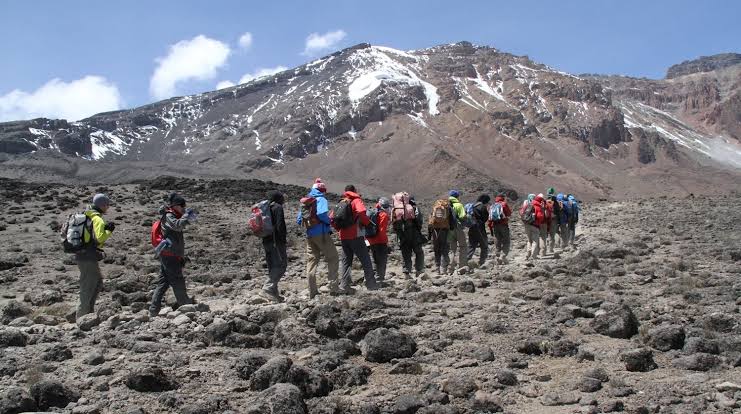
After breakfast, leave Mandara Hut and continue climbing through the upper rainforest. As you gain height, the trees gradually thin out and the landscape opens into Kilimanjaro’s moorland, with giant heathers and distinctive high-altitude plants along the trail. On a clear day, you can enjoy views of Mawenzi’s rugged peaks and Kibo, the main summit massif. The scenery changes noticeably as you leave the forest behind and make your way towards Horombo Hut. The walk takes around 5 to 7 hours. Keep a steady pace and take short breaks when needed, as the higher altitude makes the climb more demanding. Arrive at Horombo Hut, where you can eat, rest and take in the mountain scenery. Your guide will check how you are feeling at this elevation, so speak up if you develop a headache, nausea, dizziness or unusual fatigue.
Accommodation: Horombo Hut.
Meals: Breakfast, lunch and dinner.
Day 4, Horombo Hut to Kibo Hut
Approximate altitude: 3,720 m to 4,700 m
After an early breakfast, leave Horombo Hut and continue towards Kibo Hut. The trail crosses open moorland before entering the alpine desert, where vegetation becomes sparse and the landscape grows increasingly rocky. You will cross the broad saddle between Mawenzi and Kibo, with the mountain’s two striking volcanic formations rising on either side. The open terrain offers a very different view of Kilimanjaro from the forest you walked through on the first day. Although some sections look gradual, walking becomes harder as the altitude increases. Keep close to your guide, maintain a slow pace and drink water regularly. After around 5 to 7 hours of walking, reach Kibo Hut and settle in for the afternoon. Eat an early dinner, organise your summit gear and get as much rest as possible before the night climb. Your guide will check the group’s condition and go through the summit schedule, including what to wear and what to carry. The climb towards Uhuru Peak usually begins around midnight.
Accommodation: Kibo Hut.
Meals: Breakfast, lunch and dinner.
Day 5, Kibo Hut to Uhuru Peak and Descent to Horombo Hut
Summit altitude: Uhuru Peak at 5,895 m
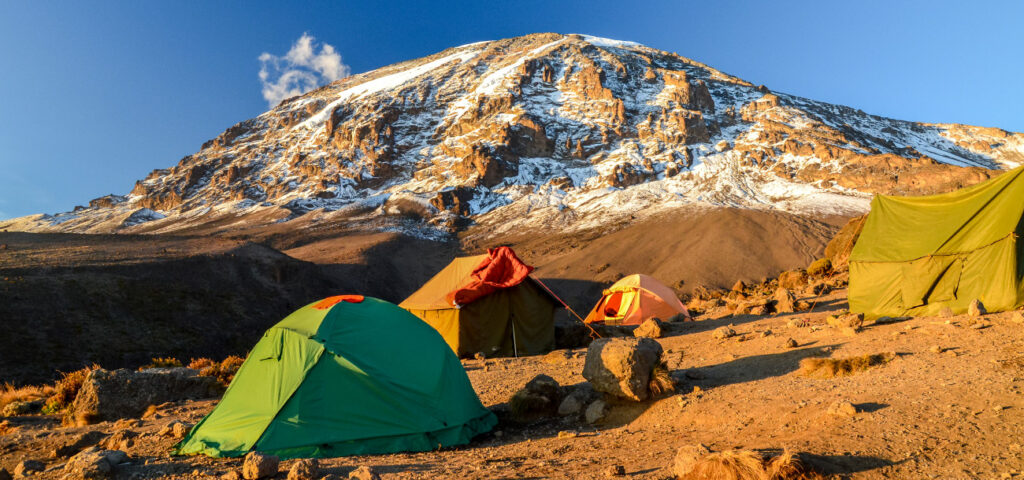
Your summit attempt begins around midnight, when you leave Kibo Hut and start climbing the steep slopes towards the crater rim. This is the most demanding part of the trek, with freezing temperatures, thin air and loose volcanic scree slowing your progress. Continue steadily towards Gilman’s Point at approximately 5,685 metres. Reaching the crater rim is a major achievement, but if you still feel strong and your guide considers conditions safe, continue along the rim towards Uhuru Peak, the highest point on Kilimanjaro at 5,895 metres. At the summit, take time for photographs and enjoy the achievement of reaching the top of Africa. On a clear day, you may see the crater and its remaining ice formations, along with the vast landscape stretching far below. After your summit stop, begin the descent to Kibo Hut for a short rest and some food. You will then continue down to Horombo Hut, where you can finally relax after a long and physically demanding day. Expect around 10 to 15 hours of walking in total, although the exact time depends on your pace and conditions on the mountain. Your safety comes first throughout the climb. If you develop signs of altitude sickness, become severely exhausted or encounter unsafe weather, your guide may ask you to turn back rather than continue towards the summit.
Accommodation: Horombo Hut.
Meals: Breakfast, lunch and dinner.
 Day 6, Horombo Hut to Marangu Gate and Return to Moshi
Approximate descent: 3,720 m to 1,860 m
After breakfast, leave Horombo Hut and begin the descent towards Marangu Gate. Retrace your route through the moorland, passing Mandara Hut before entering the rainforest again. As you lose altitude, the air becomes richer in oxygen and the vegetation grows thicker. Take care on the downhill sections, as your legs may be tired after the summit attempt the previous day. Allow around 5 to 7 hours to reach Marangu Gate. Once there, complete the park’s departure formalities and meet your driver for the journey back to Moshi. Back at your hotel, enjoy a hot shower, a proper meal and a comfortable bed after several nights on the mountain. Climbers who qualify can also collect their summit certificates through the park’s established procedures.
Accommodation: Springlands Hotel
Meals: Breakfast and lunch. Dinner
Day 7, Moshi to Nairobi
After breakfast, check out of your hotel and begin the journey back to Nairobi. Travel north through Tanzania towards the Namanga border, complete the necessary immigration formalities, and continue into Kenya. Allow around 7 to 9 hours for the journey, depending on traffic, the shuttle schedule and the time spent at the border. On arrival in Nairobi, your driver or shuttle operator will drop you at your agreed location. If you have an international flight that evening, leave a generous gap between your expected arrival in Nairobi and your flight departure, as road and border delays can make the journey longer than expected. Your Kilimanjaro trek ends in Nairobi after seven days of travel, rainforest hiking, high-altitude climbing and the summit attempt.
Meals: Breakfast.
Kilimanjaro Trek Inclusions and Exclusions
Trek Inclusions
- Return road transfers between Nairobi and Moshi
- Transfers between Moshi and Marangu Gate.
- Two nights of hotel accommodation in Moshi.
- Four nights of mountain hut accommodation along the Marangu Route.
- Kilimanjaro National Park entry, hut and applicable trekking fees
- Services of a licensed Kilimanjaro mountain guide.
- Mountain support crew, including porters and a cook
- Meals during the mountain trek.
- Drinking water arrangements on the mountain
- Mountain safety monitoring and emergency arrangements
- Return transfer to the agreed drop-off point in Nairobi.
Trek Exclusions
- International flights to and from East Africa.
- Kenya and Tanzania visa or entry authorisation expenses
- Travel insurance covering high-altitude trekking and emergency evacuation.
- Personal trekking clothing, hiking boots and equipment.
- Sleeping bag and specialist equipment hire.
- Tips for mountain guides, porters, cooks and other support staff.
- Personal expenses, laundry, drinks and additional hotel services.
- Meals not specified in the confirmed itinerary.
- Additional acclimatisation days unless booked.
- Extra accommodation before or after the trek.
- Any services not specified in the final booking confirmation.