
A Tsavo safari brings you close to large herds of elephants, dry-country wildlife and some of Kenya’s most varied landscapes. In Tsavo East National Park, the land opens into wide plains, thorn scrub and river areas where elephants gather to feed, drink and cover themselves in the red soil that gives them their distinctive reddish colour. Tsavo West National Park has a different feel, with wooded hills, volcanic landscapes and Mzima Springs, where you can take a break from game drives and watch the clear spring water flowing through the surrounding vegetation. Game drives are at the heart of a visit to both parks, but each calls for a slightly different approach. In Tsavo East, the open plains and water sources give you room to scan the landscape for elephants, lions, giraffes, buffalo and other wildlife. In Tsavo West, thicker vegetation can make animal spotting more challenging, so take your time as you drive through the hills and along the tracks. A visit to Mzima Springs adds another side to the safari, with its clear pools and surrounding greenery. You can spend several days exploring one park or combine Tsavo East and Tsavo West for a longer safari. Your route will depend on whether you are travelling from Nairobi, Mombasa or Diani, as well as where you plan to stay. Allow enough time for the journey between destinations so you can enjoy your game drives without spending most of the day on the road.
Tsavo Safari at a Glance
| Planning detail | What to know |
|---|---|
| Location | Southeastern Kenya, with access from the Nairobi–Mombasa transport corridor. |
| Safari areas | Tsavo East National Park and Tsavo West National Park. |
| Tsavo East landscape | Broad plains, thorn scrub, river corridors and waterhole habitats. |
| Tsavo West landscape | Wooded hills, volcanic formations, springs and areas of open savannah. |
| Wildlife highlights | Elephants, lions, buffalo, giraffes, zebra and other dry-country wildlife. |
| Tsavo East attractions | Mudanda Rock, the Galana River and views of the Yatta Plateau. |
| Tsavo West attractions | Mzima Springs and Shetani Lava Flow. |
| Main activities | Game drives, birdwatching and visits to designated scenic and walking sites. |
| Departure options | Nairobi, Mombasa, Diani and connections arranged around your wider itinerary. |
| Suggested stay in one park | Two nights allow one full day between arrival and departure. |
| Suggested combined stay | Start with four nights, divided between East and West, allowing for the inter-park transfer. |
| Accommodation planning | Match your lodge to the entrance route and attractions you intend to explore. |
Tsavo East vs Tsavo West
Tsavo East is ideal for travellers who enjoy wide-open landscapes, large herds of elephants and game drives across dry, open plains. Tsavo West offers a different setting, with rocky hills, volcanic landscapes, thicker bush and the clear waters of Mzima Springs. Both parks offer excellent wildlife viewing, but the scenery and the way you look for animals differ. In Tsavo East, the open plains give you long views across the landscape, making it easier to scan for elephants, giraffes, zebras and other wildlife. The Galana River and other water sources also attract animals, particularly when the surrounding country is dry. Still, sightings can take time, so allow yourself enough time to drive through different parts of the park rather than rushing from one sighting to another. Tsavo West requires a more watchful approach. Rocky hills, thick vegetation and winding tracks can hide animals just a short distance from the road, so your guide will need to drive slowly and keep a close eye on the bush. Beyond the game drives, Mzima Springs offers a chance to see clear spring water flowing through the dry landscape, while the park’s lava fields and volcanic hills add something different to the safari.
| Planning factor | Tsavo East | Tsavo West |
|---|---|---|
| Landscape | Broad plains, thorn scrub and river corridors. | Wooded hills, volcanic rock, springs and open savannah. |
| Game-viewing approach | Scan open ground, then explore riverine cover and waterholes. | Search slowly through mixed vegetation, checking clearings and suitable water sources. |
| Main attractions | Mudanda Rock, Galana River and Yatta Plateau scenery. | Mzima Springs, Shetani Lava Flow and scenic drives. |
| Wildlife photography | Wider landscape compositions and animals against open country backgrounds. | Varied terrain and vegetation, with more attention needed to sightlines. |
| Strongest fit | A focused dry-country wildlife safari. | Wildlife viewing combined with geological scenery and spring-side visits. |
Wildlife on a Tsavo Safari
Tsavo is a park where patience pays off. You can spend one moment watching elephants cross the open plains and the next scanning thick bush for a lion resting in the shade. The scenery changes between open grassland, thorn scrub, wooded hills and riverbanks, so each game drive brings a different search for wildlife. Early morning and late afternoon are good times to head out when temperatures are cooler. Rather than rushing from one part of the park to another, take time to watch animals as they feed, drink and interact. Your guide can also check fresh tracks and look for signs of activity when searching for wildlife.
Elephants and Dry-Country Wildlife
Tsavo is famous for its red elephants, whose colour comes from the reddish soil they throw over their bodies during dust baths. You can watch them feeding on trees and shrubs, pulling vegetation with their trunks and covering themselves in dust. Young calves tend to stay close to the adults, while the rest of the herd moves between feeding grounds and water sources. Waterholes and rivers are good places to look for elephants, especially during the hotter parts of the day. You may also find buffalo gathering near water, while giraffes browse on trees and zebras graze in the open grassland. Different antelope species move between the grass and thicker bush, so keep watching the surroundings rather than concentrating only on the larger animals. Give elephants plenty of space, particularly when a herd approaches water with young calves. Staying at a comfortable distance allows you to watch their behaviour without disturbing them.
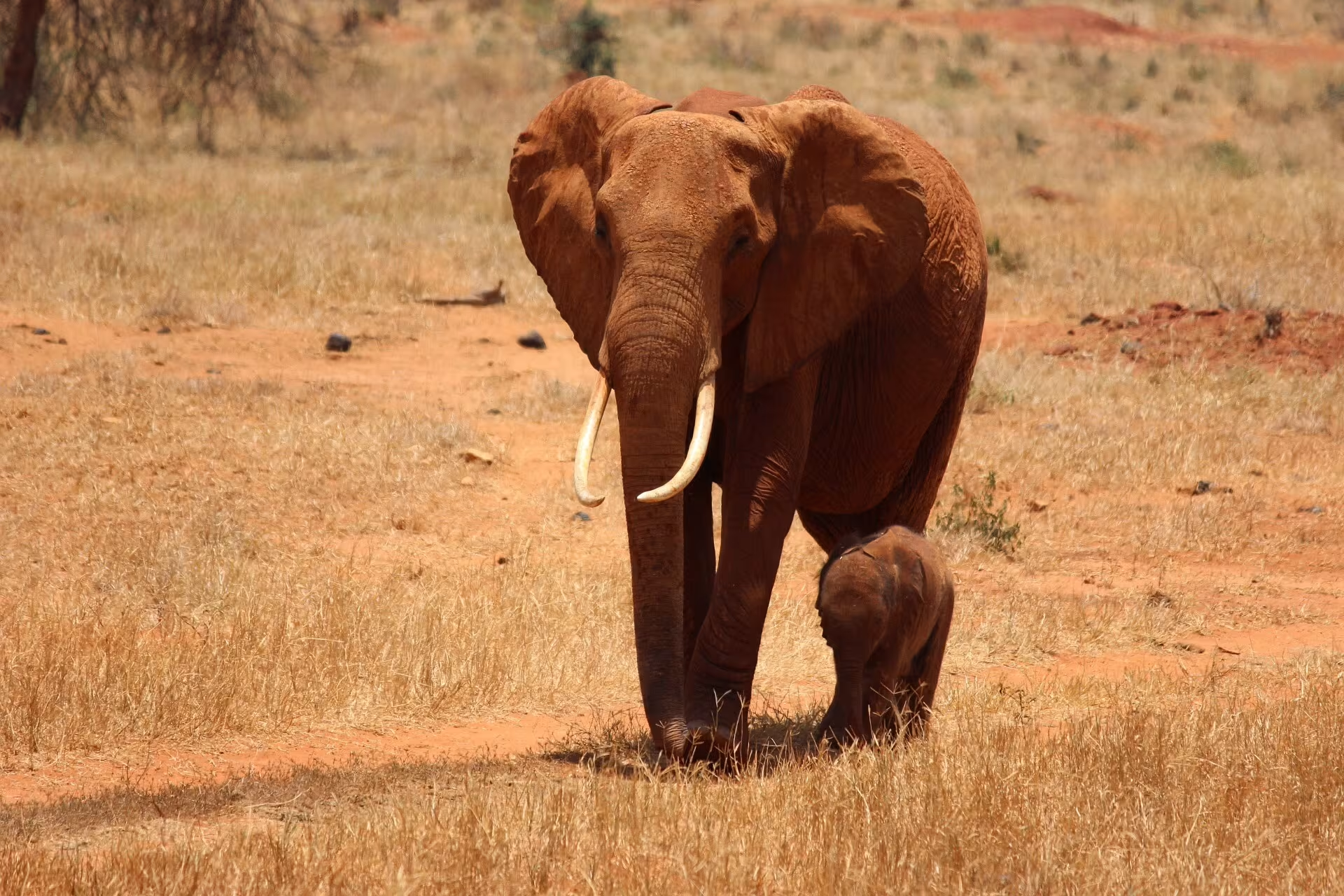
Red dust elephants in tsavo
Predators and Rhino Viewing
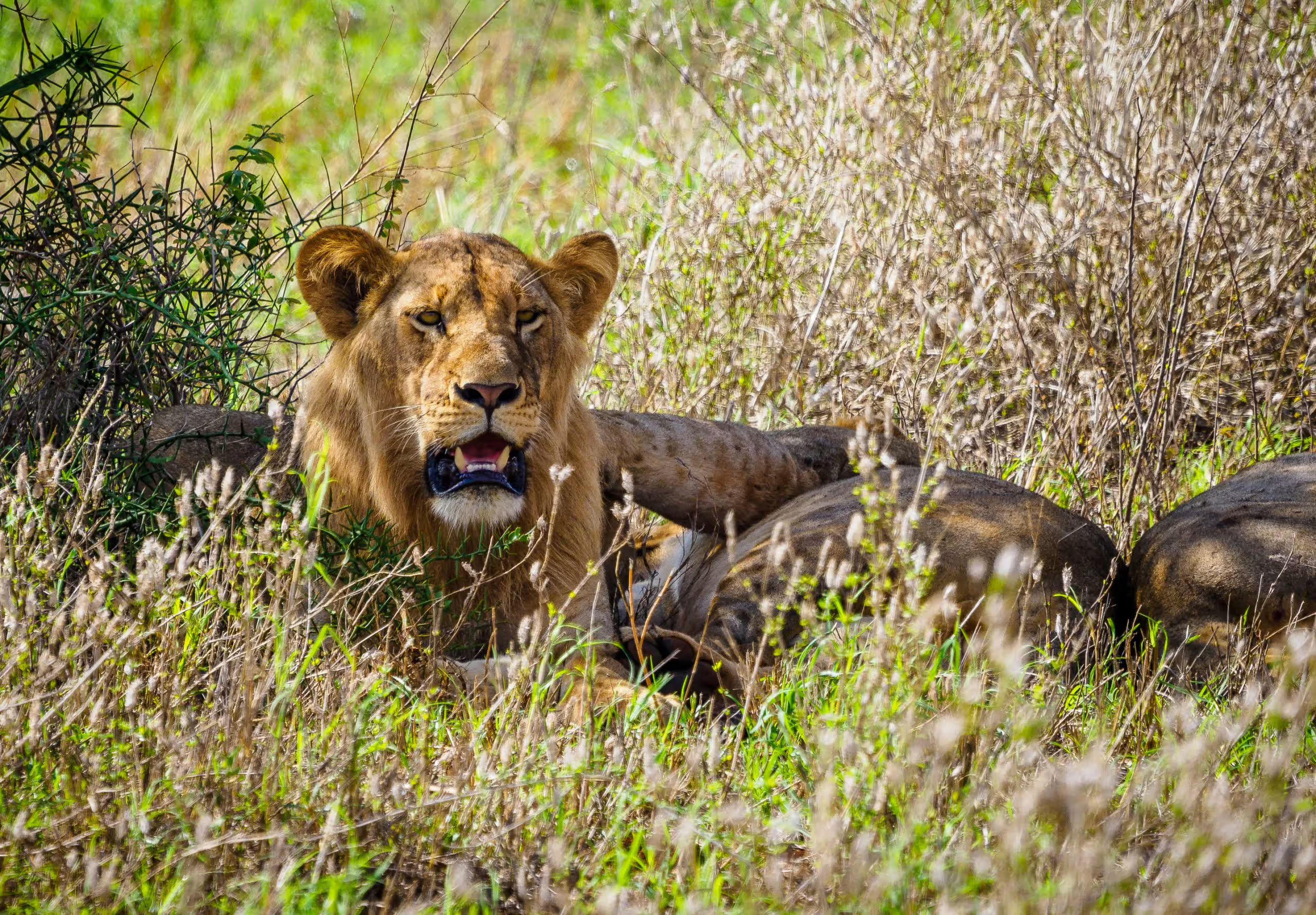
Lions, leopards and cheetahs can all be found in Tsavo, although spotting them takes patience and a bit of luck. Your guide will watch for tracks along the road, scan patches of shade and check areas where prey animals gather. Lions can be difficult to see when resting in dry grass, while leopards often remain hidden among trees and thick vegetation. If you find a promising area, spend time looking carefully before moving on. You might come across a lion resting after a meal or see a leopard slipping through the bush. Early morning and late afternoon drives are good times to search, but big cats can appear at other times too. Every sighting is different, and a successful game drive does not have to end with a hunt. If seeing black rhinos is important to you, include Tsavo West National Park in your safari plans. The park has a large rhino sanctuary, but rhinos can be difficult to spot in the thick vegetation. Check access arrangements before your visit and allow enough time for the search rather than expecting to see one beside the road.
Birdwatching
Birdwatching adds another dimension to a Tsavo safari, whether you are an experienced birder or simply enjoy seeing different species along the way. Look for large ground-dwelling birds in open areas, scan the thorn scrub for smaller birds and watch the trees for species moving between branches. Near rivers, springs and waterholes, you can also find birds feeding along the water’s edge. Hornbills are interesting to watch as they search for food, while birds of prey may be spotted perched above the ground or circling overhead. Around water, keep an eye out for birds feeding along the banks and moving between pools. Let your guide know if birdwatching is a priority so you can spend more time in suitable habitats. Bring binoculars to pick out birds in the trees and at a distance. Tsavo East offers plenty to look for across its dry plains and river areas, while Tsavo West adds springs, woodland and varied terrain to your birding experience.
Things to Do in Tsavo East
Game Drives and Waterhole Viewing
Game drives are the main activity in Tsavo East National Park, taking you across open plains, dry bushland and riverine vegetation in search of elephants, lions, giraffes, zebras and other wildlife. Early morning is a good time to head out, when temperatures are cooler and animals are more active. Your guide will follow fresh tracks, check likely wildlife areas and adjust the drive according to what you find along the way. You can return to the lodge during the hotter hours and head out again in the afternoon. If you want to visit areas farther from your camp, a longer game drive with packed meals gives you more time in the park without having to return for lunch. The aim is to enjoy the wildlife encounters along the way rather than spend most of the day driving between distant locations. Waterholes offer another way to watch wildlife. Find a suitable viewing spot and give the animals time to approach the water, drink and interact. Elephants may arrive in groups, while smaller animals keep watch for danger as they come down to drink. Sightings depend on rainfall and the availability of water elsewhere, so each visit brings its own possibilities.
Mudanda Rock
Mudanda Rock rises above the surrounding bush, giving you a broad view of the Tsavo East landscape. Below the rock is a natural water catchment that attracts wildlife when conditions are right, including elephants coming to drink. Take time to enjoy the view and look across the surrounding plains rather than focusing only on the animals below. The exposed rock can become hot under the sun, so carry drinking water and wear shoes with a good grip. Follow your guide’s instructions about where you can walk, as wildlife may be nearby and access can be restricted in some areas.
Galana River and Lugard Falls
The Galana River cuts through Tsavo East, bringing greener vegetation into the otherwise dry landscape. A drive along suitable river routes gives you a chance to look for animals along the banks and spot birds feeding, resting or moving through the vegetation. Take your time around the river, as some sightings are easy to miss when you keep moving. Further along the river, Lugard Falls offers a different kind of stop. Here, the water rushes through a narrow, rocky channel, creating rapids and unusual rock formations shaped by the flowing river. Walk to the designated viewpoints to appreciate the scenery and take photographs. The water can be dangerous, so keep away from the edge and do not enter the river.
Yatta Plateau Scenery
The Yatta Plateau is a remarkable feature of Tsavo East’s landscape, stretching across the northern part of the park. Its long, elevated form stands out from the surrounding plains and offers a glimpse into the volcanic forces that shaped this part of Kenya. Your guide can point out the plateau from a suitable viewpoint during a game drive and explain how it fits into the surrounding landscape. You do not need to make a separate journey to see every part of it. Instead, enjoy the views when they fit naturally into your route and combine the scenery with wildlife viewing along the way.
Things to Do in Tsavo West
Tsavo West offers much more than game drives. You can watch for elephants and other wildlife among the hills and woodland, walk beside the clear pools at Mzima Springs, see ancient lava fields and stop at viewpoints overlooking the surrounding landscape. Allow time for these stops instead of rushing from one attraction to the next.
Game Drives and Scenic Routes
Game drives in Tsavo West take you through rolling hills, open plains and thick bush where animals can be harder to spot. Keep your eyes on the track ahead and the surrounding vegetation, as elephants, giraffes, buffaloes and other wildlife can appear from the bush or gather around water sources. Early morning and late afternoon are good times to head out, when temperatures are cooler and animals are more active. Your guide will choose the routes according to wildlife sightings and the places you want to visit. If you plan to include Mzima Springs or the Shetani Lava Flow, allow enough time to enjoy these stops alongside your game drive.
 Mzima Springs
 is one of the highlights of Tsavo West. Here, clear water rises from underground sources and flows into pools surrounded by trees and thick vegetation. Follow the walking trail with your guide, keeping an eye out for hippos in the water, crocodiles along the banks and birds among the trees. The underwater observation chamber gives you another chance to look beneath the surface and watch for hippos or fish. Sightings depend on water clarity and where the animals are, so take your time rather than expecting them to appear immediately. Keep to the designated paths throughout your visit, follow your guide’s instructions and stay well away from the water’s edge. Swimming is not permitted at the springs.
Shetani Lava Flow
At the Shetani Lava Flow, you’ll see a broad stretch of dark volcanic rock that contrasts sharply with the surrounding bush. The broken surface and jagged formations make this a worthwhile stop for anyone interested in the geological history of Tsavo West. Walk around the permitted viewing areas with your guide and take time to look at the patterns in the hardened lava. Wear sturdy shoes because the ground is uneven and sharp in places. If you want to visit any caves in the area, confirm access and arrangements with your guide before setting out.
Viewpoints and Landscape Photography
For a different view of Tsavo West, stop at Poacher’s Lookout or Roaring Rocks. These elevated spots give you a wider view across the park’s hills, plains and surrounding bush, offering a welcome break from the game drive. Take your time at the viewpoints, especially if you enjoy landscape photography. Morning and late-afternoon light can bring out the colours and contours of the terrain, while clear weather gives you better views across the park. Some stops involve walking over uneven ground or climbing steps, so check the route with your guide if you have mobility concerns.
Best Time for a Tsavo Safari
June to October and January to February are the strongest starting points for wildlife-focused safaris in Tsavo East and West. Drier conditions reduce vegetation cover and draw animals towards available water, helping guides concentrate their searches. Neither park becomes a guaranteed viewing circuit, but the conditions make wildlife easier to locate than when water and grazing are widely dispersed.
| Period | Main appeal | What to plan around |
|---|---|---|
| January and February | Drier conditions and wildlife searches around available water. | Hot afternoons, early departures and drinking water. |
| March to May | Green landscapes, changing skies and birdwatching. | Rain, thicker vegetation and slower travel on wet tracks. |
| June to September | Generally dry conditions suited to game drives. | Dust, strong sunlight and time observing water sources. |
| October | Late dry-season wildlife viewing before the rains develop. | Increasing heat and variable rainfall onset. |
| November and December | Fresh vegetation and renewed bird activity. | Showers, changing track conditions and more dispersed wildlife. |
Getting to Tsavo
The best way to reach Tsavo depends on where you are coming from and which lodge you have booked. Tsavo East and Tsavo West both have several entry points, so choose your route with your accommodation in mind. Remember that reaching the park gate is only part of the journey. You still need time to complete entry formalities and drive to your lodge.
Driving from Nairobi
For Tsavo West, Mtito Andei Gate is about 240 km from Nairobi. The drive takes around 4 to 5 hours, depending on traffic and stops. Once inside the park, allow extra time to reach your lodge. For Tsavo East, your route depends on where you are staying. If you have booked Ashnil Aruba Lodge, for example, allow around 5½ hours to drive from Nairobi. The lodge is about 30 km from Voi Gate, so you will still have a stretch of driving through the park after entering. Leave Nairobi early enough to reach your lodge without rushing. If you arrive in good time, you can settle in and head out for an afternoon game drive.
Driving from Mombasa and Diani
Tsavo East is a convenient choice for travellers adding a safari to a beach holiday on the Kenyan coast. Bachuma and Voi are useful entry points, but your lodge location will determine which gate to use. From Mombasa, allow around 2½ hours to reach the Ashnil Aruba area .From Diani Beach, allow roughly 3 to 4 hours to reach the Bachuma entrance area, then continue to your lodge. Your driver can advise on the best route through the Dongo Kundu bypass and arrange a suitable pickup time based on your hotel location and traffic. If you are heading to Tsavo West, Mtito Andei Gate is about 250 km from Mombasa. Allow around 4 to 5 hours to reach the gate, followed by the drive to your camp or lodge. If you want to visit both Tsavo East and Tsavo West from the coast, plan overnight stays rather than trying to fit both parks into a single day.
Travelling by Train
The Madaraka Express inter-county train stops at Voi and Mtito Andei, making it possible to travel to Tsavo by rail before continuing by road. Check the train schedule carefully, as not every service stops at both stations. Choose your station based on your lodge and arrange your onward transfer before travelling. Voi is useful for reaching parts of Tsavo East. For example, Ashnil Aruba Lodge is approximately one hour by road from Voi Railway Station. For Tsavo West, Mtito Andei can be a suitable arrival point for nearby accommodation, provided you have arranged a transfer.
Flying to Tsavo
Flying can save driving time, particularly if you have only a few days for your safari. Safari flights from Wilson Airport in Nairobi serve Tsavo West, with some flights taking around 50 minutes. Flight times depend on the route and any stops along the way, so confirm the schedule and arrival airstrip before booking. Your lodge arrange the road transfer from there
Where to Stay in Tsavo
Choose your park and daily route before selecting a lodge. Tsavo covers a large area, and a property that suits one entrance or attraction can involve lengthy drives to another. For a combined safari, staying in both East and West gives you more time to explore than repeatedly travelling between them.
| Location | Accommodation | Safari suitability |
|---|---|---|
| Tsavo East, overlooking Aruba Dam | Ashnil Aruba Lodge | Rooms and tented accommodation for travellers exploring the Aruba area and surrounding game-drive routes. Its dam-facing setting adds opportunities to watch for wildlife between outings. |
| Tsavo West, overlooking a waterhole with Chyulu Hills views |
Kilaguni Serena Safari Lodge | A stone-built lodge with permanent rooms and balconies. Suits travellers who prefer lodge facilities and somewhere to sit overlooking the landscape between drives. |
| Tsavo West | Severin Safari Camp | En-suite tents with private verandas, plus suite options. Suits travellers seeking a tented setting while exploring Tsavo West’s wildlife and scenic attractions. |
How Many Days to Spend in Tsavo
Allow 2 nights for a focused visit to one park, or 4 nights to combine Tsavo East and West at a more comfortable pace. Your starting point matters. A short coastal extension and a road safari from Nairobi leave different amounts of time for wildlife viewing. 2 nights in one park provide a full day between arrival and departure. That gives your guide room to combine morning and afternoon drives, revisit promising areas and include a nearby attraction without making every outing a long circuit.
| Length of stay | What it allows | Best suited to |
|---|---|---|
| 1 night in one park | An arrival drive and possible departure-morning outing, depending on transfers. | A brief coastal safari extension with a selective programme. |
| 2 nights in one park | One full day for wildlife viewing and a nearby attraction. | Travellers wanting a focused introduction without changing accommodation. |
| 3 nights across both parks | A shorter combined itinerary with an inter-park transfer taking part of the stay. | Travellers prepared to prioritise selected areas rather than cover every attraction. |
| 4 nights across both parks | Two nights in East and two in West, with more room for game drives and scenic stops. | A balanced first visit to both parks. |
| 5 nights or more | Additional time for patient observation, birdwatching and less hurried drives. |
Wildlife enthusiasts, photographers and travellers seeking a slower pace. |