
Uganda safaris bring together mountain gorillas, chimpanzees, savannah wildlife and some of East Africa’s strongest river and forest experiences within one country. A well-planned route can take you from game drives and Nile boat safaris in Murchison Falls to chimpanzee tracking in Kibale, wildlife along the Kazinga Channel in Queen Elizabeth National Park, then south to the mountain gorillas of Bwindi or Mgahinga.
The experience changes considerably with the number of days you have. Shorter Uganda safari tours work best when they concentrate on one or two regions, while longer itineraries can connect the northern and western wildlife parks with the primate forests of southwestern Uganda without spending too much of the trip on the road. AA Safaris & Tours arranges private Uganda safaris around your available time and interests, including gorilla and chimpanzee permits, accommodation, 4×4 transport and domestic flight connections where they make the journey more practical.
Why Choose Uganda for Safari
Uganda works particularly well for travellers who want primates and classic wildlife in the same safari. Mountain gorillas can be tracked in Bwindi and Mgahinga, chimpanzee tracking is centred around Kibale, while Murchison Falls, Queen Elizabeth, Kidepo Valley and Lake Mburo add game drives, boat safaris and open savannah landscapes. The country also has exceptional bird diversity, with about 1,060 recorded bird species, ranging from Albertine Rift forest birds to wetland and savannah species.
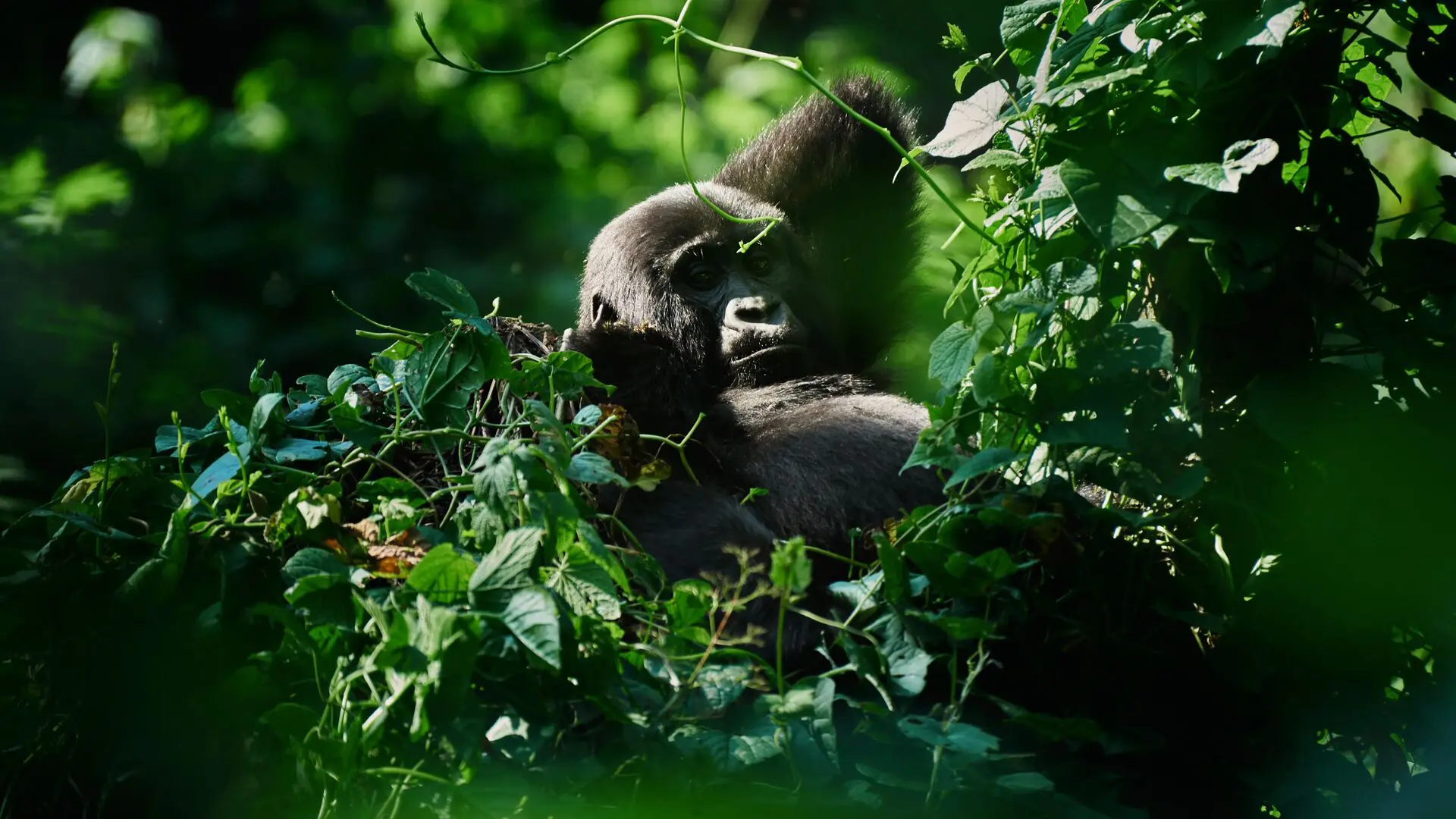
Bwindi gorilla trekking in Uganda
What makes Uganda different is the variety of experiences within one route. A safari can combine forest trekking, wildlife viewing, the Nile, crater landscapes and highland scenery without crossing into another country. The main planning challenge is distance, so the strongest itineraries connect the parks in a realistic order rather than trying to include too many regions in too few days.
Types of Uganda Safaris
Gorilla Trekking Safaris
Gorilla trekking is one of Uganda’s strongest safari experiences, with treks taking place in Bwindi Impenetrable National Park and Mgahinga Gorilla National Park. These trips can be arranged as short gorilla-focused safaris or combined with chimpanzees, wildlife and other destinations in western Uganda. Bwindi offers several trekking areas, so your permit, lodge and transfer route need to be planned around the correct sector.
Wildlife Safaris
Uganda wildlife safaris focus on parks such as Murchison Falls, Queen Elizabeth, Kidepo Valley and Lake Mburo. Game drives can bring sightings of elephants, buffaloes, lions, giraffes, zebras, antelopes and other savannah species, while boat safaris add hippos, crocodiles and wildlife along major waterways. These trips work well for travellers who want a more traditional East African safari alongside Uganda’s forest experiences.
Chimpanzee and Primate Safaris
Uganda is particularly strong for travellers interested in primates beyond gorillas. Kibale National Park is the main chimpanzee-tracking destination and combines naturally with Queen Elizabeth National Park and Bwindi. Other forests also support monkeys and smaller primates, making it possible to build a safari around several different forest habitats rather than concentrating on a single species.
Birding Safaris
Uganda’s forests, wetlands, lakes and savannah parks support a wide range of birdlife, making birding easy to combine with a wider wildlife itinerary. Key areas include Bwindi, Kibale, Queen Elizabeth, Murchison Falls and Mabamba Wetland, with opportunities to look for Albertine Rift species, waterbirds, raptors and the shoebill.
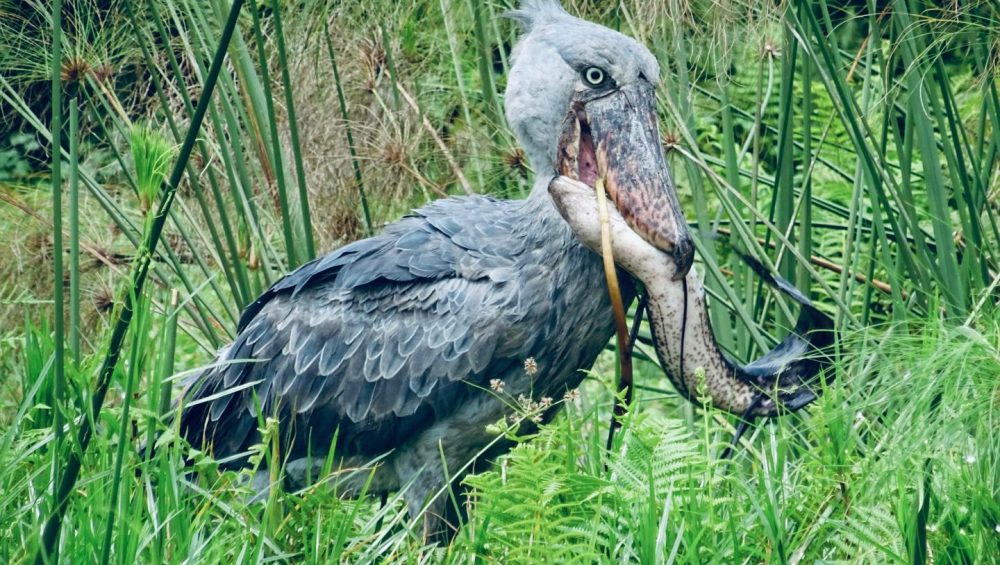
Mabamba Wetland shoebill stork
Hiking and Adventure Safaris
Travellers wanting more active days can include hiking in the Rwenzori Mountains or Mount Elgon, forest walks, cycling, white-water rafting on the Nile and other outdoor activities. These experiences work best when enough recovery time is allowed between demanding hikes, long road transfers and primate trekking days.
Best Uganda Safari Destinations
Uganda’s main safari destinations are spread from the Nile in the north to the mountain forests of the southwest, so choosing the right combination matters more than trying to visit every park. Murchison Falls and Queen Elizabeth provide the strongest classic wildlife routes, Bwindi and Mgahinga are central to mountain gorilla trekking, while Kibale adds chimpanzees and forest primates. Kidepo gives a more remote savannah experience for travellers with enough time to reach northeastern Uganda. A first Uganda safari normally works best when the parks are chosen around the experiences you value most and then connected in a realistic order.
Bwindi Impenetrable National Park for Gorilla Trekking
Bwindi Impenetrable National Park is Uganda’s main mountain gorilla trekking destination and one of the most important stops on longer Uganda safaris. Trekking is organised from Buhoma, Ruhija, Rushaga and Nkuringo, so the sector shown on your gorilla permit should determine where you stay and how you approach the park. Bwindi fits particularly well at the southern end of a route through Kibale and Queen Elizabeth National Park, allowing travellers to combine chimpanzees, savannah wildlife and mountain gorillas without unnecessary backtracking. Beyond gorilla trekking, the forest also supports birding, guided forest walks and community activities.
Murchison Falls National Park for Wildlife and Nile Safari
Murchison Falls National Park is one of the strongest choices for travellers who want classic wildlife and a boat safari in the same destination. Game drives on the northern side of the Nile can bring sightings of elephants, giraffes, buffaloes, lions, antelopes and other savannah wildlife, while the boat trip towards the falls adds hippos, crocodiles and prolific birdlife along the river. The park works particularly well at the beginning of a longer Uganda safari before continuing south towards Kibale, Queen Elizabeth National Park and Bwindi. Its combination of wildlife, the Nile and the dramatic falls gives the itinerary a very different character from Uganda’s forest and primate destinations.
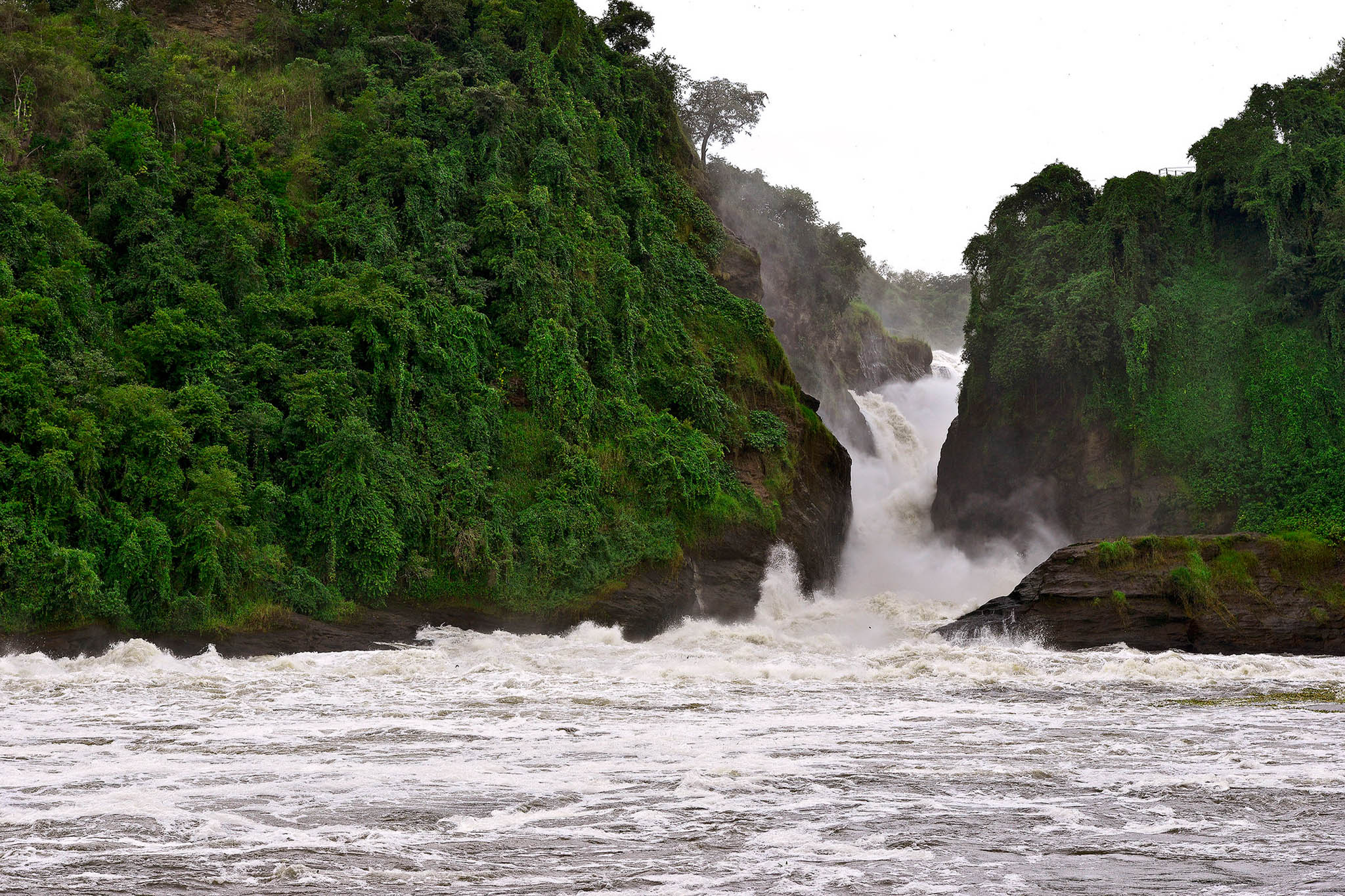
Murchison Falls
Queen Elizabeth National Park for Game Drives and Boat Safaris
Queen Elizabeth National Park works particularly well for travellers who want to combine savannah wildlife with Uganda’s western primate route. Game drives around the Kasenyi plains can bring sightings of lions, elephants, buffaloes, antelopes and other wildlife, while the Kazinga Channel boat safari gives close views of hippos, crocodiles, waterbirds and animals coming to the shoreline. The park also includes the Ishasha sector, known for its tree-climbing lions, and sits naturally between Kibale National Park and Bwindi. This makes Queen Elizabeth one of the easiest parks to include when building a Uganda safari around chimpanzees, wildlife and mountain gorillas.
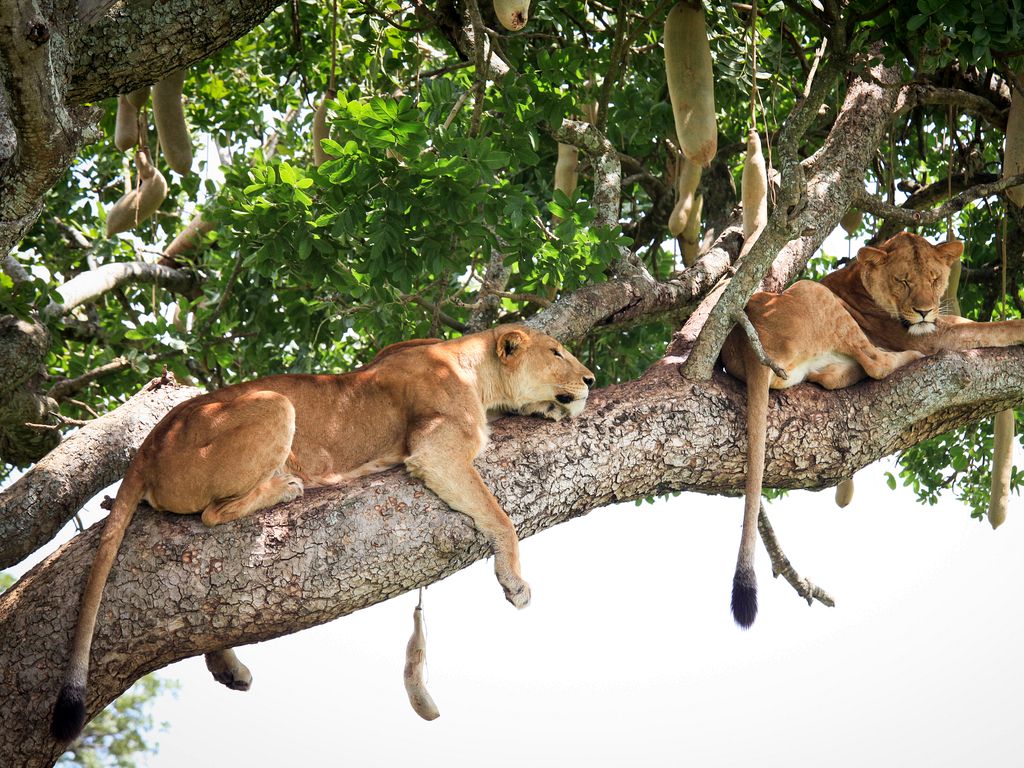
Ishasha sector tree-climbing lions
Kibale National Park for Chimpanzee Trekking
Kibale National Park is Uganda’s leading destination for chimpanzee trekking and fits naturally into the western safari route between Murchison Falls, Queen Elizabeth National Park and Bwindi. Guided tracking takes visitors into the forest to look for habituated chimpanzee communities, while the park also supports a wide range of other primates and forest birdlife. Kibale is particularly useful on itineraries that want more than one primate experience. Travellers can combine chimpanzee trekking here with savannah wildlife in Queen Elizabeth National Park before continuing south towards Bwindi for mountain gorillas, creating one of Uganda’s strongest multi-experience safari routes.
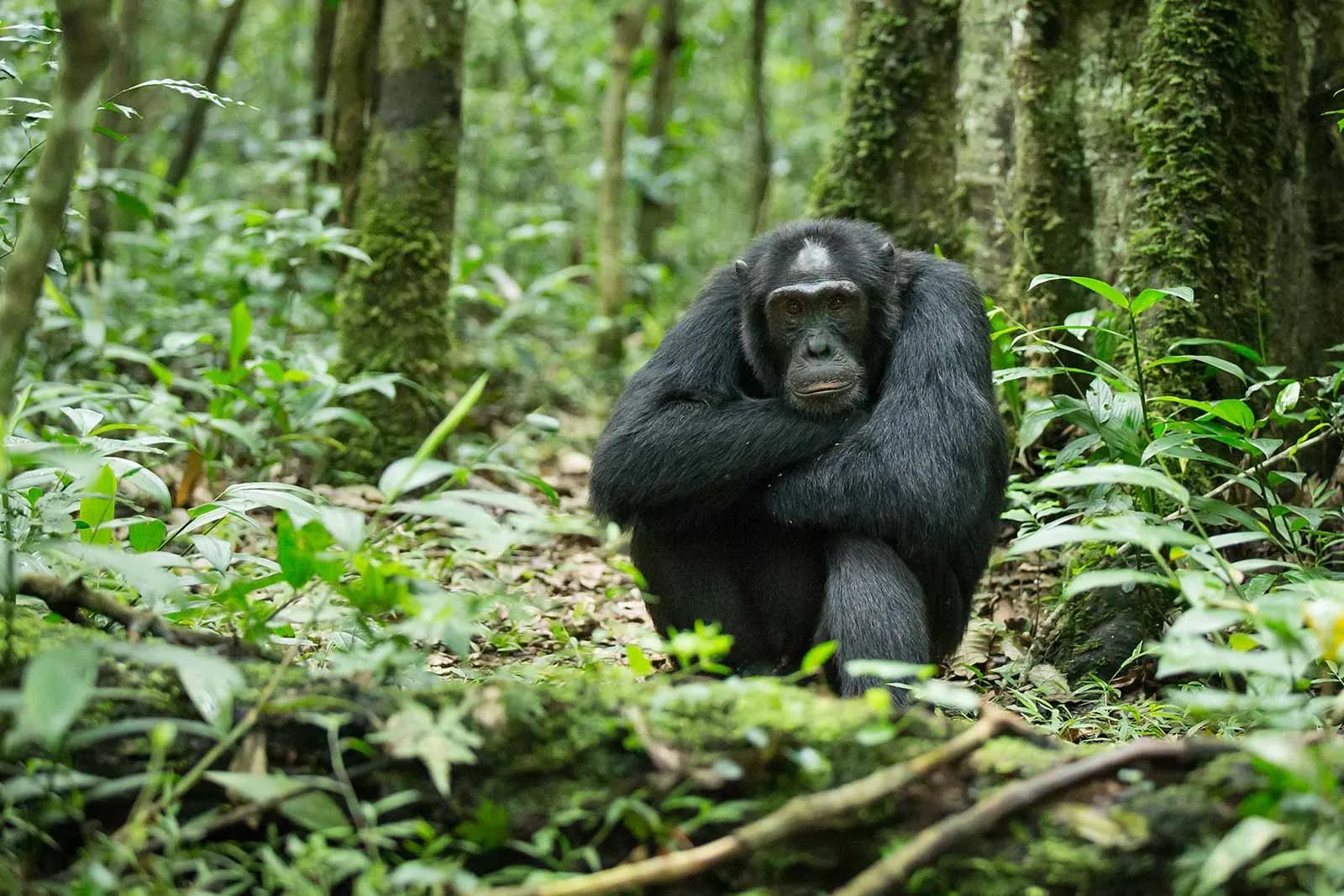
Kibale chimpanzee trekking
Kidepo Valley National Park for Remote Wildlife Safaris
Kidepo Valley National Park suits travellers who want a more remote savannah safari away from Uganda’s busier western circuit. Its open plains, rocky hills and dry valleys support lions, elephants, buffaloes, giraffes, zebras, antelopes and other wildlife, with game drives offering a very different landscape from Murchison Falls or Queen Elizabeth National Park. Because Kidepo lies in northeastern Uganda, it works best on longer itineraries or trips that use a domestic flight to reduce road time. It is particularly valuable for travellers who want to extend beyond Uganda’s primate-focused southwest and include a less-travelled wildlife region.
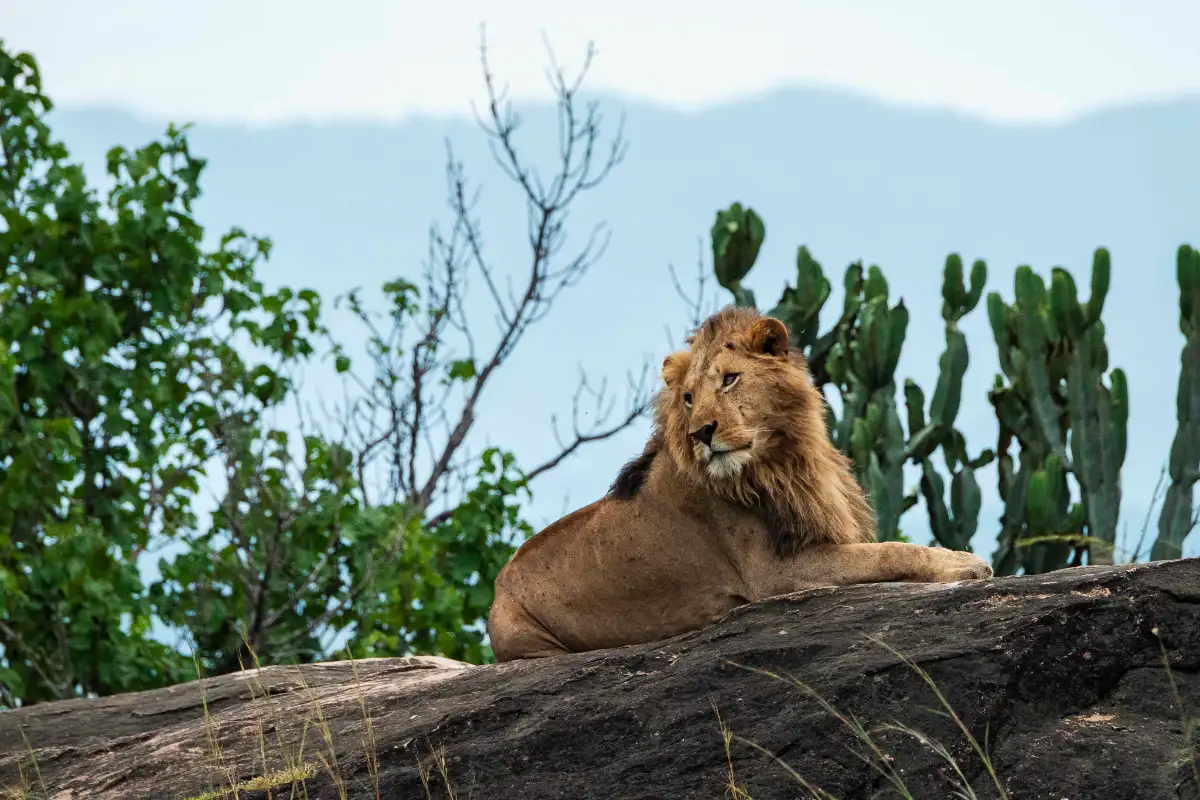
Lion in Kidepo Valley National Park
Mgahinga Gorilla National Park for Gorillas and Golden Monkeys
Mgahinga Gorilla National Park offers a more compact mountain experience in southwestern Uganda, with gorilla trekking, golden monkey tracking and hiking in the Virunga foothills. The park is smaller than Bwindi, but it gives travellers a different setting, with bamboo forest, volcanic slopes and views across the border region shared by Uganda, Rwanda and the Democratic Republic of Congo. Mgahinga fits especially well into itineraries based around Kisoro, and it can be combined with Bwindi, Lake Mutanda or onward travel through southwestern Uganda. It is a strong choice for travellers who want primate trekking with a more open mountain landscape.
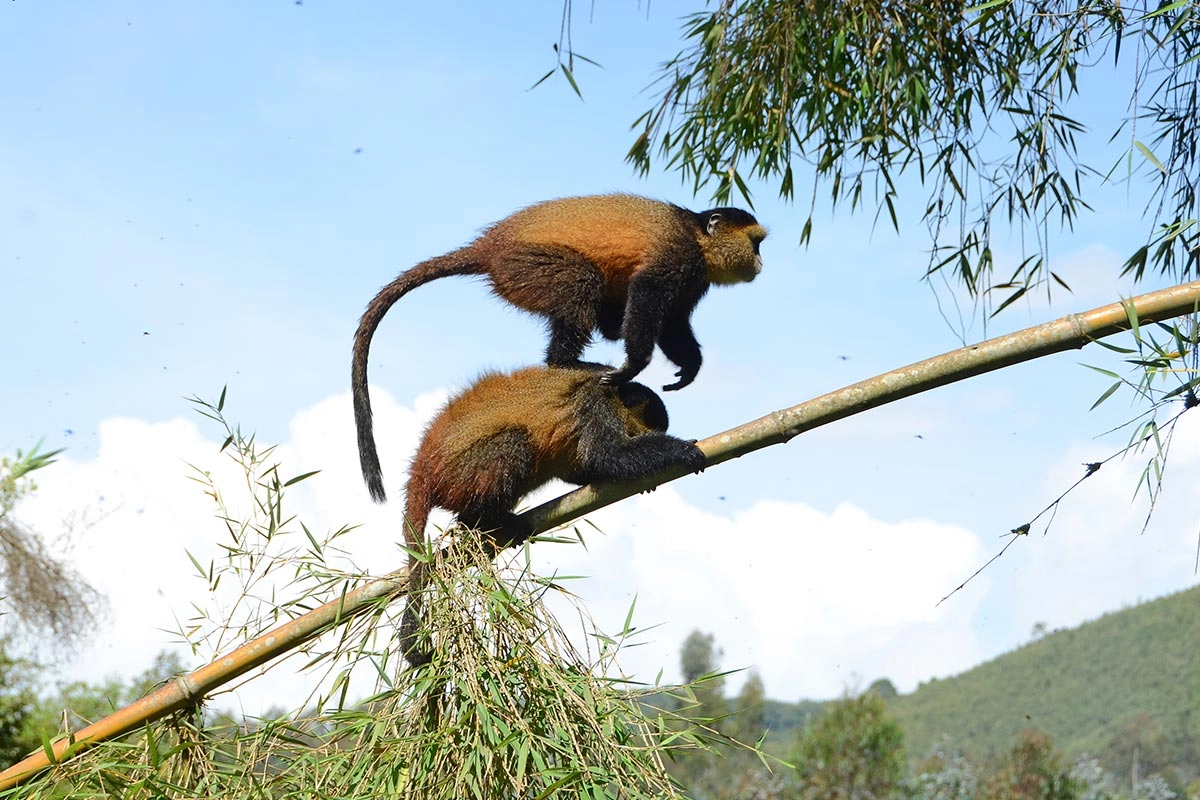
Golden monkey tracking
Other Uganda Safari Destinations Worth Considering
Beyond Uganda’s main safari circuit, several parks and landscapes work well as extensions for travellers with specific interests or extra time. These destinations are best used to strengthen a route rather than being given the same prominence as Bwindi, Murchison Falls, Queen Elizabeth, Kibale, Kidepo or Mgahinga
| Destination | Best For | Where It Fits |
|---|---|---|
| Lake Mburo National Park | Zebras, giraffes, antelopes, walking safaris and shorter wildlife stops | Fits well between Kampala or Entebbe and southwestern Uganda, particularly on routes towards Bwindi |
| Rwenzori Mountains National Park | Mountain trekking, multi-day hikes and high-altitude scenery | Best added to longer western Uganda itineraries for travellers specifically interested in hiking |
| Semuliki National Park | Forest birding, hot springs and western Rift Valley landscapes | Works as a specialist extension from the Fort Portal and Kibale region |
| Mount Elgon National Park | Hiking, waterfalls and mountain landscapes | Better suited to eastern Uganda itineraries or trips combined with Jinja and Sipi Falls |
How Many Days Do You Need for a Uganda Safari?
The right length for a Uganda safari depends on how many regions you want to combine and how much road travel you are comfortable with. A short trip can focus on one major experience, while a longer itinerary gives enough time to connect primate trekking with the main wildlife parks. For most first-time visitors, 7 to 12 days gives a strong balance between variety and travel time.
| Safari Length | What It Can Realistically Cover | Best For |
|---|---|---|
| 1 to 3 days | One focused experience such as gorilla trekking, Murchison Falls or Queen Elizabeth | Short extensions and travellers with limited time |
| 4 to 6 days | Gorilla trekking with one nearby wildlife or primate destination | Travellers wanting two major experiences |
| 7 to 9 days | Kibale, Queen Elizabeth and Bwindi, or a similar western Uganda route | First-time visitors wanting primates and wildlife |
| 10 to 12 days | Murchison Falls, Kibale, Queen Elizabeth and Bwindi | A fuller Uganda safari without rushing |
| 13 to 15 days | Main northern and western safari circuit with additional stops | Travellers wanting wider national coverage |
| 16 days or more | Longer routes including remote areas such as Kidepo or specialist hiking extensions | Travellers with more time and broader interests |
Best Time to Visit Uganda for Safari
Uganda can be visited throughout the year, but the drier months generally make road travel, game drives and forest trekking easier. The most reliable dry periods across much of the main safari circuit are June to August and December to February, although rainfall varies between regions and mountain areas can receive rain at any time.
Drier Months
June to August is one of the strongest periods for combining Uganda’s wildlife parks with gorilla and chimpanzee trekking. Trails are generally firmer, road conditions are easier, and wildlife viewing can benefit as animals concentrate more around permanent water sources. December to February provides another broadly drier window and works well for both primate and savannah itineraries. Murchison Falls also identifies these periods among its preferred times for wildlife viewing.
Wetter Months
The wetter periods fall mainly between March and May and again around September to November, although rainfall timing differs between parks. Forest trails can become muddier and some road journeys slower, but safari activities continue and the landscapes are greener. Bwindi receives some of its heaviest rainfall from March to April and September to November, so good waterproof clothing remains useful even outside the main rainy periods.
What Affects the Cost of a Uganda Safari?
The cost of a Uganda safari depends less on one fixed daily rate and more on how the trip is structured. The biggest differences come from trip length, accommodation level, permit-based activities, transport, and the number of people sharing the vehicle.
Gorilla and chimpanzee trekking add permit costs, while domestic flights can increase the budget but reduce long road journeys between Entebbe and more distant safari regions. Private safaris also cost more per person when only one or two travellers share the vehicle, while the cost is spread more widely in a larger private group.
Accommodation has another major effect. Uganda has everything from simple guesthouses and mid-range safari lodges to high-end properties near the main parks. Route design matters too, because covering distant regions such as Kidepo or combining many parks increases fuel, guiding and transfer costs. The best way to compare safari prices is therefore to check what is included, rather than judging two itineraries only by the final figure.
Getting Around Uganda on Safari
Most Uganda safaris are travelled by private 4×4 safari vehicle, which allows the route to connect national parks, lodges and activities at a comfortable pace. Road travel is also part of the experience, but distances between Uganda’s main safari regions can be long, so the order of the parks matters.
Entebbe is the main international arrival point for most safari travellers. From there, overland itineraries can head north towards Murchison Falls or west towards Kibale, Queen Elizabeth and Bwindi. Longer routes normally work best when the parks are linked geographically rather than returning repeatedly to Kampala or Entebbe.
Domestic flights can shorten journeys to more distant regions, including areas serving Bwindi, Mgahinga, Queen Elizabeth, Murchison Falls and Kidepo. They are particularly useful for shorter itineraries or travellers who want to reduce full-day road transfers. A well-designed Uganda safari therefore balances driving time, park activities and overnight stops rather than simply trying to cover the greatest number of destinations.
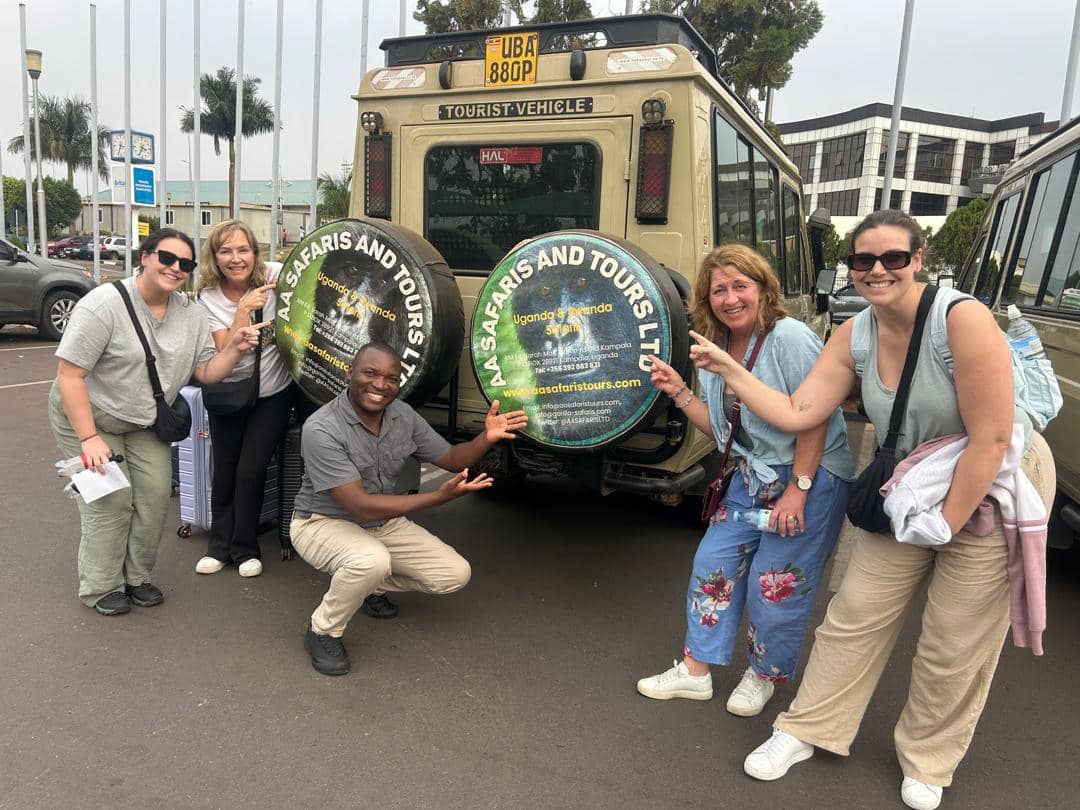
AA Safaris and Tours Uganda tours
Uganda Visa and Entry Information
Travellers who require a visa for Uganda should apply through the official Uganda immigration portal before travel. A standard single-entry tourist visa currently costs USD 50, and applicants need a passport with at least 6 months’ validity, together with supporting travel documents such as an itinerary and accommodation details. Travellers combining Uganda, Kenya and Rwanda can also consider the East African Tourist Visa. It currently costs USD 100, is valid for 90 days and should be issued by the country where you first enter the three-country region. Visa rules can change, so travellers should confirm current requirements before departure.
Frequently Asked Questions About Uganda Safaris
1. How many days do you need for a Uganda safari?
For most first-time visitors, 7 to 12 days gives enough time to combine primate trekking with major wildlife parks without making the itinerary too rushed. Shorter trips can focus on one or two areas, while two weeks or more allows a wider route that can include Murchison Falls or Kidepo.
2. What is the best time to go on safari in Uganda?
Uganda can be visited throughout the year. June to August and December to February are generally drier and can make forest trails and road travel easier. The wetter periods bring greener landscapes and remain suitable for safari, although some tracks and trekking trails can become muddy.
3. Can you combine gorilla trekking with a wildlife safari in Uganda?
Yes. One of Uganda’s main strengths is the ability to combine mountain gorillas with chimpanzees and savannah wildlife. A popular route connects Kibale, Queen Elizabeth National Park and Bwindi, while longer itineraries can also include Murchison Falls or other parks.
4. Should I travel around Uganda by road or domestic flight?
Most Uganda safaris use a private 4×4 vehicle, which works well when several parks are connected in a logical route. Domestic flights are useful when time is limited or when travelling to more distant regions. Many itineraries combine road transfers with one or more flights.
5. Is Uganda suitable for a first safari in Africa?
Yes. Uganda works particularly well for travellers who want more than a traditional game-drive safari. A single itinerary can combine gorilla trekking, chimpanzee tracking, game drives and boat safaris, although the distances between parks mean the route and number of days should be chosen carefully.
6. How far in advance should I book a Uganda safari?
Book once your travel dates are reasonably confirmed, particularly if the itinerary includes gorilla or chimpanzee trekking. Permit availability, preferred lodges, private vehicles and domestic flights can become limited during popular travel periods, so confirming the main components early gives more flexibility when designing the route.