
Tanzania safaris bring together the Serengeti, Ngorongoro Crater, elephant country in Tarangire, and some of East Africa’s largest wilderness areas within one destination. The northern safari circuit works particularly well for first-time visitors, while Nyerere and Ruaha offer longer southern routes with a more remote character. The Great Migration adds a strong seasonal dimension to the Serengeti, and Zanzibar makes it possible to finish a wildlife safari on the Indian Ocean coast. Most northern Tanzania safaris begin around Arusha, with private 4×4 travel connecting Tarangire, Lake Manyara, Ngorongoro and Serengeti. Domestic flights become useful when reducing long transfers or connecting the wildlife areas with Zanzibar and the southern parks. AA Safaris & Tours arranges Tanzania safari itineraries around your available time and interests, including accommodation, private transport, domestic flight connections and safari routes coordinated with trusted ground partners in Tanzania.
Why Choose Tanzania for Safari
Tanzania gives travellers access to several of East Africa’s strongest wildlife regions within one country. The Serengeti and Ngorongoro form the core of many first-time safaris, while Tarangire and Lake Manyara add different landscapes and wildlife to the northern circuit. Travellers with more time can head south to Nyerere and Ruaha for larger wilderness areas and a more remote safari experience. Another major advantage is the variety of ways a trip can be structured. Tanzania works for classic road safaris, fly-in journeys, Great Migration itineraries and longer wildlife trips that finish on Zanzibar or the Indian Ocean coast. The country also suits different trip lengths. A week can cover the main northern wildlife circuit, while longer itineraries allow more time in the Serengeti, southern Tanzania or a beach extension without forcing too many destinations into one route.
Types of Tanzania Safaris
Tanzania safaris can be planned around the northern wildlife circuit, the Great Migration, the more remote southern parks, a Zanzibar beach extension or a wider East African journey. The right safari style depends on how many days you have, the wildlife you want to prioritise and whether you prefer travelling mainly by road or using domestic flights between distant regions
| Safari Style | What It Includes | Best For |
|---|---|---|
| Northern Circuit Safari | Serengeti, Ngorongoro, Tarangire and Lake Manyara | First-time visitors and classic wildlife viewing |
| Great Migration Safari | Serengeti stays positioned around seasonal herd movements | Travellers focused on migration wildlife and predator activity |
| Southern Tanzania Safari | Nyerere and Ruaha, often using domestic flights | Travellers wanting larger wilderness areas and fewer busy safari routes |
| Tanzania Safari and Zanzibar | Wildlife safari followed by time on Zanzibar | Travellers wanting safari and beach in one trip |
| Kenya and Tanzania Safari | Tanzania’s northern circuit combined with destinations such as the Maasai Mara | Longer East African wildlife journeys |
Best Tanzania Safari Destinations
Tanzania’s main safari regions offer very different wildlife experiences. The Serengeti and Ngorongoro anchor the northern circuit, while Tarangire and Lake Manyara fit naturally into routes beginning around Arusha. Further south, Nyerere and Ruaha provide much larger wilderness journeys that work particularly well for travellers with more time or those using domestic safari flights. The right combination depends on trip length, season and whether the priority is the Great Migration, Big Five viewing, elephants, quieter wilderness areas or a broader Tanzania itinerary.
Serengeti National Park for Wildlife and the Great Migration
Serengeti National Park is the centrepiece of many Tanzania safaris and one of the strongest wildlife destinations in East Africa. Its open plains, woodland, rocky kopjes and river systems support lions, leopards, cheetahs, elephants, buffaloes, giraffes, hyenas and large populations of plains game. The Great Migration is a major reason travellers choose the Serengeti, but the herds do not remain in one location throughout the year. The southern plains become important during the breeding and calving period before the animals begin moving west and north in search of fresh grazing and water. Later in the cycle, the northern Serengeti and Mara River become particularly important as herds move through the Serengeti-Mara ecosystem. River crossings are highly unpredictable, and even during the main northern migration period there is no guarantee that a crossing will happen during a particular game drive.
Serengeti is equally valuable outside the migration because resident wildlife remains across the park throughout the year. Different regions can therefore be chosen according to season, safari length and the kind of wildlife experience a traveller wants. The park fits naturally into the northern Tanzania circuit, commonly combined with Ngorongoro, Tarangire and Lake Manyara. Travellers with limited time can also use domestic safari flights to reduce long road transfers or connect Serengeti with Zanzibar.
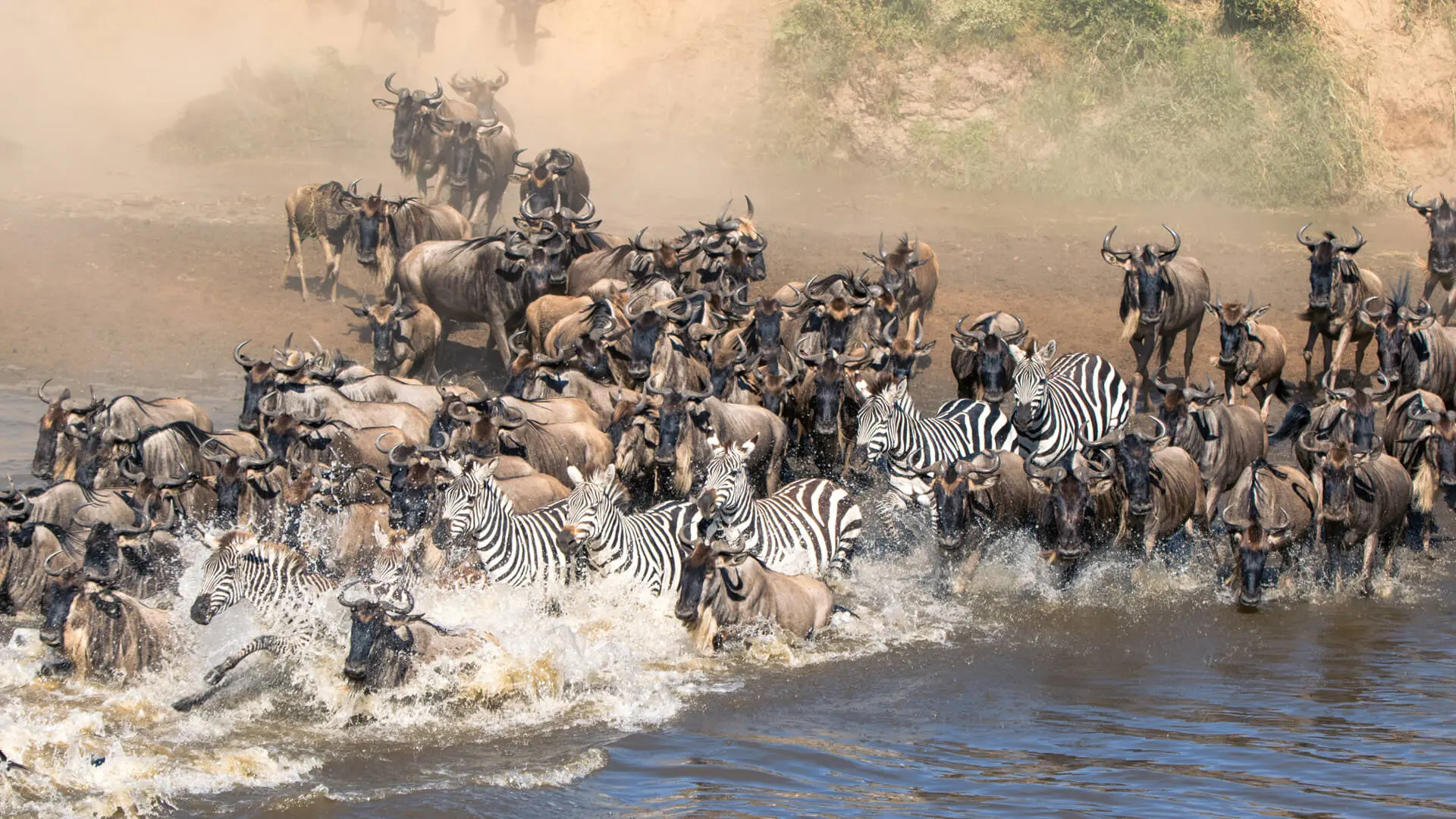
Herds of zebra and wildebeest during the Great Migration
Ngorongoro Crater for Big Five Safaris
The Ngorongoro Crater is one of the most important wildlife stops on Tanzania’s northern safari circuit. It lies within the wider Ngorongoro Conservation Area, a UNESCO World Heritage Site covering highland plains, savannah, woodland and forest between the Serengeti and the Great Rift Valley. The crater itself is the world’s largest unbroken caldera and holds a remarkable concentration of wildlife within a relatively compact area. A descent onto the crater floor can bring sightings of lions, buffalo, elephants, zebras, wildebeest, hippos, hyenas and many antelope species. Black rhinos are also present, making Ngorongoro one of the stronger places in northern Tanzania to look for them, although sightings should never be treated as guaranteed. Lakes, grasslands, marshes and woodland pockets create different habitats across the crater floor, which is why so much wildlife can be encountered during a single game drive.
Ngorongoro works particularly well within a road safari because of its position between Tarangire, Lake Manyara and the Serengeti. Many itineraries spend a night on or near the crater highlands before descending for a morning or full-day game drive and then continuing towards Serengeti or Arusha. The wider conservation area is also important because wildlife and pastoral communities share the landscape, distinguishing it from a conventional national park. For most travellers, however, the main safari experience remains the crater itself, where dramatic scenery and concentrated wildlife make it one of the strongest components of a northern Tanzania itinerary
Tarangire National Park for Elephants and Baobabs
Tarangire National Park is one of the strongest additions to Tanzania’s northern safari circuit, particularly for travellers interested in elephants, dry-season wildlife and landscapes dominated by old baobab trees. The park covers about 2,850 square kilometres and takes its name from the Tarangire River, which runs through the landscape and becomes increasingly important to wildlife as surrounding seasonal water sources begin to dry. From roughly June to October, large numbers of animals move towards the river system, seasonal swamps and remaining water points. Elephants are one of Tarangire’s defining sights, but game drives can also bring buffaloes, zebras, wildebeest, giraffes, hartebeest and predators including lions, leopards and hyenas. Silale Swamp is another important dry-season area where elephants, buffaloes and birdlife can concentrate.
The scenery is equally important. Open savannah, acacia woodland, riverine vegetation and large baobabs give Tarangire a very different appearance from the open grasslands of the Serengeti. This contrast is one reason the park works so well in a multi-park itinerary rather than feeling like a smaller version of another northern destination. Tarangire is also convenient at the beginning or end of a road safari. It lies roughly 2.5 to 3 hours from Arusha, making it straightforward to combine with Lake Manyara, Ngorongoro and the Serengeti.
Lake Manyara National Park for Rift Valley Wildlife
Lake Manyara National Park is one of the most varied stops on Tanzania’s northern safari circuit. The park covers about 648.7 square kilometres and sits below the western escarpment of the Great Rift Valley, where groundwater forest, acacia woodland, open floodplain, wetlands and the alkaline lake create a surprisingly wide range of habitats within a compact area. Game drives can bring elephants, buffaloes, giraffes, zebras, wildebeest and troops of baboons, while the groundwater forest near the entrance is particularly good for blue monkeys and forest birdlife. Hippos are found around the wetter parts of the park, and the lakeshore attracts pelicans, storks, herons and other waterbirds. Flamingos can gather in large numbers when lake conditions are suitable, but their presence and concentration vary with water levels and feeding conditions.
Lake Manyara is also known for its tree-climbing lions, although they should be treated as a possible sighting rather than a guaranteed feature of every visit. Other distinctive parts of the park include the hot springs at Maji Moto, the Rift Valley escarpment and the contrast between dense forest and open lakeshore scenery. Its position makes Manyara easy to include without creating a difficult route. The park lies about 125 kilometres from Arusha, with the drive taking roughly 2 to 2.5 hours, and it fits naturally between Arusha, Tarangire, Ngorongoro and the Serengeti.
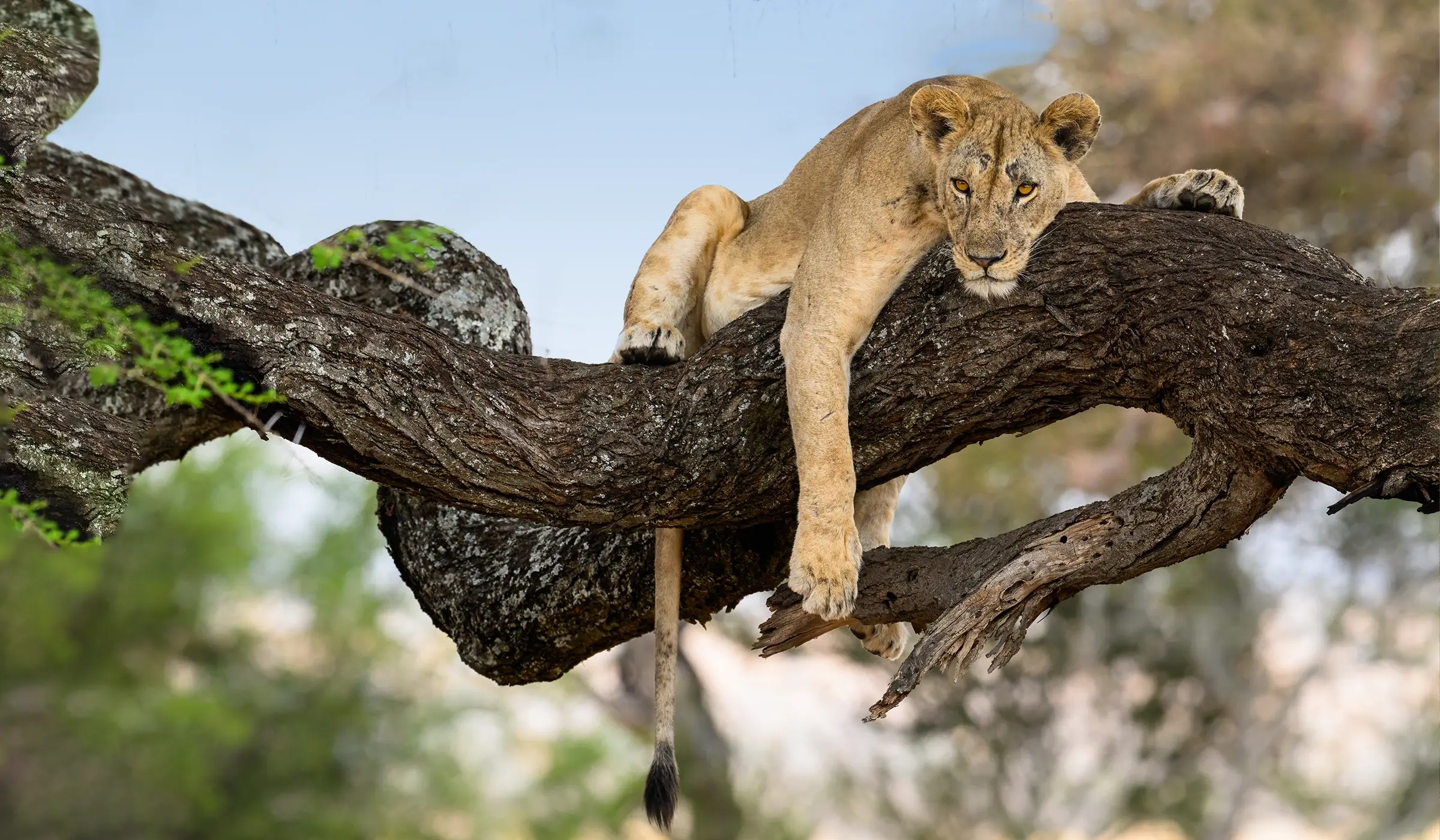
Lake Manyara tree-climbing lions
Nyerere National Park for Southern Tanzania Safaris
Nyerere National Park opens up a very different side of Tanzania from the better-known northern circuit. Covering more than 30,000 square kilometres, the park stretches across a vast landscape of miombo woodland, open grassland, floodplains, riverine forest and the channels and oxbow lakes of the Rufiji River. Its scale gives longer Tanzania itineraries room to move away from the familiar Serengeti and Ngorongoro route and experience one of the country’s largest protected wilderness areas.
Wildlife includes elephants, buffaloes, giraffes, hippos, crocodiles, lions, leopards and several antelope species. Nyerere is also one of Tanzania’s important strongholds for African wild dogs, although sightings depend on where packs are moving at the time of the safari. The Rufiji River is central to the experience, drawing wildlife towards its banks, channels and surrounding lakes, particularly as conditions become drier.
What separates Nyerere from many northern parks is the variety of ways travellers can explore it. Alongside conventional game drives, boat safaris on the Rufiji River bring a different perspective, with hippos, crocodiles, elephants and waterbirds encountered from the water. Guided walking safaris are also available in designated areas, adding another dimension to a longer southern Tanzania safari. Nyerere works particularly well for travellers who want a safari with a stronger wilderness character or who are combining southern Tanzania with Ruaha. Domestic flights from Dar es Salaam are commonly used to reach park airstrips, making a fly-in southern circuit much more practical than trying to connect every region by road.
Ruaha National Park for Remote Wildlife Safaris
Ruaha National Park is one of the strongest choices for travellers who want to experience southern Tanzania beyond the better-known northern circuit. Covering about 20,226 square kilometres, it is Tanzania’s second-largest national park and combines broad miombo woodland, baobab-studded plains, rocky hills and several important river systems. The Great Ruaha River is central to the park. During the drier months, wildlife becomes increasingly concentrated around the river, permanent pools and remaining water sources, creating good opportunities to see elephants, buffaloes and predators. Ruaha is particularly strong for lions, while leopards, cheetahs, spotted hyenas and African wild dogs are also present. The park is also known for antelope species such as greater kudu, sable and roan, which add something different to a wider Tanzania wildlife itinerary.
Game drives remain the main way to explore Ruaha, but guided walking safaris are also available in designated areas. The combination of riverine habitat, open country and miombo woodland means game viewing changes noticeably as you move through different parts of the park rather than following one dominant landscape. Ruaha works particularly well alongside Nyerere National Park on a southern Tanzania safari. Scheduled and charter flights serve airstrips including Msembe and Jongomero, while road access from Iringa is roughly 2 to 3.5 hours, depending on conditions
Other Tanzania Destinations Worth Adding to a Safari
Beyond the main northern and southern wildlife parks, Tanzania has several destinations that can add trekking, primates, forest landscapes or beach time to a longer itinerary. Arusha National Park works well near the northern safari gateway, Kilimanjaro adds a mountain component, while Mahale and Gombe open up western Tanzania for chimpanzee trekking. Zanzibar provides the strongest beach extension after a wildlife safari.
| Destination | Best For | Where It Fits |
|---|---|---|
| Arusha National Park | Short game drives, forest scenery, Mount Meru and canoeing | Before or after a northern Tanzania safari from Arusha |
| Mount Kilimanjaro | Multi-day mountain trekking and high-altitude scenery | Before or after the northern safari circuit |
| Zanzibar | Beaches, Indian Ocean stays and post-safari relaxation | After Serengeti, Ngorongoro or southern Tanzania |
| Mahale Mountains National Park | Wild chimpanzee trekking, Lake Tanganyika and remote forest | Longer western Tanzania journeys |
| Gombe National Park | Chimpanzee trekking and forest walks beside Lake Tanganyika | Specialist western Tanzania itineraries |
| Mikumi National Park | Accessible game drives and southern Tanzania extensions | Between Dar es Salaam and the wider southern circuit |
| Udzungwa Mountains National Park | Hiking, waterfalls, forest and endemic primates | Combined with Mikumi or a longer southern route |
Great Migration Safaris in the Serengeti
The Great Migration is a continuous movement of wildebeest, zebras and other grazing animals through the wider Serengeti and Mara ecosystem in search of fresh grass and water. There is no single migration month or permanent viewing location. The part of the Serengeti that works best for a migration safari changes through the year as rainfall influences where the herds feed, breed and move. From roughly January to March, the southern Serengeti and neighbouring short-grass plains become important during the calving period. As conditions change, the herds begin moving towards the central and western parts of the ecosystem. By the middle of the year, movement increasingly shifts northwards, with the northern Serengeti and Mara River becoming important later in the dry season before animals gradually move back south as the cycle continues. River crossings receive much of the attention, but they are among the least predictable parts of a migration safari. Herds can gather near the Mara River and remain there before crossing, change direction or use a different crossing point. Serengeti National Park therefore manages designated crossing areas and requires vehicles to remain back from animals approaching the river so their movement is not disturbed. For travellers planning specifically around the migration, location and number of nights matter more than simply choosing the Serengeti. Several nights positioned in the appropriate part of the ecosystem generally give a better chance of encountering the herds than trying to cover several Serengeti regions quickly.
How Many Days Do You Need for a Tanzania Safari?
The right length for a Tanzania safari depends on the number of parks you want to combine, whether you focus on the northern or southern circuit, and how much time you want to spend in the Serengeti. Short trips can cover two nearby northern destinations, while longer itineraries allow a better balance between wildlife viewing, travel time and optional extensions such as Zanzibar. For most first-time visitors, 7 to 10 days gives enough time to combine several major wildlife areas without rushing
| Safari Length | What It Can Realistically Cover | Best For |
|---|---|---|
| 3 to 4 days | Two nearby northern destinations such as Tarangire and Ngorongoro | Short safari extensions and travellers with limited time |
| 5 to 7 days | Tarangire, Ngorongoro and Serengeti | First-time visitors wanting the core northern circuit |
| 8 to 10 days | Deeper Serengeti stay with several northern parks, or a focused southern Tanzania safari | Travellers wanting more wildlife time and less rushing |
| 11 to 14 days | Northern circuit with Zanzibar, or a broader southern Tanzania route | Travellers wanting safari plus additional regions |
| 15 days or more | Tanzania wildlife circuit with Zanzibar, western Tanzania or a Kenya combination | Longer multi-region and cross-border journeys |
Best Time to Visit Tanzania for Safari
Tanzania can be visited throughout the year, but the best time depends on the wildlife areas included and the kind of safari you want. For general game viewing, the drier months from June to October are among the strongest periods across much of the country. Wildlife becomes easier to locate around rivers and permanent water sources, vegetation is generally thinner, and road conditions are more dependable in many parks.
Drier Months
From June to October, the Serengeti, Tarangire, Ruaha and Nyerere can all offer strong wildlife viewing. Tarangire is particularly rewarding as animals gather around the Tarangire River, while the Great Ruaha River and Rufiji system become increasingly important in southern Tanzania. January and February can also work very well, particularly in northern Tanzania. These months are warmer and generally drier, and they overlap with an important period for the southern Serengeti plains.
Wetter Months
The long rains generally fall from March to May, while shorter rains commonly arrive around November and December. Rain can make some roads more difficult and occasionally interrupt game drives, but it does not mean safaris stop. The wetter periods bring greener landscapes, fewer dusty conditions and strong birdlife. Wildlife remains present, although animals can spread more widely when water is readily available. For travellers focused specifically on the Great Migration, season alone is not enough. The location of the herds should guide where you stay in the Serengeti.
What Affects the Cost of a Tanzania Safari?
The cost of a Tanzania safari depends mainly on trip length, the parks included, accommodation level, transport style and the number of travellers sharing the vehicle. A short northern circuit using Tarangire and Ngorongoro will cost differently from a longer itinerary that includes several nights in the Serengeti, domestic flights or a Zanzibar extension. Park and conservation fees form an important part of the total, particularly on routes that include Serengeti and Ngorongoro. Accommodation also makes a major difference, ranging from comfortable lodges and tented camps to high-end properties in prime wildlife areas.
Transport choices matter as well. Private road safaris are common on the northern circuit, while fly-in itineraries become more useful when reducing long transfers or combining distant regions such as Serengeti, Nyerere, Ruaha and Zanzibar. Season can also influence the final cost. Accommodation around key Great Migration areas can be more expensive during high-demand periods. The best comparison is therefore not the headline price alone, but what is included, especially park fees, accommodation, meals, private transport, domestic flights and additional activities.
Getting Around Tanzania on Safari
Most northern Tanzania safaris begin in Arusha, with travellers arriving through Kilimanjaro International Airport or connecting from elsewhere in East Africa. From Arusha, private 4×4 vehicles are commonly used to reach Tarangire, Lake Manyara, Ngorongoro and the Serengeti, making the northern circuit well suited to a continuous road safari. Tarangire and Lake Manyara are among the easier parks to reach from Arusha, while the journey becomes longer as the route continues through Ngorongoro towards the Serengeti. Domestic safari flights are useful when travellers want to reduce these longer transfers, spend more time inside the Serengeti or connect directly with Zanzibar after the wildlife portion of the trip.
Southern Tanzania works differently. Dar es Salaam is an important gateway for safaris to Nyerere, while domestic flights are widely used to reach Nyerere and Ruaha because the distances between southern wildlife areas are much greater. Fly-in combinations can therefore make better use of limited safari time. The best transport choice depends on the route. Road travel works particularly well on the northern circuit, while domestic flights become increasingly useful for Serengeti extensions, southern Tanzania and safari-and-beach combinations.
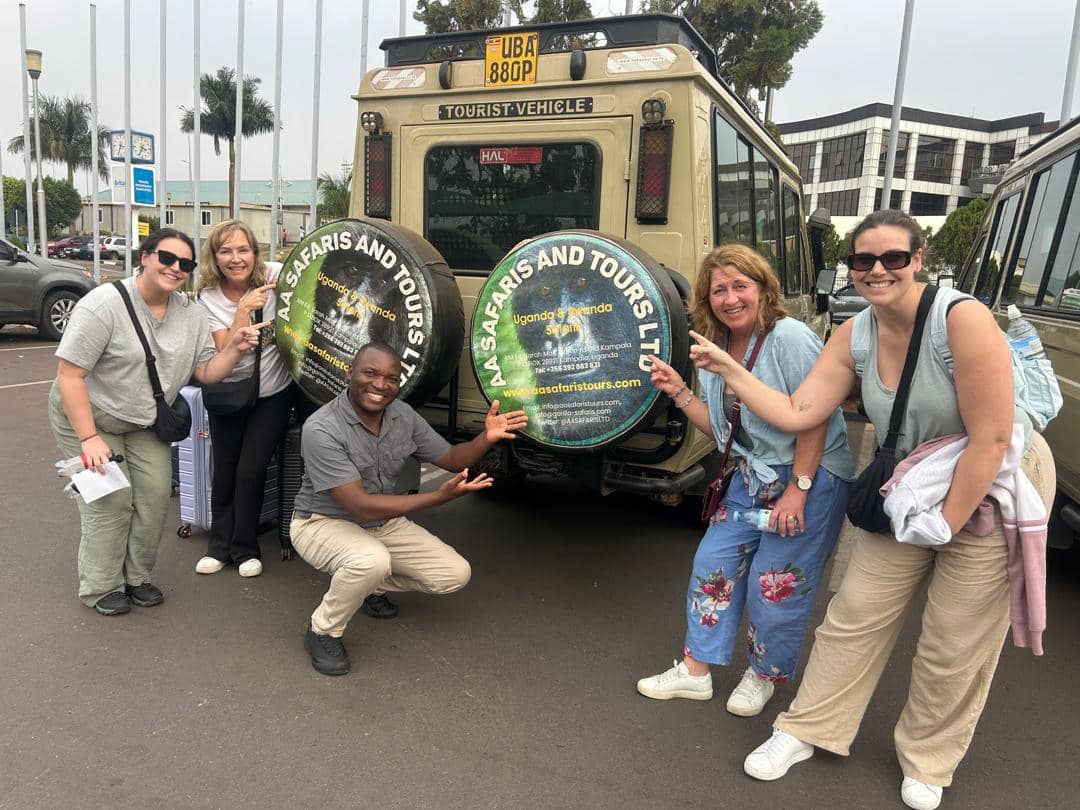
AA Safaris and Tours
Tanzania Visa and Entry Information
For most international travellers, getting a Tanzania visa is part of preparing for a safari. A standard tourist visa costs US$50 and allows eligible visitors to stay for up to 90 days. If you are travelling on a US passport, Tanzania requires a Multiple Entry Visa for tourism, which costs US$100. If your safari includes both mainland Tanzania and Zanzibar, you do not need two separate visas. Your Tanzania visa covers both destinations, so you can travel between the mainland and Zanzibar without applying for another one. Just make sure you enter your correct first arrival point when completing the visa application. Visa requirements depend on your nationality. Some travellers can enter Tanzania without a visa, while others need additional approval before travelling. It is worth checking the requirements for your passport before booking your trip so you arrive with the right documents in place.
Frequently Asked Questions About Tanzania Safaris
1. How many days do you need for a Tanzania safari?
For most first-time visitors, 7 to 10 days gives enough time to combine several major northern parks without rushing. Shorter trips can focus on Tarangire, Ngorongoro and part of the Serengeti, while longer itineraries allow more time in the Serengeti, southern Tanzania or Zanzibar.
2. What is the best time to go on safari in Tanzania?
Tanzania can be visited throughout the year. June to October is one of the strongest periods for general wildlife viewing because conditions are drier across many safari regions. January and February also work well in northern Tanzania, while wetter months bring greener landscapes and strong birdlife.
3. When is the Great Migration in the Serengeti?
The Great Migration moves through different parts of the Serengeti ecosystem throughout the year. The southern plains become important during the calving period early in the year, while the herds gradually move west and north before reaching the northern Serengeti later in the cycle. Exact timing depends on rainfall and grazing conditions.
4. Is northern or southern Tanzania better for safari?
The northern circuit is best suited to travellers who want Serengeti, Ngorongoro and Tarangire in one route. Southern Tanzania, including Nyerere and Ruaha, suits travellers looking for larger wilderness areas, different safari activities and routes that rely more heavily on domestic flights.
5. Can I combine a Tanzania safari with Zanzibar?
Yes. Tanzania is particularly well suited to a safari and beach combination. Travellers can finish a Serengeti, Ngorongoro or southern Tanzania safari with several nights on Zanzibar, with domestic flights making the connection between the wildlife areas and the coast straightforward.
6. Can Kenya and Tanzania be combined on one safari?
Yes. Kenya and Tanzania work well together on longer East African itineraries. A common combination connects the Maasai Mara, Serengeti and Ngorongoro, while longer routes can also include Amboseli, Tarangire and other wildlife areas depending on available time and border logistics.
Start Planning Your Tanzania Safari with AA Safaris & Tours
Tell us how many days you have, the wildlife areas you want to prioritise and whether you prefer a road safari, domestic flights or a safari and Zanzibar combination. AA Safaris & Tours can arrange the route, accommodation, private 4×4 transport and flight connections around your available time so the itinerary remains balanced and realistic.