
Queen Elizabeth National Park covers about 1,978 sq km in western Uganda, stretching across open savannah, crater lakes, wetlands, forested gorges and the Kazinga Channel between Lakes George and Edward. It is one of the best parks in Uganda for combining classic game viewing with water-based wildlife encounters, with more than 95 mammal species and over 600 bird species recorded across its varied habitats. Elephants, buffaloes, Uganda kob, hippos, lions and leopards are among the animals most travellers hope to see here, while the park’s changing landscapes mean the safari experience is very different from one area to another. For planning, it helps to think of Queen Elizabeth as several safari areas rather than one large park. Kasenyi Plains is one of the main areas for game drives and lion searches, Kazinga Channel is the place for boat cruises among hippos, elephants and waterbirds, Ishasha is known for tree-climbing lions, while Kyambura Gorge brings chimpanzee tracking into the same itinerary. The park also fits naturally between Kibale and Bwindi, which makes it especially practical for travellers building a longer western Uganda safari rather than visiting it as an isolated stop.
Queen Elizabeth National Park Quick Facts
| Location | Western Uganda, between Lake George and Lake Edward |
|---|---|
| Park Size | About 1,978 sq km |
| Mammal Species | More than 95 recorded species |
| Bird Species | More than 600 recorded species |
| Main Safari Areas | Kasenyi Plains, Mweya Peninsula, Kazinga Channel and Ishasha |
| Main Experiences | Game drives, Kazinga Channel boat cruises, tree-climbing lions and chimpanzee tracking |
Game Drives in Queen Elizabeth National Park
Game drives in Queen Elizabeth are strongest in the early morning and late afternoon, when temperatures are cooler, and lions, leopards and other predators are more likely to be active. The park is too large and varied to treat as one game-viewing area, so your route should depend on where you are staying and what you most want to see. For a first visit, the Kasenyi Plains and the tracks around Mweya give the most practical introduction to the central part of the park, while Ishasha deserves its own game drive if tree-climbing lions are a priority.
Kasenyi Plains
Kasenyi lies about 30 minutes from Mweya and is the main open-plains game-driving area in central Queen Elizabeth. Large numbers of Uganda kob gather on these grasslands, particularly around their breeding grounds, which in turn makes Kasenyi one of the better places to search for lions. Buffaloes, elephants, warthogs, waterbuck and several smaller antelopes are also regularly encountered along the network of tracks. A morning game drive here normally works best before combining the day with an afternoon Kazinga Channel cruise. Give yourself at least 2 to 3 hours rather than rushing through the plains. Predator sightings require patience, and sometimes the most productive part of the drive is simply following fresh tracks, alarm calls or the movement of kob herds with an experienced guide.
Mweya Peninsula and Channel Tracks
The Mweya Peninsula sits on an elevated area overlooking the Kazinga Channel and Lake Edward and forms the park’s main tourism hub. Game-drive tracks around Mweya and towards the channel are particularly useful for elephants, buffaloes, warthogs, waterbuck and occasional predators, while the proximity to the water means wildlife often moves between the bush and the channel during the day. This area is especially practical when your lodge is around Mweya because you can start a game drive soon after sunrise and still return easily for breakfast or continue directly towards the boat-cruise jetty.
Kazinga Channel Boat Cruise
The Kazinga Channel boat cruise is one of the easiest ways to see wildlife at close range in Queen Elizabeth National Park. The channel links Lake George with Lake Edward, and the standard cruise from the Mweya jetty takes about 2 hours. Boats follow the banks where large groups of hippos rest in the shallows and elephants, buffaloes and other animals regularly come down to drink. Nile crocodiles can also be seen along quieter stretches, while the shoreline attracts large numbers of waterbirds including African fish eagles, pied kingfishers, pelicans, cormorants, herons and various storks.
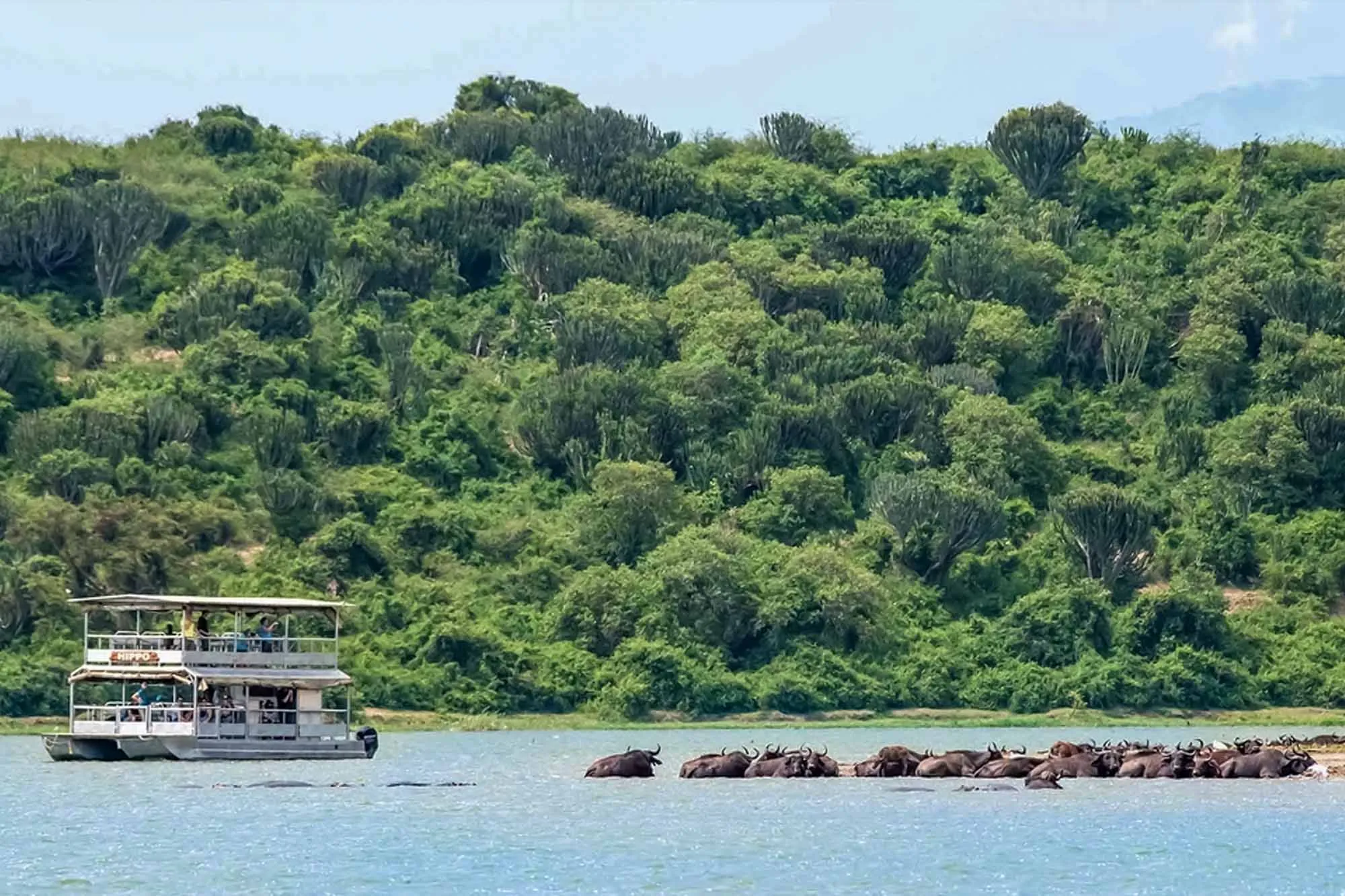
Kazinga Channel cruise
For most itineraries, the most common combination is an early-morning game drive followed by an afternoon Kazinga Channel cruise. This gives you two very different ways of seeing the park in the same day without making the schedule feel rushed. Arrive at the jetty with enough time for boarding, carry binoculars even if you are not a dedicated birder, and keep your camera ready because wildlife can appear very close to the boat. If photography is important, try to sit where you have a clear view towards the bank rather than only across the centre of the channel.
Tree-Climbing Lions in the Ishasha Sector
The Ishasha sector sits in the southern part of Queen Elizabeth National Park and feels noticeably quieter and more open than the busy Kasenyi and Mweya areas. Its main attraction is the chance to find lions resting in large fig trees, sometimes stretched along the lower branches during the warmer part of the day. The lions are the reason most travellers come this far south, but Ishasha is worth treating as a proper game-drive area rather than simply driving through quickly. The plains also support topi, buffaloes, elephants, Uganda kob and warthogs, while the Ishasha River and surrounding woodland add a different landscape from central Queen Elizabeth. Allow around 2 to 3 hours for a dedicated Ishasha game drive if finding the lions is important. Sightings are never guaranteed, so give your guide enough time to check the open plains and the larger fig trees instead of expecting to locate them immediately. Ishasha also fits perfectly into a safari continuing south to Bwindi. Buhoma is about 62 km from Ishasha, so you can spend the morning searching for tree-climbing lions and continue towards your Bwindi lodge afterwards rather than returning to Mweya. A 4WD vehicle is the better choice for this route, particularly when the dirt roads are wet.
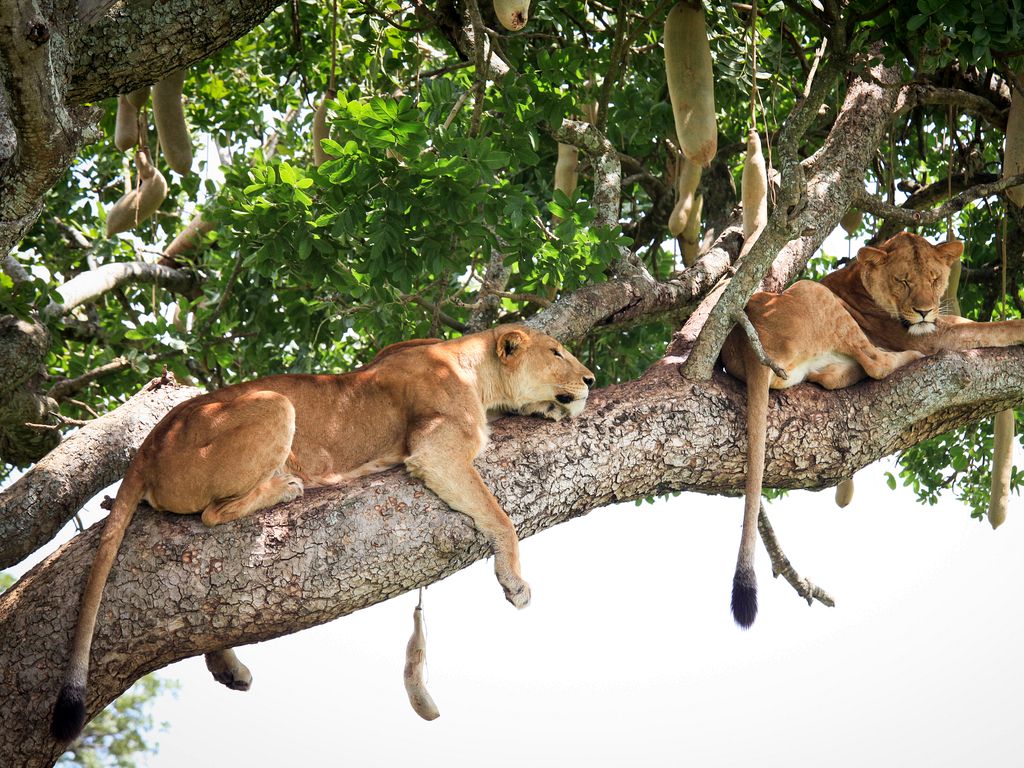
Ishasha sector tree-climbing lions
Chimpanzee Tracking in Kyambura Gorge
Kyambura Gorge gives Queen Elizabeth National Park a completely different experience from the open savannah around Kasenyi and Mweya. The gorge cuts into the surrounding landscape and holds a strip of dense riverine forest where a habituated chimpanzee community is tracked on foot. Morning tracking starts from around 8:00 am, while afternoon tracking begins around 2:00 pm. Once the chimpanzees are found, visitors can spend up to one hour with them. The walk can be steep in places because you descend into the gorge and climb back out again, so proper walking shoes and a reasonable level of fitness are important. The forest is also home to other primates and birds, and even when chimpanzees are moving deeper into the gorge, the walk itself is very different from the game-drive experience above. Children must be at least 12 years old to join chimpanzee tracking. If chimpanzees are a major priority in your Uganda safari, Kibale National Park remains the stronger destination to build the trip around. Kyambura works best as an additional primate experience for travellers already spending two or three days in Queen Elizabeth and wanting to combine savannah wildlife with a forest walk.
Other Things to Do in Queen Elizabeth National Park
The main safari experiences in Queen Elizabeth are game drives and the Kazinga Channel cruise, but there is enough variety around the park to justify an extra half-day or full day. The strongest additions are birdwatching, the crater landscape north of Mweya, Lake Katwe and guided walks in Maramagambo Forest. These activities work best when they are chosen around where you are staying rather than added simply to fill time.
Birdwatching
Queen Elizabeth is one of Uganda’s strongest birding parks, with more than 600 recorded species, but the birding changes depending on the habitat. The Kazinga Channel is especially productive for waterbirds such as African fish eagles, pelicans, cormorants, herons and kingfishers. The soda lakes around Katwe and Kyambura can attract flamingos seasonally, while Maramagambo Forest adds forest species such as Rwenzori turaco, forest flycatcher and African finfoot. Serious birders should allow a separate morning rather than relying only on sightings from a game drive or boat cruise.
Katwe Explosion Craters and Lake Katwe
The volcanic landscape north of Mweya gives one of the best scenic drives in the park. The 27 km Crater Drive runs between Kabatoro and Crater gates, passing extinct volcanic craters filled with lakes, grassland and forest, with wide views towards Lake Edward, the Rift Valley floor and the Rwenzori Mountains. This works particularly well as a late-afternoon drive when you want scenery rather than another full wildlife circuit. Lake Katwe, about 12 km from Mweya, adds a cultural stop to the crater area. Salt has been extracted here for centuries using evaporation pans, and a local walk takes you down towards the crater floor to see how the process works. Nearby Lake Munyanyange is also useful for birding, with lesser flamingos sometimes present between roughly August and November.
Maramagambo Forest Walks
Maramagambo Forest lies below the Kichwamba Escarpment and gives a cooler, shaded contrast to the park’s open savannah. Guided walks can include Lake Nyamusingire, Blue Lake and the bat cave area, with opportunities to see primates, forest birds and smaller wildlife that rarely appear on the plains. It is better suited to travellers with an extra half-day than someone trying to fit Queen Elizabeth into a rushed one-night stop.
How to Get to Queen Elizabeth National Park
| Route | Approximate Distance | Allow |
|---|---|---|
| Kampala to Mweya via Fort Portal | About 410 km | At least 7 to 8 hours |
| Kampala to Mweya via Mbarara and Bushenyi | About 420 km | Full-day drive |
| Buhoma to Ishasha | About 62 to 64 km | Allow around 2 hours depending on road conditions |
| Buhoma to Mweya | About 160 km | Allow most of the day if including an Ishasha game drive |
| Entebbe to nearby airstrips(Kasese, Mweya and Kihihi) | Domestic flight | Around 1 hour, then road transfer |
Where to Stay in Queen Elizabeth National Park
Where you stay in Queen Elizabeth should depend on which part of the park you want to explore first. For a first visit, the central Mweya and Kasenyi area is usually the most practical base because it keeps you close to the main game-drive tracks and the Kazinga Channel boat cruise. Travellers adding Kyambura chimpanzee tracking may prefer the eastern escarpment, while anyone prioritising tree-climbing lions should spend at least one night in Ishasha rather than trying to reach it as a long return trip from Mweya
| Area | Luxury Options | Mid-range Options | Best For |
|---|---|---|---|
| Mweya and Central Park | Mweya Safari Lodge | The Bush Lodge Buffalo Safari Lodge Simba Safari Camp |
Kazinga Channel, Kasenyi game drives and first-time visits |
| Kyambura and Escarpment | Kyambura Gorge Lodge Katara Lodge |
Elephant Plains Lodge Parkview Safari Lodge |
Chimpanzee tracking, crater views and central Queen Elizabeth access |
| Ishasha Sector | Ishasha Wilderness Camp | Enjojo Lodge Ishasha Jungle Lodge |
Tree-climbing lions and travellers continuing to Bwindi |
Best Time to Visit Queen Elizabeth National Park
Queen Elizabeth National Park can be visited throughout the year, but June to August and December to February are generally the easiest periods for a wildlife-focused safari. Rainfall is usually lower, game-drive tracks are firmer, and animals often concentrate around permanent water sources such as the Kazinga Channel, Lake Edward and Lake George. These months work particularly well if your itinerary includes several early-morning game drives, the Ishasha sector or onward travel to Bwindi, where wet road conditions can otherwise slow the journey.
The wetter periods, particularly March to May and roughly September to November, should not be dismissed. The park becomes noticeably greener, birding remains excellent, and there is often less dust on the tracks. Rain usually comes in periods rather than making safari activities impossible for entire days, although some dirt roads can become muddy and slower after heavy showers. The Kazinga Channel boat cruise operates throughout the year, and wildlife continues to use the channel regardless of season. Chimpanzee tracking in Kyambura can also benefit from wetter conditions because food is more widely available in the forest and chimpanzees may not need to range as deeply in search of it. For most first-time visitors whose priority is game viewing, photography and easier road conditions, I would favour June to August or December to February. If birding, greener scenery and a quieter safari atmosphere matter just as much, the wetter months can still be very rewarding.