
Semuliki National Park protects about 220 sq km of lowland tropical forest on the floor of the Albertine Rift in western Uganda, close to the border with the Democratic Republic of Congo. The park forms part of the eastern extension of the vast Congo Basin forest system, which gives Semuliki a very different character from Uganda’s better-known savannah parks and montane forests. The landscape is humid, densely forested and relatively low-lying, with elevations of roughly 670 to 760 metres above sea level. This environment supports 441 recorded bird species, including many Congo-Guinea forest species that are difficult to find elsewhere in East Africa. The park’s best-known attraction is the Sempaya Hot Springs, where the male spring, Bintente, and the female spring, Nyasimbi, rise from the forest floor in a striking geothermal setting. Beyond the springs, Semuliki is best explored slowly on foot. Guided forest trails lead through rich birding habitat, primate areas and sections of forest that connect ecologically with the Ituri Forest of Central Africa. Rather than coming here for conventional savannah game drives, plan your visit around Sempaya, birdwatching, forest walks and the wider Fort Portal and Rwenzori region. Semuliki works particularly well for travellers already exploring western Uganda because it can be combined with Kibale National Park, Fort Portal and the Rwenzori Mountains without forcing a completely separate route. For birders, nature walkers and travellers interested in a very different side of Uganda, the park offers one of the country’s most distinctive forest experiences.
Semuliki National Park Quick Facts
| Location | Western Uganda, in Bundibugyo District near the Democratic Republic of Congo |
|---|---|
| Park Size | About 220 sq km |
| National Park Since | 1993 |
| Altitude | About 670 to 760 metres above sea level |
| Bird Species | About 441 recorded species |
| Main Experiences | Sempaya Hot Springs, birdwatching, forest walks and primate viewing |
Sempaya Hot Springs
The Sempaya Hot Springs are the best-known attraction in Semuliki National Park and one of the easiest ways to experience the park without committing to a long forest walk. The springs lie close to the Sempaya visitor area and are reached on foot through lowland forest and swampy sections of the park. What makes the experience interesting is that there are two distinct geothermal springs, each with its own character and traditional name.
Nyasimbi Female Hot Spring
Nyasimbi, meaning “the female ancestors”, is the more dramatic of the two springs. It is a boiling geyser where hot water and steam rise from the ground, sometimes reaching about 2 metres high. The surrounding pools are hot enough to boil eggs, and the water temperature can reach close to 100°C, so visitors should remain on the designated path and avoid touching the water. The spring is reached by a relatively short walk of about 15 minutes from the Sempaya park office, making it suitable even for travellers who do not want a long forest hike.
Bintente Male Hot Spring
Bintente, the male hot spring, gives you a very different experience. Instead of a forceful geyser, it forms a broad steaming pool about 12 metres across in a forest clearing. Reaching it takes longer, with roughly an hour of walking along forest trail and swamp boardwalk sections, so the outing feels more like a nature walk than a quick viewpoint stop. The route also gives you more time to notice forest birds, monkeys, butterflies and the humid lowland vegetation that makes Semuliki so distinctive. If you have enough time, visit both springs rather than only Nyasimbi. The female spring gives you the stronger geothermal spectacle, while the walk to Bintente adds more of the forest experience that defines Semuliki itself.
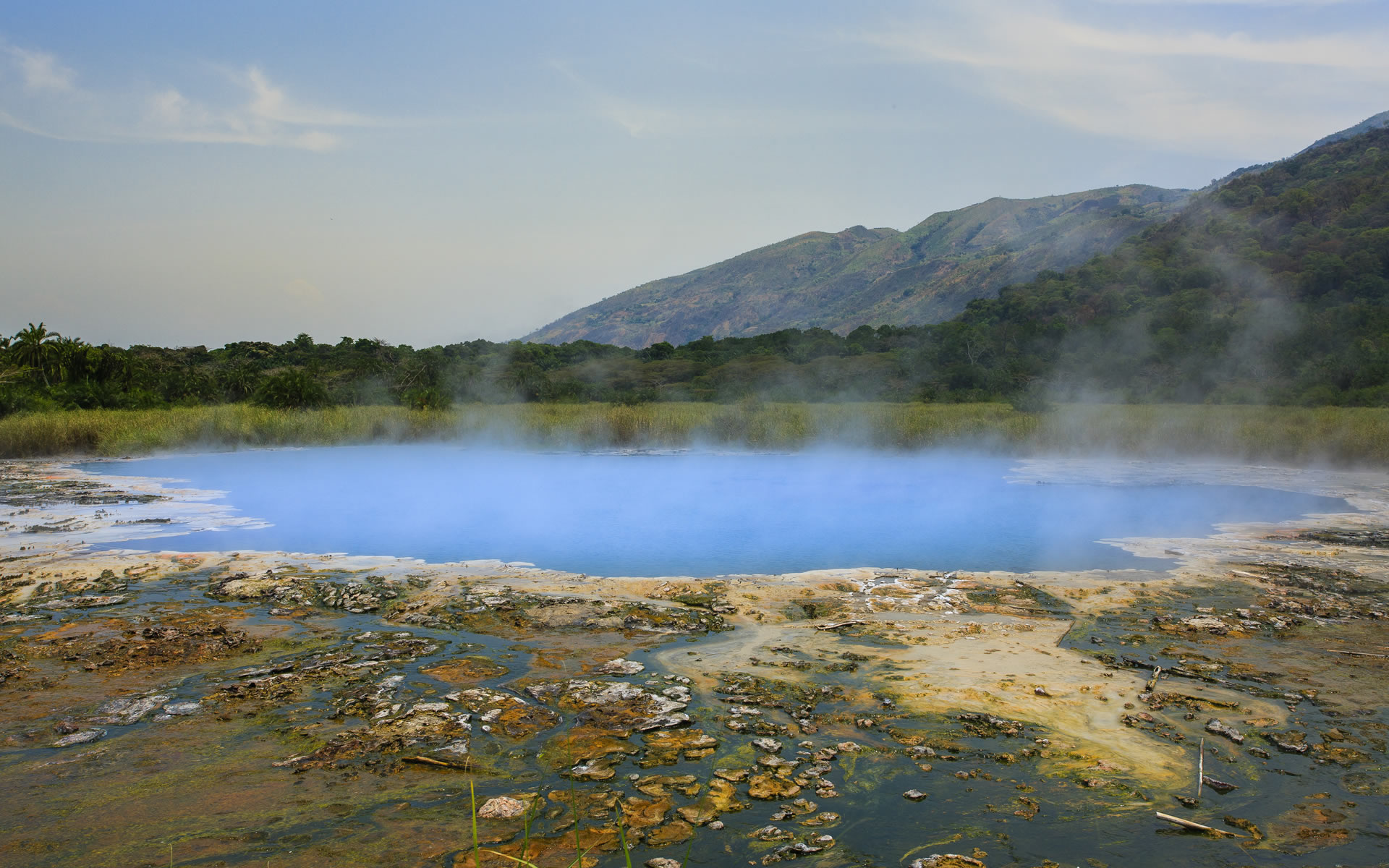
Sempaya Hot Springs
Birdwatching in Semuliki National Park
Semuliki is one of Uganda’s most specialised birding destinations, with more than 435 recorded species and an exceptional concentration of birds associated with the Guinea-Congo forest biome. What makes the park particularly important is not simply the size of its checklist, but the presence of forest species that are extremely difficult to find elsewhere in East Africa. For serious birders, Semuliki therefore offers a very different experience from Bwindi, Kibale or Uganda’s savannah parks. Among the most sought-after birds are the Congo serpent eagle, black dwarf hornbill, Nkulengu rail, Gabon woodpecker, western bronze-naped pigeon and yellow-throated cuckoo. Several hornbill species also occur in the forest, and birding often depends on listening carefully for calls high in the canopy before the birds come into view. Binoculars are essential, and serious birders should expect to spend long periods moving slowly rather than trying to cover large distances quickly.
Best Birding Areas in Semuliki
The 6 km road between Sempaya and Ntandi is one of the easiest places to begin because gaps along the roadside give clearer views into the forest canopy than you normally get on a closed forest trail. Early morning is particularly productive, when bird activity is higher, and temperatures are more comfortable. For a deeper forest experience, the Kirumia Trail runs about 14 km through the heart of Semuliki towards the Semliki River. The trail passes through secondary forest, mature forest, swampy sections and oxbow lakes, creating opportunities for a much wider range of specialist species. Birds recorded along this route include spot-breasted ibis, African piculet, black dwarf hornbill, red-billed dwarf hornbill and black-throated coucal. The complete trail is long enough that committed birders may treat it as an extended day walk or an overnight forest outing rather than trying to rush through it. If birding is one of your main reasons for visiting Semuliki, allow at least one dedicated morning rather than relying only on the walk to Sempaya Hot Springs.

Nature Walks and Forest Trails
Walking is the best way to understand Semuliki beyond the hot springs. The forest is low, humid and often dense, with trails passing through mature rainforest, secondary forest, swampy ground and river-edge habitat. Conditions change quickly after rain, so expect mud, exposed roots, wet boardwalk sections and high humidity, even when the morning starts dry. Proper walking shoes, long trousers, drinking water and light rain protection are more useful here than ordinary safari clothing. Guided walks are done with a park ranger, and the route should be chosen according to how much time you have and whether your main interest is birds, primates or simply experiencing the forest.
Sempaya Nature Trail
The Sempaya Nature Trail is about 8 km when walked as the full route and normally takes around 2 to 4 hours. It is the easiest trail to fit into a general Semuliki visit because it combines the forest experience with access to the Sempaya Hot Springs. Shorter walks to the individual springs are possible, so you do not have to complete the full 8 km every time. Along the trail, pay attention to the canopy for black-and-white colobus, red-tailed monkeys and grey-cheeked mangabeys, while butterflies and forest birds are often active around openings in the vegetation. For travellers spending only one day in Semuliki, this is the most practical walking option because it combines several of the park’s main attractions in one outing.
Red Monkey Trail
The Red Monkey Trail runs for about 11 km along the eastern side of the park towards the Semliki River. It is a longer and quieter forest walk than the Sempaya route and is particularly useful when primates are a priority. The eastern forest is associated with species such as De Brazza’s monkey and red-tailed monkeys, although sightings depend on where the animals are feeding and moving that day. This trail is better for travellers who already have enough time for the hot springs and want to move deeper into Semuliki rather than repeating another short nature walk. Expect several hours on foot and allow the ranger to set the pace around trail and wildlife conditions.
Kirumia Trail
The Kirumia Trail is Semuliki’s most demanding established forest route. It runs for about 14 km from the Kirumia area through the forest towards the Semliki River, crossing a mixture of secondary forest, mature forest, swamp and oxbow-lake habitat. The changing habitats are what make this trail particularly valuable for birders. Plan this as a full-day forest walk, not an activity to squeeze between the hot springs and another excursion. Earlier visitor information places the complete outing at around 8 hours, so start in the morning and carry enough water and food for a long day. The trail can become wet and muddy, and the longer distance means it suits travellers comfortable spending most of the day on foot. For most first-time visitors, the Sempaya Trail is enough for a one-day visit. Choose the Red Monkey Trail if primates are the main interest, and reserve Kirumia for serious birders or travellers specifically wanting a longer rainforest walk.

Primates and Forest Wildlife in Semuliki National Park
Semuliki’s wildlife is very different from what you encounter on Uganda’s open savannahs. The dense lowland forest supports several Central African mammals at the eastern edge of their natural range, including Dent’s mona monkey, water chevrotain, bay duiker, forest buffalo and pygmy scaly-tailed flying squirrel. These are precisely the species that make the park interesting to travellers who have already experienced Uganda’s better-known wildlife destinations. Primates are often easier to notice than the larger forest mammals. During guided walks around Sempaya and the forest trails, watch the canopy for Dent’s mona monkeys, red-tailed monkeys, black-and-white colobus and other forest primates. Calls and movement through the trees often reveal them before you get a clear view, so binoculars are useful even when your main interest is mammals. Semuliki also supports forest buffaloes, elephants, duikers, bushbabies and African civets, while hippos occur around the Semliki River. The important thing is to keep expectations realistic. This is dense rainforest, so large mammals can be present without being easily seen. You should come here for the forest itself, unusual Central African species, primates and birdlife, rather than expecting the predictable big-game sightings of Murchison Falls or Queen Elizabeth. That difference is part of Semuliki’s appeal. A rustle in the undergrowth, monkeys moving through the canopy, or fresh tracks across a muddy trail can be as much a part of the experience as actually seeing the animal.
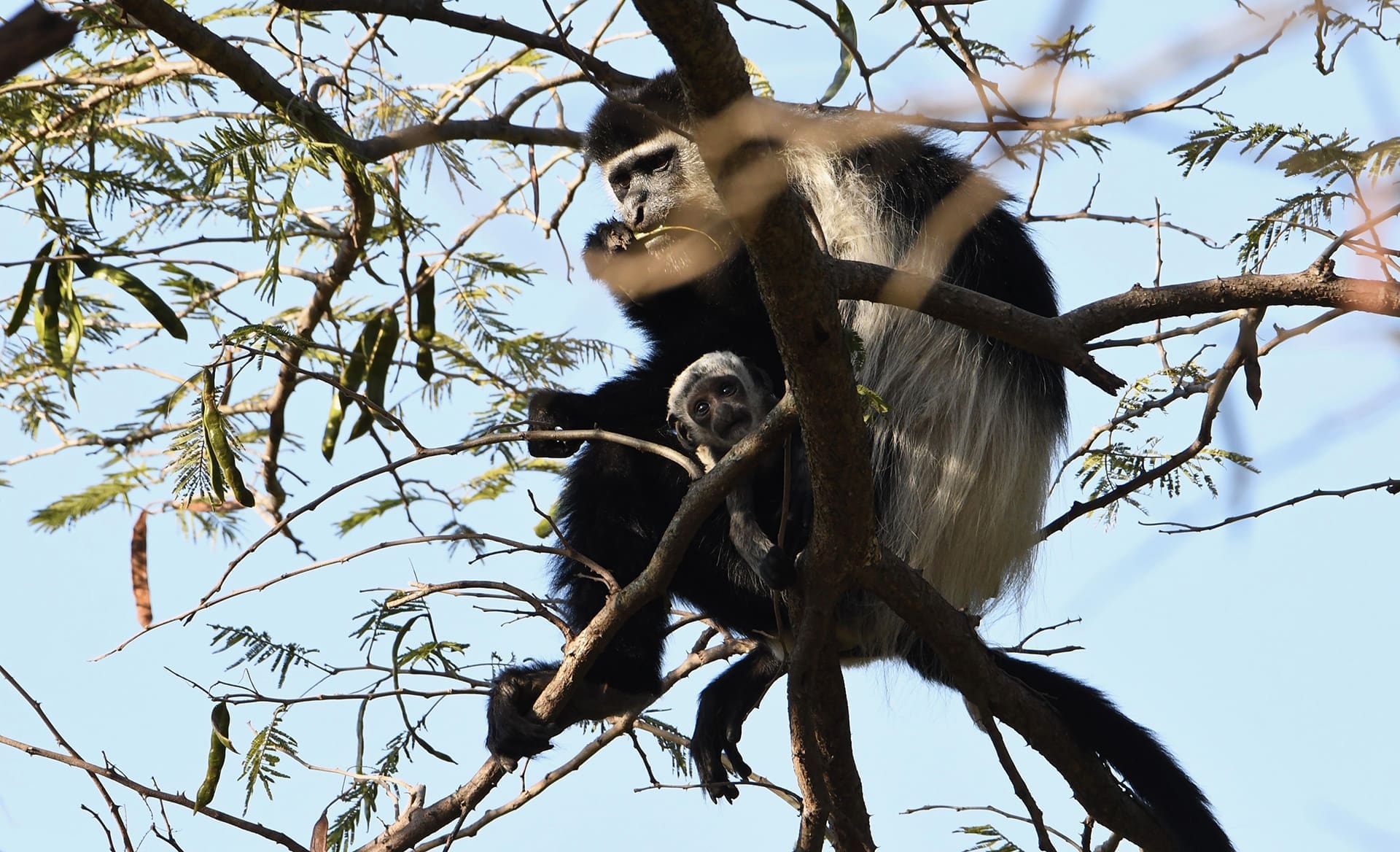
Black and white colobus monkey
Semliki River and the Albertine Rift
Semuliki National Park lies on the floor of the Albertine Rift, between the Rwenzori Mountains and the forests stretching west towards the Congo Basin. Much of the park sits only 670 to 760 metres above sea level, creating a noticeably hotter, more humid environment than the highlands around Fort Portal. This low elevation, combined with slow drainage, has produced swamp forest, oxbow lakes and seasonally flooded areas that give Semuliki its distinctive Central African character. The Semliki River winds through this wider rift-valley landscape on its way north towards Lake Albert. Forest and wetland habitat along the river supports hippos, crocodiles, waterbirds and other wildlife, while the river itself forms part of the broader ecological connection between Uganda and the Congo Basin. You appreciate the geography particularly well when descending from Fort Portal towards Semuliki, dropping roughly 700 metres from the highlands onto the rift-valley floor. The cooler uplands quickly give way to a much warmer, flatter and more heavily forested landscape, making the journey into Semuliki feel very different from arriving at Uganda’s other forest parks.
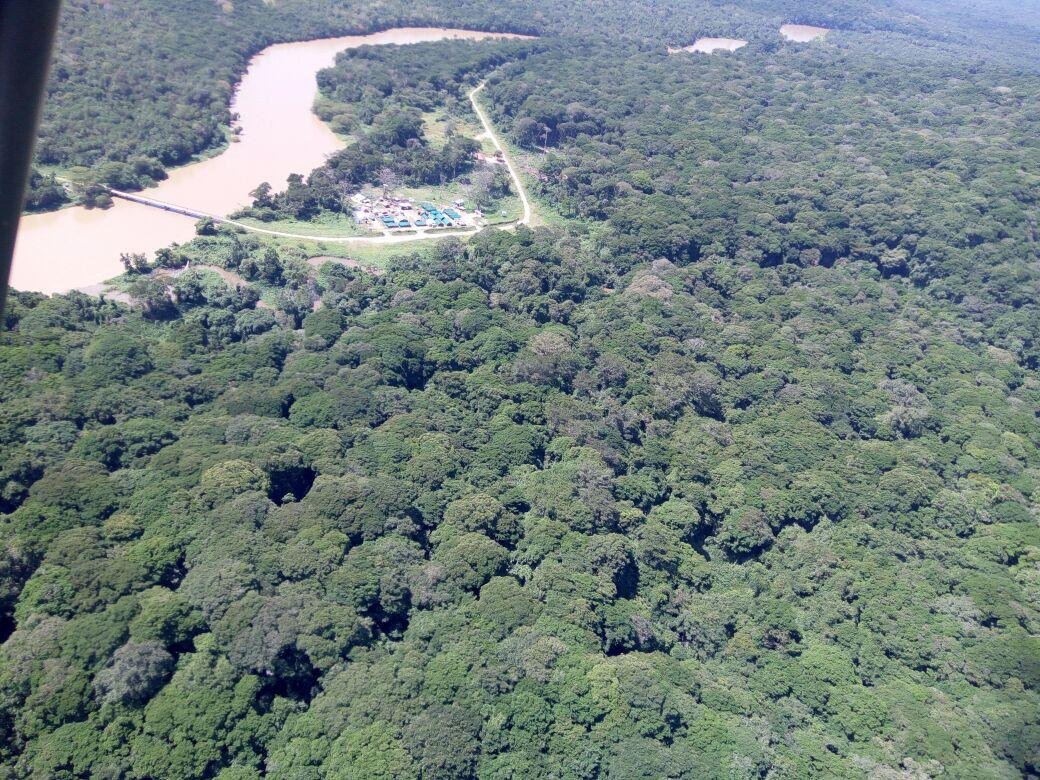
Semliki River
Batwa and Community Experiences
A community visit around Semuliki adds useful context to the forest because several groups have long lived around the park and wider Bundibugyo landscape. These include the Batwa, Bwamba, Bakonzo and Batuku, each with different relationships to the forest, farming and the wider rift-valley environment. For most travellers, the Batwa experience is the most directly connected to Semuliki’s forest story because Batwa communities traditionally depended heavily on the forest for food, shelter, medicine and hunting before conservation restrictions changed that way of life. A good visit should focus on conversation, local knowledge and everyday life, rather than treating the experience as a short performance stop. Depending on how the visit is organised, you may learn about traditional forest skills, plants, food, music and the way communities have adapted to life around the protected area. Allow enough time for proper interaction and arrange the visit in advance through recognised local or community tourism contacts rather than arriving unannounced. For most itineraries, this works best as a supporting afternoon activity after Sempaya or a shorter forest walk. If birding or a long Kirumia Trail walk is your main priority, keep the community visit on a separate day so neither experience feels rushed.
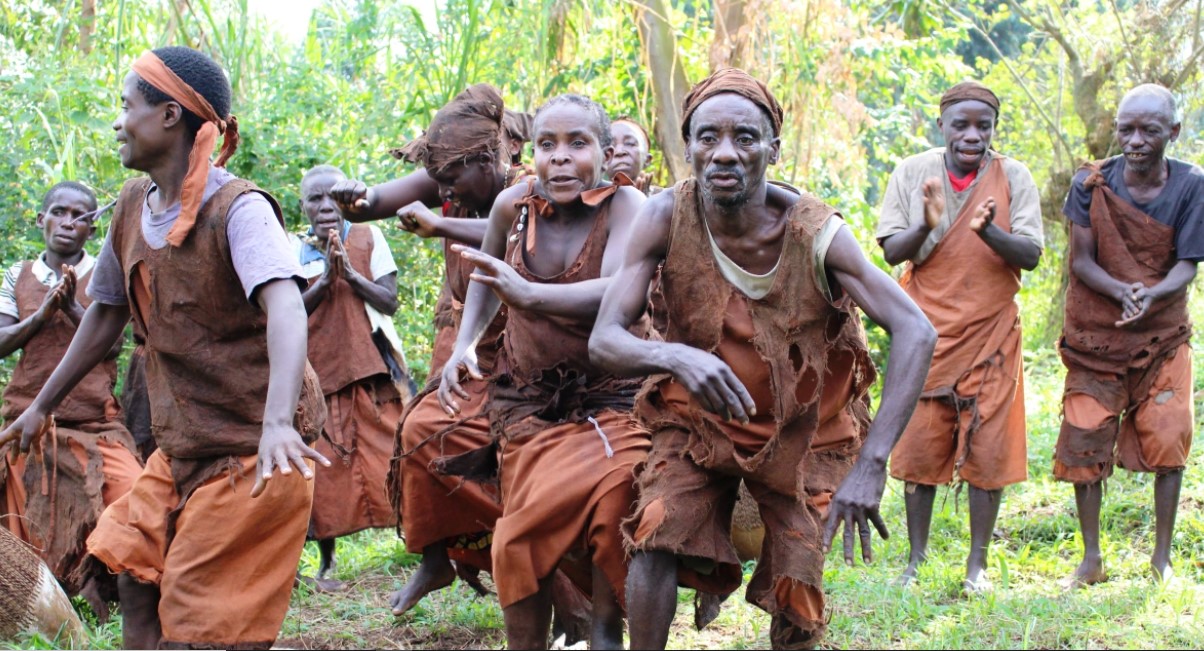
Batwa community
Semuliki National Park Fees
Park entrance is charged separately from activities such as guided nature walks, birding, the Sempaya Hot Springs walk, and community experiences
| Visitor Category | Adult Park Entry |
|---|---|
| Foreign Non-Resident | US$35 |
| Foreign Resident | US$25 |
| East African Citizen | UGX 15,000 |
How to Get to Semuliki National Park
Semuliki is easiest to visit from Fort Portal, which sits about 60 km from the park’s main tourism area at Sempaya. The drive takes roughly 1 hour along the Fort Portal to Bundibugyo road, descending about 700 metres from the highlands onto the floor of the Albertine Rift. This approach is one of the more scenic park journeys in western Uganda, with views towards the Rwenzori Mountains and across the rift valley before the landscape becomes noticeably warmer and more heavily forested.
Fort Portal to Semuliki
From Fort Portal, follow the Bwamba Road towards Bundibugyo until you reach Sempaya. The road is surfaced, making Semuliki straightforward to combine with Fort Portal, Kibale National Park or the Rwenzori region. If you are staying in Fort Portal, leave early enough to reach Sempaya in the morning, particularly when birding or a longer forest walk is part of the day.
Driving from Kampala or Entebbe
The most direct route from Kampala runs through Mubende to Fort Portal, covering about 290 km in 4 to 5 hours, followed by the 60 km drive to Semuliki. A longer route through Masaka, Mbarara and Kasese covers about 465 km to Fort Portal and takes around 7 to 8 hours, but it works better when Semuliki forms part of a wider itinerary through Lake Mburo, Queen Elizabeth or the Rwenzori Mountains. For most travellers, treat Semuliki as a Fort Portal extension rather than a direct day trip from Kampala.
Where to Stay Near Semuliki National Park
Accommodation around Semuliki is much more limited than around Kibale or Queen Elizabeth, so the first decision is whether you want to sleep close to the forest or base yourself in Fort Portal. Staying near Sempaya makes sense for serious birders and travellers starting a long forest walk early in the morning. For a general visit focused on the hot springs and a shorter nature walk, Fort Portal gives you considerably more choice while keeping Semuliki within roughly an hour’s drive.
| Area | Accommodation Options | Best For |
|---|---|---|
| Sempaya and Bumaga | UWA Bumaga cottages and campsite | Early access to Sempaya Hot Springs, birding and forest walks. |
| Kirumia Area | Kirumia Guesthouse and simple local stays | Birders planning the long Kirumia Trail and early forest starts. |
| Fort Portal | Mountains of the Moon Hotel and a wider range of lodges and hotels | Most general safari itineraries combining Semuliki with Kibale, Fort Portal and the crater lakes. |
| Bundibugyo | Small hotels and guesthouses | Travellers continuing west or spending additional time in the Semuliki Valley. |
Best Time to Visit Semuliki National Park
Semuliki can be visited throughout the year, but the drier periods from December to February and June to July generally give you the easiest conditions for forest walks, birding and visits to the Sempaya Hot Springs. Trails are usually firmer, boardwalk sections are easier to negotiate, and you are less likely to spend long periods walking through heavy mud. Even during these months, carry light rain protection because Semuliki is a humid lowland rainforest and showers can develop quickly. The wetter periods, particularly March to May and September to November, bring heavier rainfall and noticeably muddier forest conditions. The landscape becomes exceptionally green, streams and wetlands carry more water, and bird activity can remain strong, but longer walks such as the Kirumia Trail become more physically demanding. Proper waterproof footwear becomes especially important if you are visiting at this time. For dedicated birders, there is no reason to avoid Semuliki simply because rain is possible. Forest birding can be productive throughout the year, particularly during the cooler hours of the morning. For a first visit combining Sempaya Hot Springs, birdwatching and one or two forest walks, I would favour December to February or June to July because they give you the most comfortable balance between forest conditions and activity access.