
Murchison Falls National Park covers about 3,840 sq km in northwestern Uganda, making it the largest national park in the country. The Victoria Nile runs through the middle of the park, separating the open savannah and wildlife-rich plains of the north from more wooded country to the south. At Murchison Falls, the river is forced through an approximately 8-metre-wide rocky gorge before dropping about 45 metres, creating one of the most powerful sections of the Nile in Uganda. The river then continues westwards through the park towards Lake Albert. The park combines several different safari experiences in one destination. The northern savannah around the main game-drive circuits is where you spend most of your time looking for giraffes, elephants, buffaloes, Uganda kob, Jackson’s hartebeest, lions and other plains wildlife. Along the Victoria Nile, the experience changes completely. Boat trips bring you close to hippos, Nile crocodiles, elephants, buffaloes and waterbirds gathering along the riverbanks before the boat approaches the base of the falls. For a first visit, I would plan around at least three core experiences: an early-morning game drive, a Nile boat cruise to the bottom of Murchison Falls and a visit to the Top of the Falls. With an additional day, you can explore the Albert Delta for shoebill birding, take another game drive, spend more time along the river or add chimpanzee tracking in the wider Budongo Forest area. Murchison is therefore better treated as a multi-day safari destination rather than a waterfall stop added quickly to a northern Uganda journey.
Murchison Falls National Park quick facts
| Location | Northwestern Uganda |
|---|---|
| Park Size | About 3,840 sq km |
| Established | 1952 |
| Mammal Species | About 144 recorded species |
| Bird Species | About 556 recorded species |
| Main Experiences | Game drives, Nile boat cruises, Murchison Falls, birding and wildlife viewing |
Murchison Falls and the Top of the Falls
Murchison Falls is the defining feature of the park, where the Victoria Nile is compressed into an approximately 8-metre-wide rocky gorge before dropping about 45 metres into the turbulent pool below. The force of the river is very different from the wide, slow-moving Nile you see farther downstream. At the gorge, the water accelerates between steep rock walls, producing heavy spray, constant noise and the churning water often referred to as the Devil’s Cauldron. Before reaching the falls, the Nile passes through a long stretch of rapids, then becomes much calmer again as it continues west towards Lake Albert. The Top of the Falls gives you the closest view of this change in the river. From the viewpoints above the gorge, you can watch the broad Nile narrow dramatically before disappearing between the rocks beneath you. This is where you appreciate the force of Murchison Falls far better than from a distant viewpoint. Take time to move between the viewing points rather than treating it as a quick photograph stop. Spray can reach parts of the viewing area, and the rocks and paths can become slippery, so shoes with a good grip are more practical than sandals. For a first visit, consider both the Top of the Falls and the boat cruise to the bottom of the falls because they show two completely different perspectives. The boat approaches from downstream, where you see the waterfall framed by the gorge while watching hippos, crocodiles, elephants, and other wildlife along the Nile. At the top, the experience is about standing close to the river as it enters the narrow gorge and drops below you. A guided hike to the Top of the Falls is also one of the activities offered in the park.
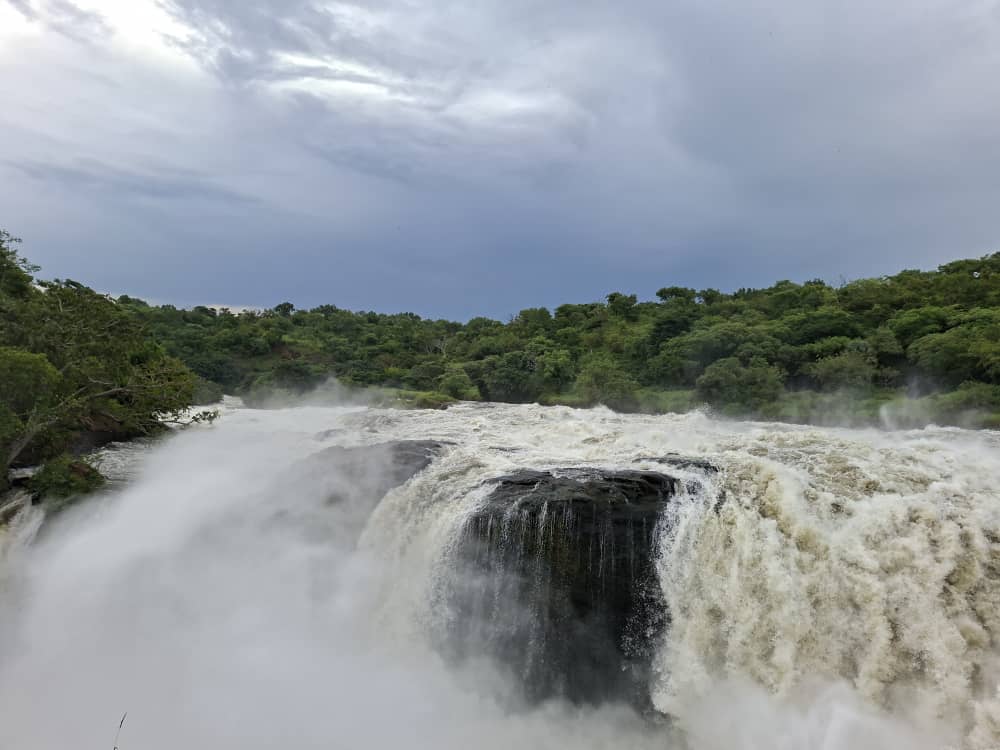
Top of the Falls
Game Drives in Murchison Falls National Park
Game drives are one of the main reasons to spend more than one night in Murchison. The strongest wildlife viewing is on the northern side of the Victoria Nile, where open savannah, acacia woodland and Borassus palms make animals easier to locate than in the thicker southern woodland. Early morning is usually the best time to start because temperatures are lower and predators are still active, while a late-afternoon drive gives you another good window before sunset. A typical game drive should be given at least 3 to 4 hours, especially if you want enough time to explore beyond the first sightings rather than simply driving from one animal to another. Expect to spend most of the drive looking for giraffes, elephants, buffaloes, Uganda kob, Jackson’s hartebeest, oribi and warthogs, with lions, leopards and spotted hyenas requiring more patience. Murchison’s open country gives you long viewing distances, so binoculars are useful even on a general wildlife drive. The best sightings are not always close to the road, and a good guide will spend time reading movement across the plains rather than racing between vehicles.
Buligi and the Northern Game Drive Area
The Buligi Peninsula is the park’s principal game-viewing area, lying between the Victoria Nile, Lake Albert and the Albert Nile. The circuit moves through open grassland and woodland where large herbivores are regularly encountered, and the wide plains also give predators good hunting country. The wider northern network includes Buligi, Pakuba, Queen’s, Victoria and Albert tracks, giving guides several options depending on recent wildlife movement and road conditions. Do not expect every drive to follow the same route. If lions have been active around one circuit, giraffes are feeding farther towards Pakuba, or elephants have moved closer to the river, your guide may change direction. This flexibility is important in Murchison because the animals are spread across a large landscape rather than confined to one small viewing area. The Albert and Victoria tracks bring you closer to the western side of the northern plains and the delta landscape, where open grassland meets riverine habitat. The wider Buligi circuit is particularly productive for giraffes, buffaloes and antelopes, while areas closer to the delta can also be good for elephants, hippos, waterbirds and predators moving around the grazing herds.
Heart of Murchison
The Heart of Murchison offers another game-drive option away from the traditional northern circuits. This savannah area lies roughly 20 km east of the Masindi to Paraa road and was opened to increase wildlife viewing on the southern side of the park. Large concentrations of Uganda kob use these grasslands, and the presence of prey has made the area increasingly interesting for lion sightings. For a first-time visit, however, I would still give priority to the northern game-drive circuits, particularly if you only have two nights. With three nights or more, you have enough time to repeat the northern drive at a different time of day or include another sector without sacrificing the Nile boat cruise and the falls.
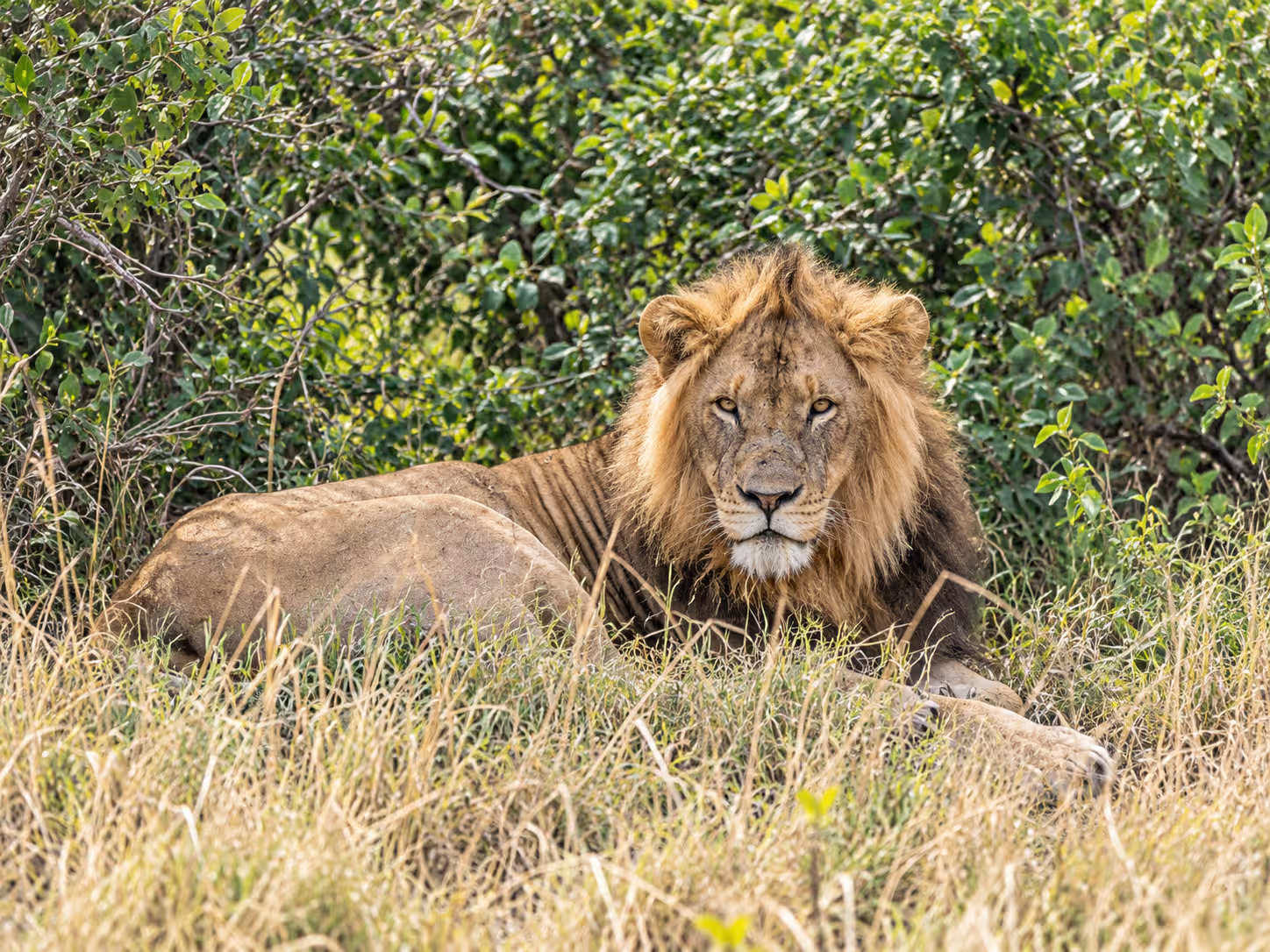
Game Drives in Murchison Falls National Park
Nile Boat Cruise to Murchison Falls
The Nile boat cruise from Paraa towards the base of Murchison Falls is one of the park’s essential safari experiences and should be planned alongside a game drive rather than treated as an optional extra. The trip follows the Victoria Nile upstream through a broad, calm section of river before the channel begins to narrow towards the falls. Allow roughly 2 to 3 hours for the return journey, depending on the boat, river conditions and time spent watching wildlife along the banks. This is one of the best places in Murchison to see wildlife from a completely different angle. Hippos and Nile crocodiles are commonly encountered in the water, while elephants, buffaloes, waterbuck and other animals regularly come down to drink along the riverbanks. The river is also excellent for birds, with African fish eagles, kingfishers, herons, cormorants and other waterbirds often seen during the trip. Keep your camera ready well before reaching the falls because some of the strongest wildlife encounters happen along the quieter stretches of river. As the boat approaches Murchison Falls, the landscape becomes steeper and the sound of the water grows noticeably louder. Boats stop at a safe distance below the falls, giving you a clear view of the Victoria Nile emerging through the narrow gorge and crashing into the river below. You do not travel directly underneath the waterfall because of the powerful current and turbulent water close to the gorge. For a well-paced day, I would combine an early-morning game drive with an afternoon boat cruise. This gives you savannah wildlife when temperatures are cooler, then river wildlife during the warmer part of the day. If you are also visiting the Top of the Falls, keep that as a separate road stop so you experience Murchison from both below and above rather than trying to rush all three activities together.
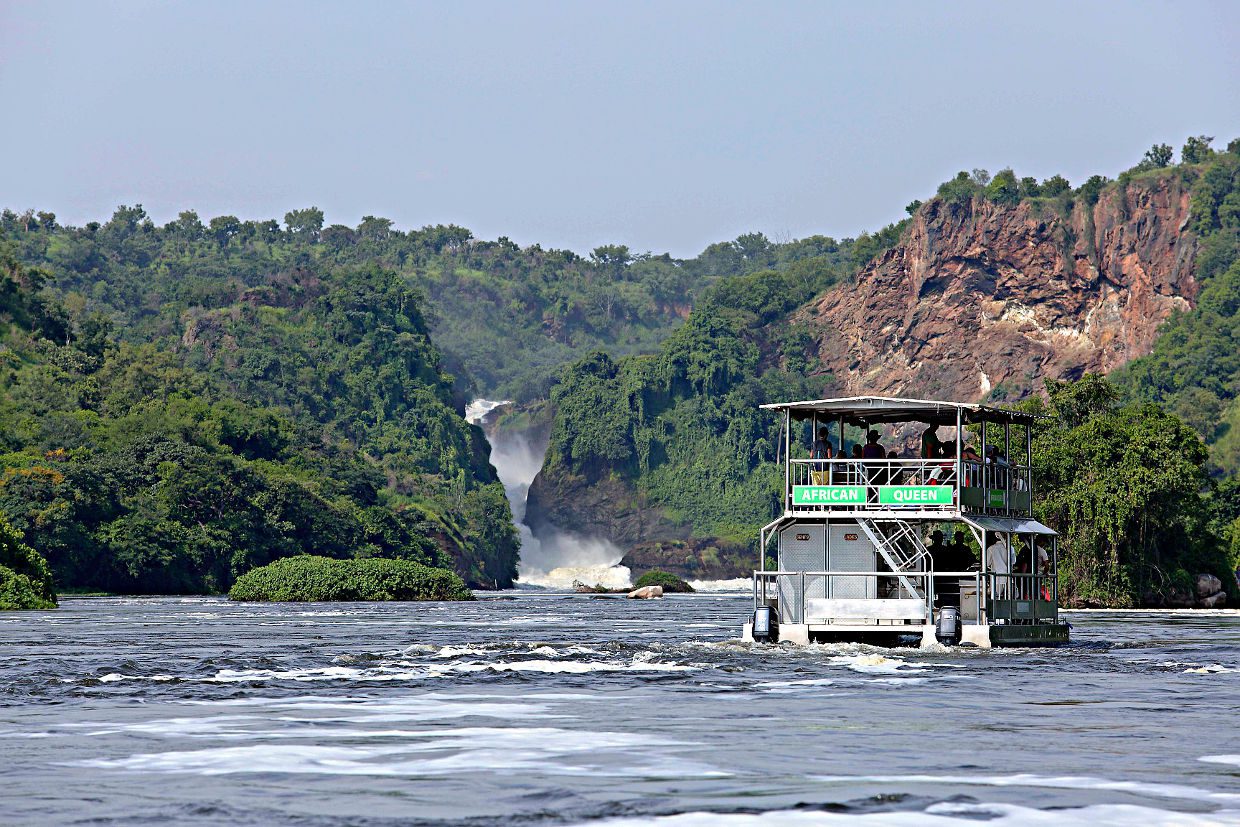
Nile Boat Cruise to Murchison Falls
Albert Delta Boat Cruise and Shoebill Birding
The Albert Delta boat cruise follows the Victoria Nile downstream from Paraa towards the point where the river spreads into a network of channels and wetland islands before entering Lake Albert. This is a very different experience from the upstream cruise to Murchison Falls. Instead of moving towards steep gorge walls and fast water, you travel through quieter stretches of river, papyrus, floating vegetation and shallow wetland habitat where the focus shifts strongly towards birds and river wildlife. The delta is one of the better places in Murchison to look for them, particularly when the boat moves slowly through the quieter wetland channels. Pelicans, darters, herons and other waterbirds also use this part of the Nile, while hippos, crocodiles and animals coming to drink along the banks remain part of the experience. Shoebill sightings are never guaranteed, so the cruise works best when you approach it as a dedicated birding and wetland outing rather than a quick extension of the standard falls cruise. For travellers specifically targeting shoebill, the drier periods from December to February and June to September are particularly useful months to consider. Give the delta its own half-day window if possible. Trying to combine the falls cruise and the delta in one rushed outing removes much of the value of both experiences. If your stay in Murchison is only two nights, prioritise the classic boat cruise to the falls. With three nights or more, the Albert Delta becomes much easier to add without sacrificing game-drive time.
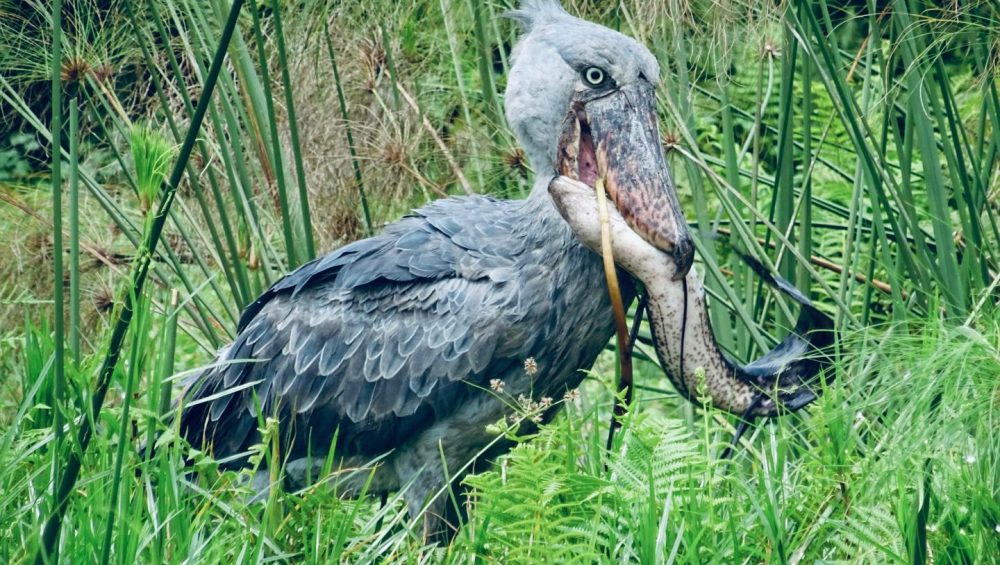
shoebill
Birdwatching in Murchison Falls National Park
Murchison Falls is one of Uganda’s strongest birding destinations, with about 556 recorded bird species spread across savannah, woodland, riverine habitat, wetlands and forest. You do not need to be on a dedicated birding safari to see a good range because many of the park’s most visible species appear naturally during game drives and boat cruises. African fish eagles, Goliath herons, saddle-billed storks, kingfishers and other waterbirds are commonly associated with the Victoria Nile, while Abyssinian ground hornbills, raptors and savannah species are more likely during drives across the northern plains. The Albert Delta is the key area for travellers specifically hoping to see the shoebill. The shallow channels, papyrus and wetland islands near Lake Albert provide suitable feeding habitat, and the area also supports pelicans, darters and several heron species. Because we have already covered the delta cruise in detail, this birding section should not repeat the full excursion. Its role here is to show that Murchison’s birding changes considerably depending on where you spend your time. For more specialised forest birding, Kaniyo Pabidi in the wider Budongo Forest area adds species that you will not normally find on the open savannah or river. Birders can look for species such as chocolate-backed kingfisher, white-thighed hornbill and Puvel’s illadopsis, making the forest a useful addition for travellers spending three nights or more around Murchison. For a general safari, your morning game drive and Nile cruise will already give you plenty of birdlife. Serious birders should allow extra time for the Albert Delta and Budongo Forest rather than trying to cover every habitat during a standard two-night stay.
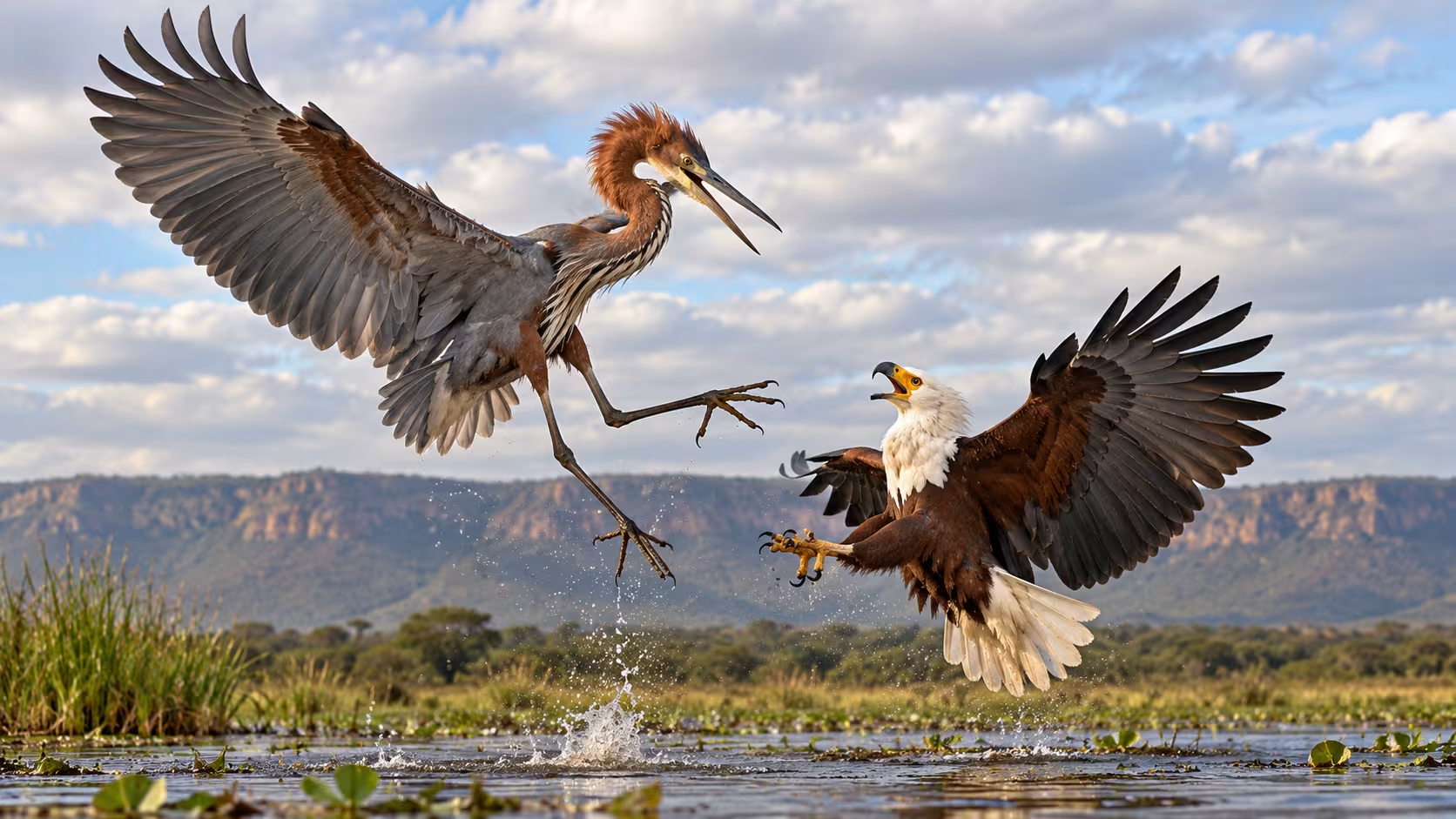
Goliath heron vs African fishing eagle
Chimpanzee Tracking in Budongo Forest
Chimpanzee tracking adds a very different experience to a Murchison safari because it takes you away from the open savannah and Nile into the forested southern part of the wider conservation area. The main tracking area is Kaniyo Pabidi, within Budongo Forest, where a habituated chimpanzee community can be followed with experienced forest guides. This works particularly well for travellers who want to combine classic game viewing with primates without travelling all the way to Kibale. The forest walk can take several hours depending on where the chimpanzees are feeding and how far they have moved. Unlike the open plains of Murchison, visibility here is tighter, and the experience depends heavily on sound and movement through the canopy. You may hear pant-hoots, branch movement and calls from other primates before you see the chimpanzees themselves. The forest also supports black-and-white colobus, red-tailed monkeys, blue monkeys and a wide range of woodland birds, so the walk remains interesting even before the chimpanzees are located. For planning, I would not squeeze Budongo into the same day as a full game drive and boat cruise. Give it its own half day, preferably as part of a three-night or longer Murchison itinerary. Wear proper walking shoes, long trousers and light rain protection because the forest floor can remain damp even when the savannah is dry.
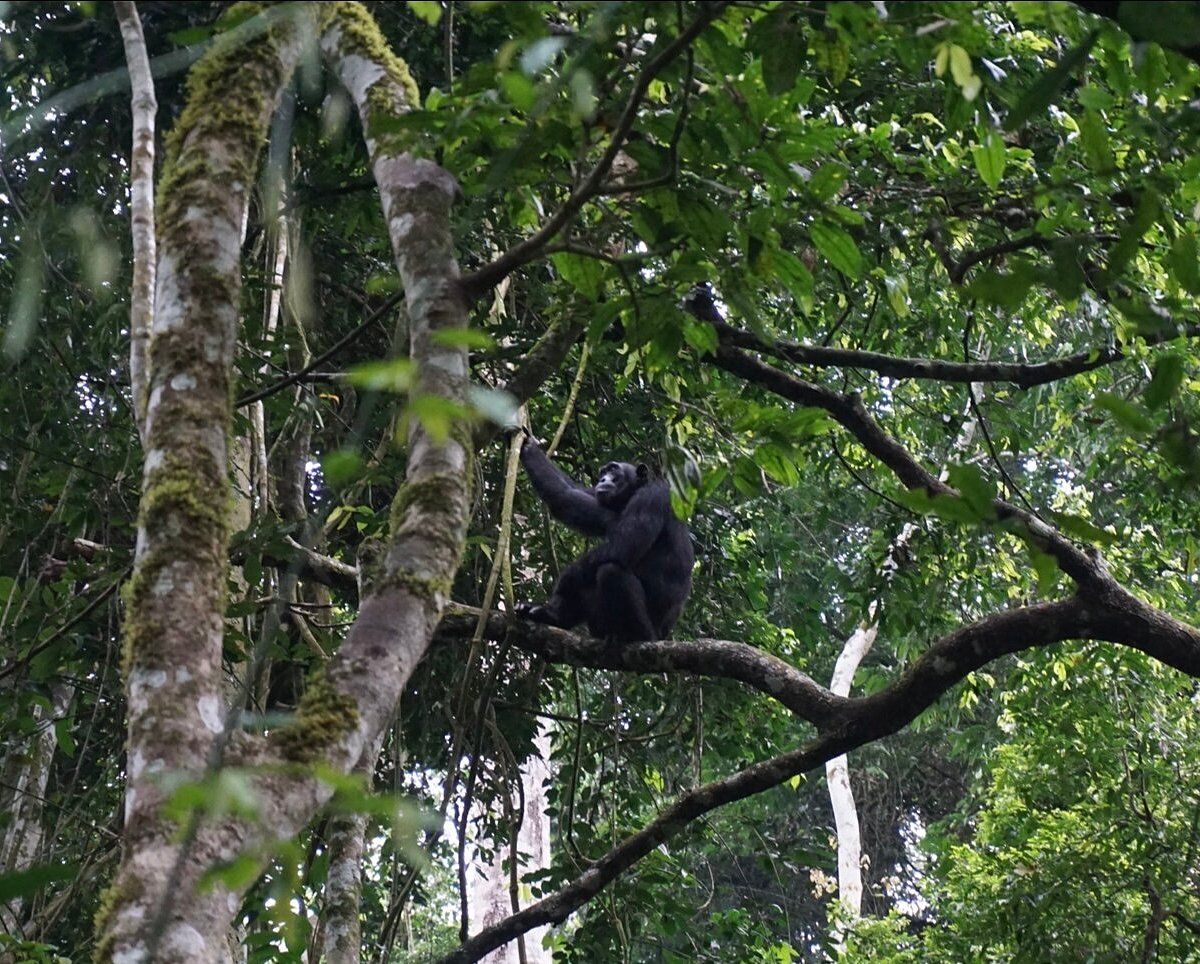
Chimpanzee Tracking in Budongo
Sport Fishing on the Nile
Sport fishing in Murchison Falls is centred on the Victoria Nile below the falls, where deep pools and fast-moving water create some of the best conditions in Uganda for targeting Nile perch. The river has produced exceptionally large fish, with historical rod-and-line records exceeding 100 kg, which is why this stretch has long attracted specialist anglers. This is not an activity to add casually between a game drive and boat cruise. Fishing normally needs to be arranged in advance, with the correct permit, boat and experienced fishing guide organised before arrival. The most productive areas are generally around the deeper pools downstream from the falls, where strong currents and rocky structure create good holding water for large fish. Other species present in the river system include tiger fish, catfish and several smaller freshwater species. If sport fishing is one of the main reasons for visiting Murchison, give it at least half a day, and serious anglers may want a full day or more rather than squeezing the experience into a standard safari programme. Carry suitable sun protection, drinking water and light clothing for long periods on the river, and expect the fishing guide to determine the exact stretch based on water conditions and recent activity.
Murchison Falls National Park Fees
Murchison Falls National Park charges a separate entrance fee for each visitor, while activities such as boat cruises, ranger-guided game drives, sport fishing and vehicle entry are paid separately. For a normal safari, your lodge or tour operator will usually arrange the park entry and activity bookings together, but it is still useful to understand what the basic entrance fee covers before comparing safari packages.
| Visitor Category | Adult Park Entry |
|---|---|
| Foreign Non-Resident | US$45 |
| Foreign Resident | US$35 |
| East African Citizen | UGX 25,000 |
How to Get to Murchison Falls National Park
Murchison Falls National Park lies about 305 km north of Kampala, and the southern entrance can normally be reached in around 4 to 5 hours by road, depending on traffic and stops. From Kampala, the most practical route runs through Luweero, Kafu and Masindi, then continues to Kichumbanyobo Gate. Remember that reaching the gate is not the end of the journey. Depending on your lodge, allow additional driving time inside the park.
Driving to Murchison Falls
Travellers coming from Gulu, Kidepo or northern Uganda can enter through northern gates such as Tangi, Wankwar or Chobe, which avoids unnecessary backtracking towards Masindi. The best gate should be chosen according to your previous destination and lodge location. Movement between the northern and southern sides of the park is now easier because the Paraa bridge crosses the Victoria Nile, replacing the old need to plan vehicle movements around the ferry.
Flying to Murchison Falls
Scheduled and charter flights operate from Entebbe or Kajjansi. Pakuba Airfield is the most convenient option for many lodges around Paraa and the northern game-drive area, while Chobe and Bugungu airfields serve other parts of the park. For most safari itineraries, the main decision is simple. Drive if Murchison forms part of a longer Uganda route, and fly if you want to save a full road-transfer day.
Where to Stay in Murchison Falls National Park
Where you stay in Murchison should be decided mainly by which side of the park you want to explore and how much driving you want between activities. The park covers a very large area, so choosing a lodge simply because it is described as being “near Murchison Falls” can leave you with long transfers before an early game drive or boat cruise.
| Area | Lodge/ Camp | Best For |
|---|---|---|
| Paraa and Central Park | Paraa Safari Lodge | Easy access to the Victoria Nile, boat cruises and both sides of the park. |
| Northern Game-Drive Area | Pakuba Safari Lodge | Wildlife-focused stays with quick access to the northern savannah circuits. |
| Southern Nile Area | Nile Safari Lodge | Higher-comfort stays beside the Nile, with convenient access to river activities. |
| Southern Park Boundary | Twiga Safari Lodge | Travellers arriving through the southern route and wanting a quieter riverside base. |
Best Time to Visit Murchison Falls National Park
Murchison Falls can be visited throughout the year, but the drier months from June to September and December to February generally offer the easiest conditions for game drives. Vegetation becomes thinner, tracks are easier to use, and wildlife tends to stay closer to permanent water sources, including the Victoria Nile. Early morning remains the strongest time for game viewing, while afternoons can become very hot, particularly between December and February. The wetter periods, particularly March to May and October to November, bring greener landscapes and more dramatic skies over the savannah. Wildlife is still present, but animals spread more widely as seasonal water becomes available, and some tracks can become muddy after heavy rain. These months can work particularly well for photographers who prefer greener scenery and travellers who do not mind occasional rain during game drives. The Nile boat cruises operate throughout much of the year, so the river remains one of Murchison’s most reliable wildlife areas regardless of season. Birders should also consider the wetter and migratory periods, when resident species are joined by additional visitors. For a first safari focused mainly on game drives, the boat cruise and the falls, I would favour June to September or December to February.
Plan Your Murchison Falls Safari
Tell us your travel dates, how many days you have and whether you want to focus on game drives, the Nile boat cruise, the Top of the Falls, birding or a wider Uganda safari. We can organise the right lodge location, transport, park activities and route so your time in Murchison fits smoothly with the rest of your journey.