
Lake Nakuru National Park is a rewarding stop on a Kenya safari, combining rhino sightings, excellent birdwatching and beautiful Rift Valley scenery. Game drives take you through open grasslands, woodland and along the lakeshore, where you can look out for black and white rhinos, giraffes, buffaloes and predators. Watch white rhinos grazing in the open grasslands, giraffes feeding among the trees and waterbirds gathering along the lake. Flamingos are another attraction, sometimes covering sections of the shoreline in pink. Their numbers change with water conditions and food availability, so enjoy them as part of the wider wildlife experience rather than expecting to find them in large numbers throughout the year. Staying overnight gives you time for an afternoon game drive and another outing the following morning, when you can continue looking for wildlife before moving on. Lake Nakuru also fits naturally into a longer Kenya safari, either as a stop on the way from Nairobi to the Masai Mara National Reserve or as part of a wider journey through the Great Rift Valley.
Lake Nakuru National Park at a Glance
Lake Nakuru combines lakeside birdwatching with game drives through woodland and grassland. Allow time for both habitats rather than treating the visit as a brief flamingo stop.
| Planning detail | What to know |
|---|---|
| Location | In Kenya’s Great Rift Valley, immediately south of Nakuru city. |
| Park size | Approximately 188 square kilometres, including the lake and surrounding terrestrial habitats. |
| Main wildlife | Black and white rhinos, giraffes, buffaloes, zebras and antelopes, with opportunities to search for lions and leopards. |
| Flamingos | Numbers fluctuate with feeding conditions and movements between Rift Valley lakes. Extensive pink flocks are not guaranteed. |
| Landscape | Lake margins, grassland, acacia woodland, bushland and rocky escarpments. |
| Main activities | Guided game drives, birdwatching, wildlife photography and visits to designated viewpoints. |
| Recommended stay | One night allows afternoon and morning drives. Two nights provide more time for birdwatching, photography and patient wildlife observation. |
| Getting around | Explore by safari vehicle or a suitable self-drive vehicle. Leave the vehicle only at permitted locations. |
| Safari combinations | Combine with Lake Naivasha, the Masai Mara or a longer route through Kenya’s central and northern wildlife areas. |
Where Is Lake Nakuru National Park?
Lake Nakuru National Park lies just south of Nakuru city, in Kenya’s Great Rift Valley. The park surrounds Lake Nakuru and extends into open grasslands, wooded areas and rocky hillsides. As you drive through the park, you can look out for rhinos, Rothschild’s giraffes and predators away from the lake itself. When travelling to the park, remember that Nakuru city and the park entrance are separate stops. Check which gate you’ll use and where you’re staying before setting off, so you can plan your drive without unnecessary detours. Lake Nakuru also fits naturally into a safari through Kenya’s Rift Valley and the Masai Mara. You can visit from Nairobi, combine it with Lake Naivasha, or stop here on your way towards the Masai Mara. Allow enough time for a game drive, rather than rushing through the park on your way to the next destination.
Wildlife in Lake Nakuru National Park
A game drive in Lake Nakuru National Park takes you through open grasslands, acacia woodland and bush-covered slopes, each offering different wildlife sightings. Keep an eye on the open ground for grazing animals, but also look between the trees and along the edges of the bush, where some animals prefer to feed or rest.
Black and White Rhinos
Lake Nakuru is one of the places to look for both black and white rhinos during a Kenya safari. White rhinos graze on short grass, often with their heads lowered as they feed, while black rhinos browse on leaves, shrubs and woody plants. Look across the open grassland for white rhinos, then check the thicker bush for black rhinos. When you come across a rhino, take your time watching it. You might see it feeding, walking through the grass or interacting with another rhino. Your guide will help you get a good view while keeping a safe distance and leaving the animal plenty of room to move.
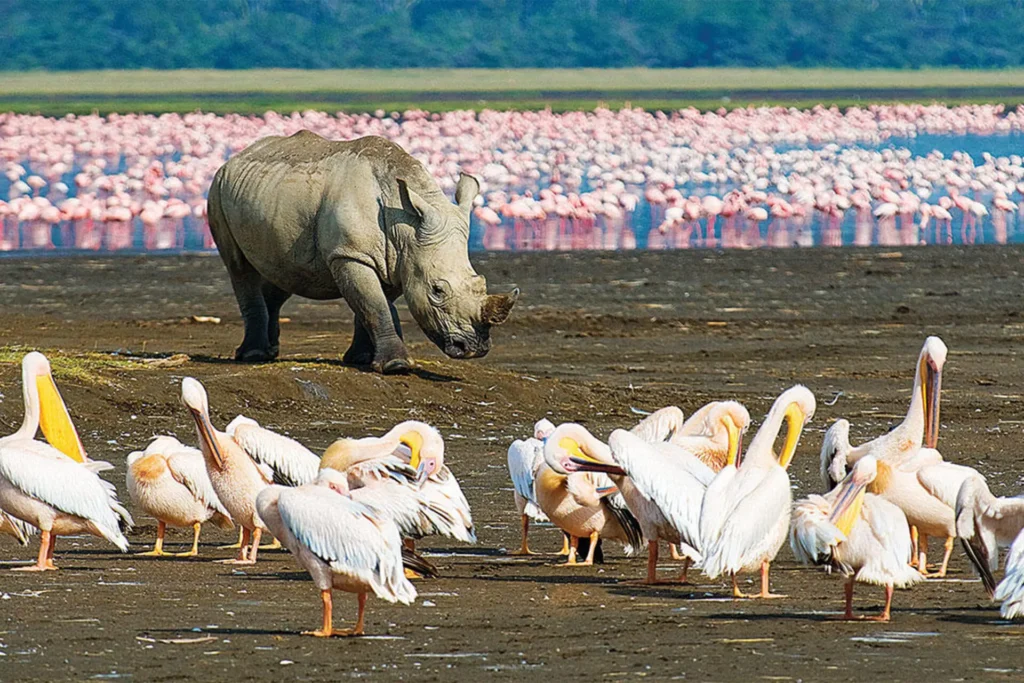
Rhinos in Lake Nakuru National Park
Giraffes, Buffaloes and Grazing Wildlife
Giraffes reach into the acacia trees for leaves, while buffaloes gather in herds and zebras graze across the open plains. You may also spot waterbucks and impalas around the grassland and woodland edges. Watch the animals as well as looking for new species. Young animals staying close to their mothers, giraffes feeding from different branches and buffaloes resting in the shade all add interest to the drive. Your guide can position the vehicle for a better view without disturbing the animals.
Lions and Leopards
Keep a close watch on the grassland and areas of thick cover for lions, particularly where they can rest in the shade during the warmer hours. Leopards are more difficult to spot, so look carefully through the woodland and among the branches where one might be resting. Seeing either predator depends on the day, so enjoy the other wildlife along the way rather than rushing from one sighting to the next. Your guide can check suitable areas for lions and leopards while you continue looking for rhinos, giraffes, buffaloes and other animals across the park.
Flamingos and Birdwatching at Lake Nakuru
Lake Nakuru offers excellent birdwatching along its shores, through the surrounding woodland and across the open grassland. Although flamingos attract much of the attention, there is plenty more to look for as you move through the park.
Flamingos and Changing Lake Conditions
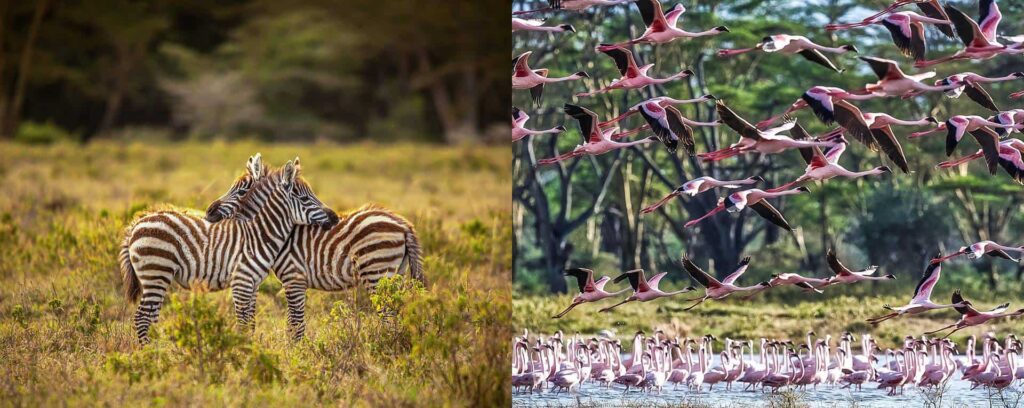
Flamingos move between lakes in the Rift Valley as water levels and feeding conditions change. Sometimes, large flocks gather along Lake Nakuru’s shores, creating a striking sight against the blue water. At other times, fewer flamingos are around, so the lake does not always have the pink shoreline many visitors expect. If seeing flamingos is a major reason for your visit, ask your safari AA Safaris about recent sightings before travelling. When you reach the lake, your guide can take you to suitable viewing spots and help you watch the birds feeding in the shallows and moving together across the water.
Waterbirds Along the Shore
Beyond flamingos, keep an eye out for pelicans, cormorants, herons and other waterbirds along the shoreline. Some wade through shallow water searching for food, while others gather in groups to rest between feeding. Take your time at the water’s edge and use binoculars to look more closely at the birds. Your guide can help identify different species and point out their feeding habits and behaviour as you watch them.
Woodland and Grassland Birding
Birdwatching continues as you drive through the park’s woodland and grassland. Look among the branches, along the edges of the trees and across the open ground for birds feeding, calling or resting. At times, switching off the vehicle and listening quietly makes it easier to hear birds hidden among the vegetation. If birdwatching is a priority, let your guide know before the game drive begins. You can then allow more time to stop and watch the birds while still looking for rhinos, giraffes and other wildlife. This way, birdwatching becomes part of your safari rather than something squeezed into the final few minutes.
Things to Do in Lake Nakuru National Park
A safari in Lake Nakuru National Park is best enjoyed with time to drive through the park, stop for wildlife sightings and take in the scenery around the lake. Your game drives take you through open grasslands, acacia woodland and lakeside areas, where you can look for rhinos, giraffes, buffaloes and a variety of birds. Your guide can adjust the route depending on where animals are spotted and which tracks are accessible.
Guided Game Drives
An overnight stay gives you time for an afternoon game drive on arrival and another early the following morning. Each drive brings different opportunities to spot wildlife, whether you are watching rhinos grazing in the grasslands, giraffes moving through the woodland or birds feeding along the lake. If you have a full day in the park, carry a packed lunch and stop at a designated picnic site before continuing your game drive. Let your guide know which animals you are most interested in seeing, particularly if you want to spend more time looking for rhinos or photographing birds. There is no need to rush from one part of the park to another when an interesting sighting gives you a reason to stay longer.
 Viewpoints and Landscape Photography
Take time to stop at the park’s viewpoints for views across Lake Nakuru and the surrounding landscape. From higher ground, you can appreciate how the lake sits among the woodland, grasslands and escarpments. Your guide can recommend suitable viewpoints along your route, depending on the conditions and how much time you have. Early morning and late afternoon are good times to photograph the landscape, when the changing light brings out different colours across the lake and surrounding hills. Take a few wide shots to capture the scenery, and watch how the view changes as clouds move across the sky.
Wildlife and Bird Photography
Lake Nakuru offers plenty of opportunities for wildlife photography, from close views of rhinos and giraffes to birds feeding along the lakeshore. When you find an interesting sighting, give yourself time to watch the animals before moving on. You may capture more interesting photographs by waiting for an animal to move, feed or interact with others rather than taking several pictures of the same pose. A telephoto lens is useful for photographing animals and birds at a distance. Keep your camera equipment protected from dust during the drive, and ask your guide to position the vehicle safely for photographs. Stay inside the vehicle unless you are at a designated place where getting out is permitted.
Best Time to Visit Lake Nakuru
June to February offers a broad window for wildlife viewing, although showers occur throughout the year. January and February provide a relatively dry interval, while March to May brings the main rains. April and May require more flexibility around game drives and track conditions.
| Travel period | What to expect | Planning advice |
|---|---|---|
| June to September | Cooler mornings and generally favourable conditions for exploring, with occasional rain. | Wear layers for early drives and carry a light waterproof jacket. |
| October to December | Variable weather as the short rains develop, with greener scenery and showers between clearer periods. | Protect camera equipment and allow your guide to adjust the route around wet tracks. |
| January to February | A warmer, relatively dry interval that suits game drives and photography. | Explore early and late in the day, with drinking water and sun protection ready. |
| March to May | The main rainy period, with April and May capable of bringing heavy showers and muddy tracks. | Choose a vehicle suited to wet conditions and avoid a schedule that leaves no room for delays. |
How to Get to Lake Nakuru National Park
Lake Nakuru is reached by road from Nairobi through the Great Rift Valley. Allow approximately 3 to 4 hours for the approach to the park, with extra time for traffic, stops, entrance formalities and the drive to your lodge.
| Road approach | Distance and estimated time | Guidance |
|---|---|---|
| Nairobi to the park | Approx 156 to 165 km. Allow 3 to 4 hours before the onward park drive. | Confirm the entrance with your lodge or driver before departure. Traffic and sightseeing stops extend the journey. |
| Nakuru city to Main Gate | Approx 4 km from the city centre. Allow around 15 to 30 minutes, depending on your starting point and traffic. | A convenient approach when staying in Nakuru city. Add time for admission and your wildlife circuit. |
Distances and driving times are approximate. Allow additional time for entrance formalities and the drive inside the park.
Where to Stay in Lake Nakuru
Staying inside the park allows you to return to your lodge between drives without travelling through an entrance gate. Choose around the setting you prefer, the internal driving distance and the activities included in your booking.
| Accommodation | Location | Safari suitability |
|---|---|---|
| Sarova Lion Hill Game Lodge | Inside the park, on the wooded slopes of Lion Hill. | Suits travellers wanting an established lodge base for morning and afternoon drives, with gardens and space to relax between outings. |
| Lake Nakuru Sopa Lodge | Inside the park, in an elevated hillside setting overlooking the lake and surrounding landscape. | Suits visitors who value broad scenery alongside wildlife viewing. Allow for the internal drive when planning arrival, departure and lodge breaks. |
| Lake Nakuru Lodge | Inside Lake Nakuru National Park. | A good option for an overnight wildlife stop, allowing afternoon and morning drives without returning to Nakuru city. |
Confirm the meal plan, room location, park fees and game-drive arrangements before booking.